Pirisi L, Yasumoto S, Feller M, Doniger J, DiPaolo J A
J Virol. 1987 Apr;61(4):1061-6. doi: 10.1128/JVI.61.4.1061-1066.1987.
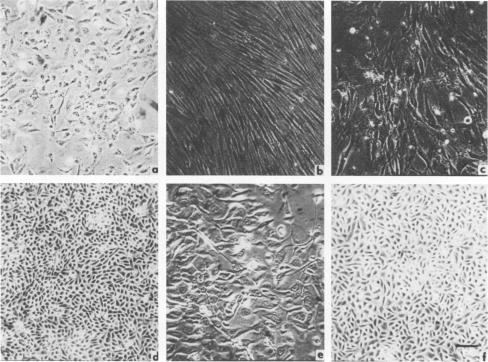
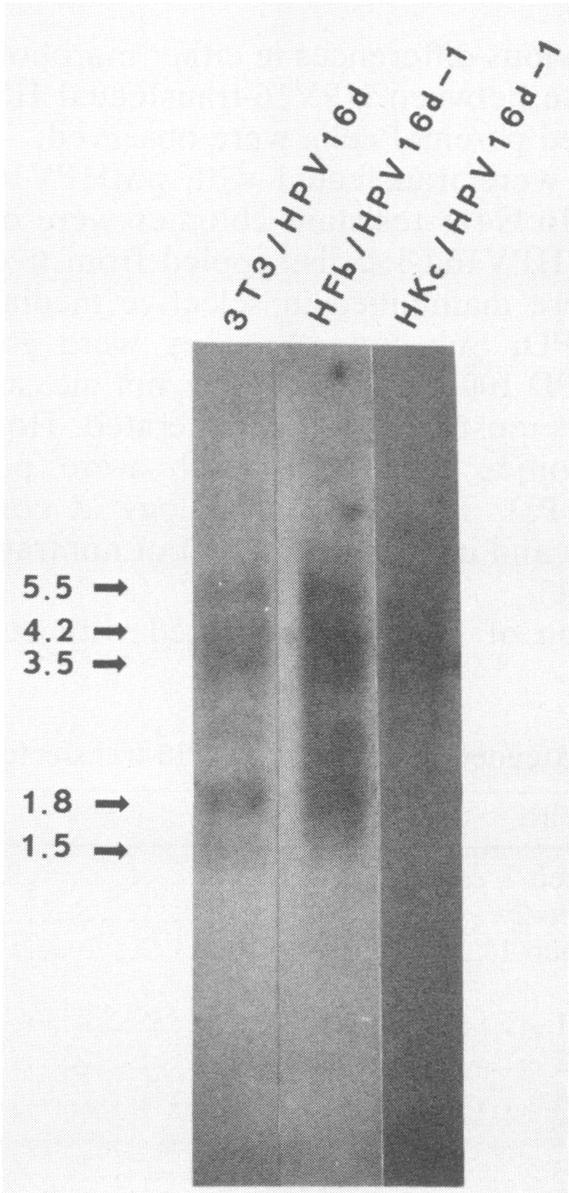
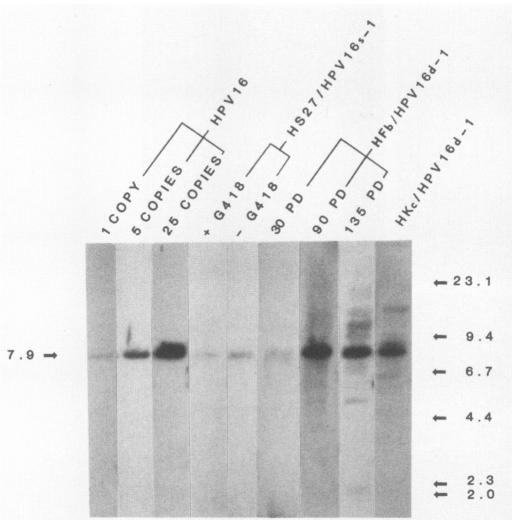
Human keratinocytes and fibroblasts isolated from foreskin were transformed by transfection with recombinant human papillomavirus type 16 (HPV16) DNA. The transformed cells exhibited an extended (fibroblasts) or indefinite (keratinocytes) life-span compared with that of normal controls. In addition, HS27, a human fibroblast cell line previously transfected with origin-defective simian virus 40, was successfully transfected. HPV16 sequences were stably maintained in the cells, and extensive amplification and rearrangements occurred with continuous culturing. Moreover, both fibroblasts and keratinocytes expressed several specific HPV16 mRNAs. Because HPV16-transfected cells had viral transcripts and because transfection with the vector alone did not extend the life-span of the cells, it is likely that the virus was responsible for the indefinite life-span. Transfected fibroblast and keratinocyte lines will be useful for investigating the molecular biology of HPV16 and the interactions between the viral DNA and the human genome. Moreover, transfected keratinocytes provide a model for analyzing the effects of HPV16 on the differentiation properties of human epithelial cells.
从包皮分离出的人角质形成细胞和成纤维细胞通过用重组人乳头瘤病毒16型(HPV16)DNA转染进行转化。与正常对照相比,转化后的细胞表现出延长的(成纤维细胞)或无限的(角质形成细胞)寿命。此外,HS27,一种先前用起源缺陷型猿猴病毒40转染的人成纤维细胞系,被成功转染。HPV16序列在细胞中稳定维持,并且随着连续培养发生广泛的扩增和重排。此外,成纤维细胞和角质形成细胞都表达了几种特定的HPV16 mRNA。由于HPV16转染的细胞有病毒转录本,并且由于单独用载体转染不会延长细胞寿命,因此很可能是病毒导致了无限寿命。转染的成纤维细胞系和角质形成细胞系将有助于研究HPV16的分子生物学以及病毒DNA与人类基因组之间的相互作用。此外,转染的角质形成细胞为分析HPV16对人上皮细胞分化特性的影响提供了一个模型。