Division of Parasitology, Medical Research Council National Institute for Medical Research, Mill Hill, London, United Kingdom.
Wellcome Trust Sanger Institute, Hinxton, Cambridge, United Kingdom.
PLoS Pathog. 2013;9(12):e1003811. doi: 10.1371/journal.ppat.1003811. Epub 2013 Dec 12.
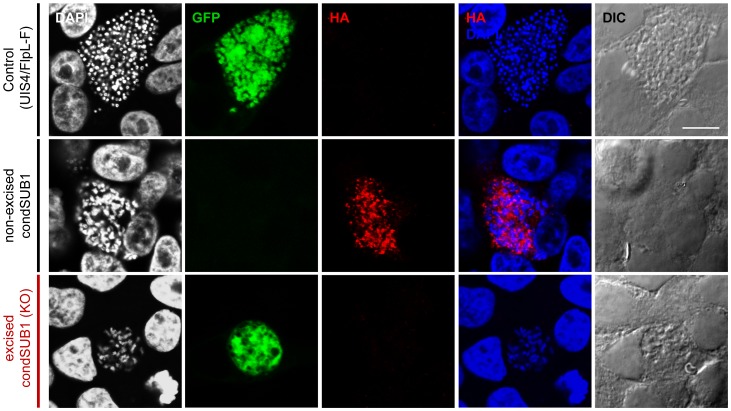
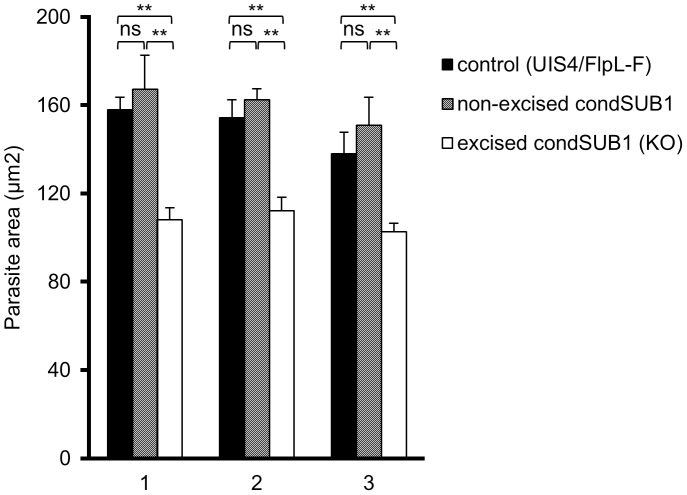
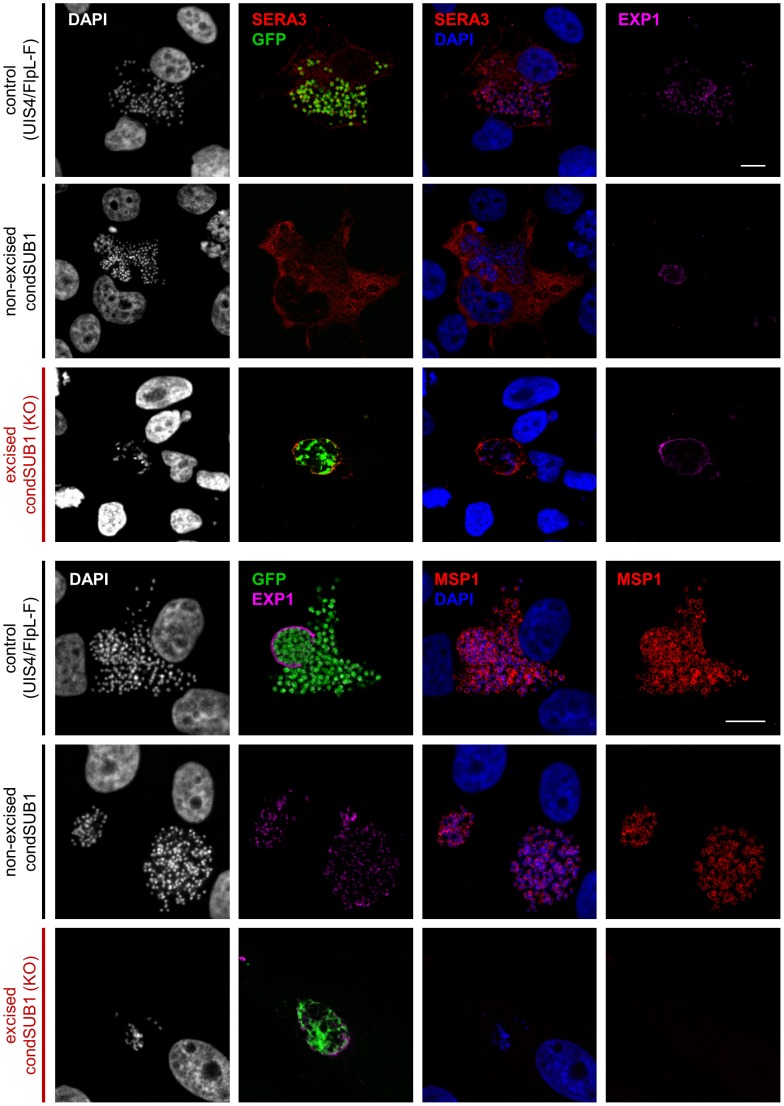
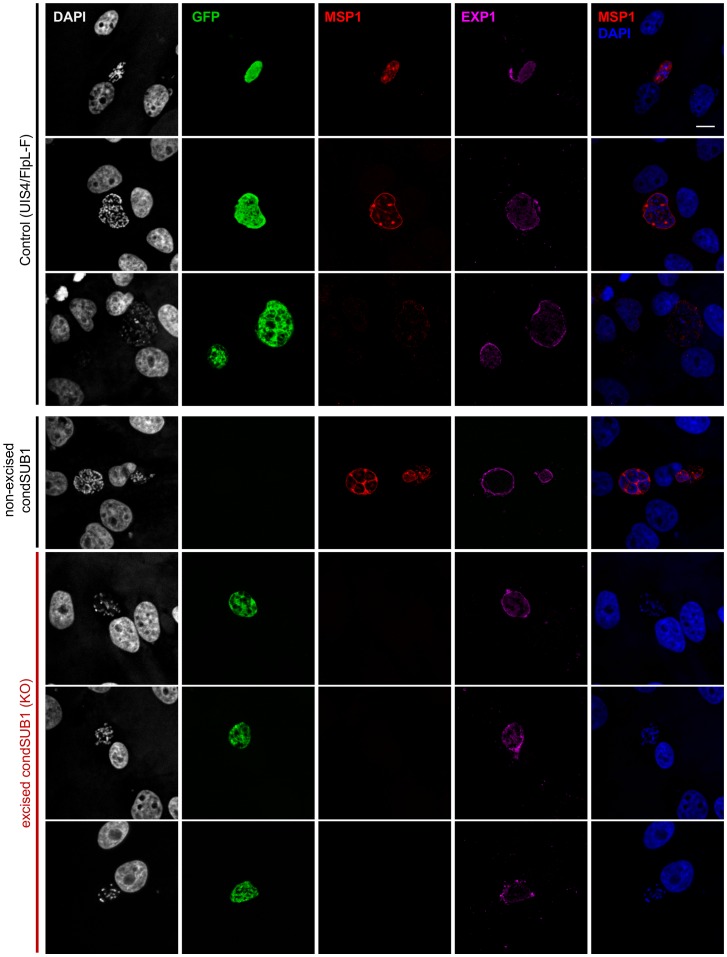
Transmission of the malaria parasite to its vertebrate host involves an obligatory exoerythrocytic stage in which extensive asexual replication of the parasite takes place in infected hepatocytes. The resulting liver schizont undergoes segmentation to produce thousands of daughter merozoites. These are released to initiate the blood stage life cycle, which causes all the pathology associated with the disease. Whilst elements of liver stage merozoite biology are similar to those in the much better-studied blood stage merozoites, little is known of the molecular players involved in liver stage merozoite production. To facilitate the study of liver stage biology we developed a strategy for the rapid production of complex conditional alleles by recombinase mediated engineering in Escherichia coli, which we used in combination with existing Plasmodium berghei deleter lines expressing Flp recombinase to study subtilisin-like protease 1 (SUB1), a conserved Plasmodium serine protease previously implicated in blood stage merozoite maturation and egress. We demonstrate that SUB1 is not required for the early stages of intrahepatic growth, but is essential for complete development of the liver stage schizont and for production of hepatic merozoites. Our results indicate that inhibitors of SUB1 could be used in prophylactic approaches to control or block the clinically silent pre-erythrocytic stage of the malaria parasite life cycle.
疟原虫向其脊椎动物宿主的传播涉及一个必需的外红细胞阶段,在此阶段寄生虫在受感染的肝细胞中进行广泛的无性繁殖。由此产生的肝裂殖体经历分割,产生数千个子疟原虫。这些疟原虫被释放出来启动血液阶段生命周期,从而导致与疾病相关的所有病理学。虽然肝期裂殖体生物学的某些方面与研究得更好的血液期裂殖体相似,但对于参与肝期裂殖体产生的分子参与者知之甚少。为了促进肝期生物学的研究,我们开发了一种在大肠杆菌中通过重组酶介导的工程快速产生复杂条件等位基因的策略,我们将其与表达 Flp 重组酶的现有疟原虫伯氏疟原虫缺失系结合使用,以研究枯草杆菌蛋白酶 1(SUB1),这是一种保守的疟原虫丝氨酸蛋白酶,先前与血液期裂殖体成熟和逸出有关。我们证明 SUB1 不是肝内生长早期所必需的,但对于肝期裂殖体的完全发育和肝期疟原虫的产生是必需的。我们的结果表明,SUB1 的抑制剂可用于预防性方法来控制或阻断疟原虫生命周期中临床无症状的红细胞前阶段。