Wu Dan, Chen Jiang, Zhu Hao, Xiong Xin-Gui, Liang Qing-Hua, Zhang Yang, Zhang Yong, Wang Yang, Yang Bo, Huang Xi
Department of Traditional Chinese Medicine, Central South University, Changsha, Hunan 410008, P.R. China.
Center of Telemedicine, Xiangya Hospital, Central South University, Changsha, Hunan 410008, P.R. China.
Exp Ther Med. 2014 Jan;7(1):209-217. doi: 10.3892/etm.2013.1358. Epub 2013 Oct 23.
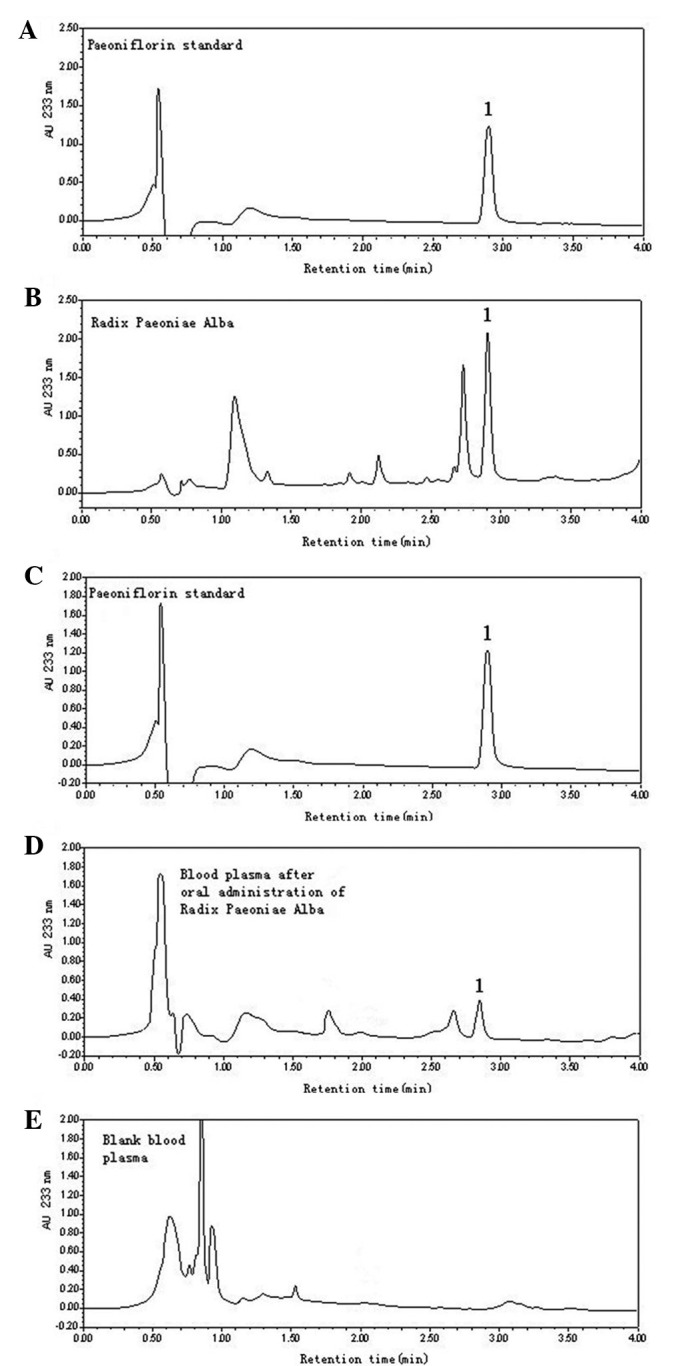
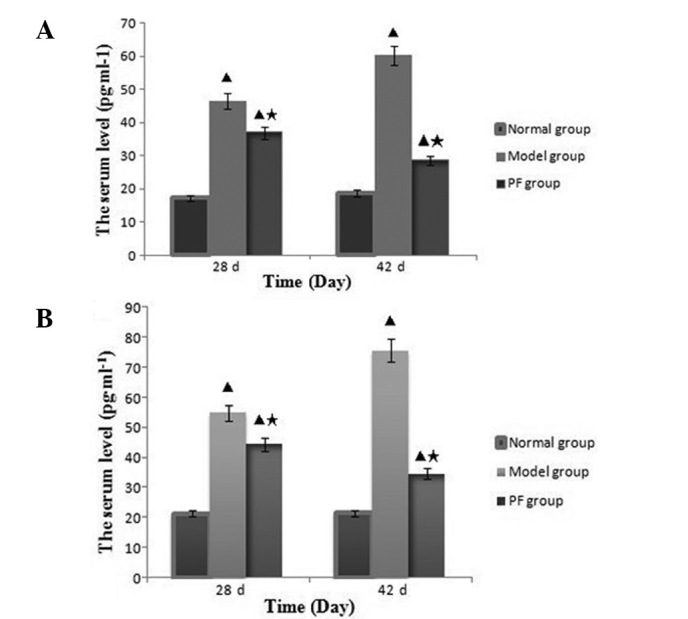
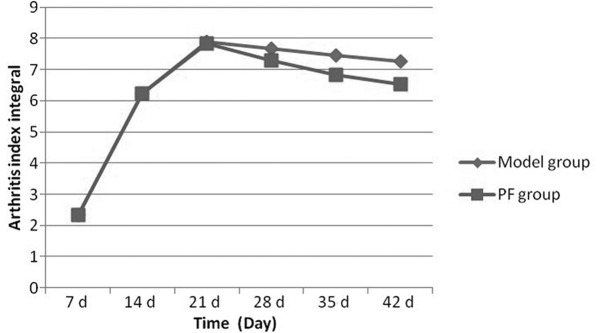
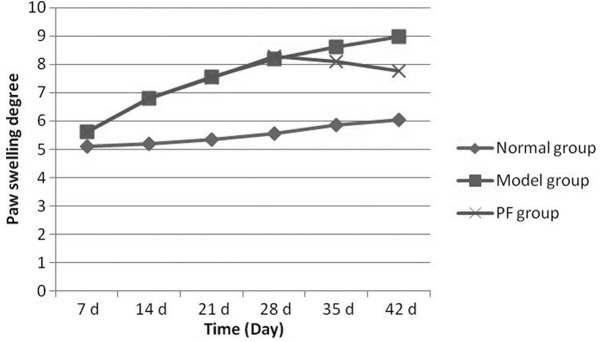
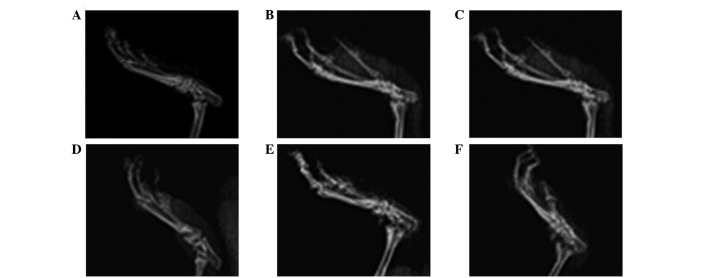
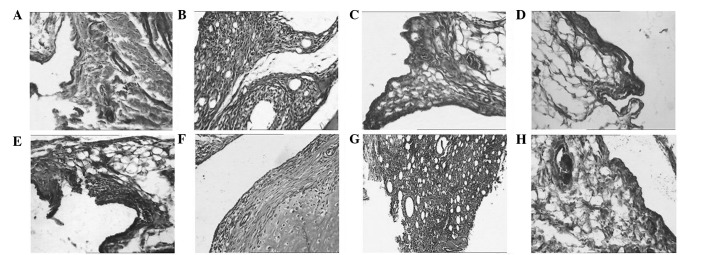
Rheumatoid arthritis (RA) is a chronic disabling autoimmune disease with characteristics of chronic, progressive inflammatory joint synovial damage, which mainly encroaches upon the synovium of the joint. The use of traditional medicine to treat RA slows the development of RA to a certain extent; however, it often has numerous side-effects. Therefore, the focus of RA research is the identification of a new, safe and effective medicine. The aim of the present study was to use an ultra performance liquid chromatography and photo diode array (UPLC-PDA) method to detect the paeoniflorin component in a Radix Paeoniae Alba decoction and in rat plasma following the oral administration of Radix Paeoniae Alba decoction. In addition, the effects of paeoniflorin on collagen-induced arthritis (CIA) in rats were investigated. The results indicate that a UPLC-PDA method for determining the presence of paeoniflorin in the Radix Paeoniae Alba decoction was successfully established. The method was fast, simple, sensitive, precise and valid. Paeoniflorin was shown to be a bioactive component of the Radix Paeoniae Alba decoction that was absorbed into rat plasma. Paeoniflorin significantly improved the disease resistant ability of RA rats and reduced the levels of the inflammatory cytokines, IL-1β and TNF-α, thereby inhibiting inflammation and bone erosion in the rats with CIA. The observations are likely to lay the foundation for further study of the mechanism of paeoniflorin in the treatment of RA.
类风湿性关节炎(RA)是一种慢性致残性自身免疫性疾病,具有慢性、进行性炎症性关节滑膜损伤的特征,主要侵犯关节滑膜。使用传统药物治疗RA在一定程度上减缓了RA的发展;然而,它往往有许多副作用。因此,RA研究的重点是寻找一种新的、安全有效的药物。本研究的目的是使用超高效液相色谱和光电二极管阵列(UPLC-PDA)方法检测白芍汤中芍药苷成分以及口服白芍汤后大鼠血浆中的芍药苷成分。此外,还研究了芍药苷对大鼠胶原诱导性关节炎(CIA)的影响。结果表明,成功建立了一种用于测定白芍汤中芍药苷含量的UPLC-PDA方法。该方法快速、简便、灵敏、准确且有效。芍药苷被证明是白芍汤的一种生物活性成分,可被吸收进入大鼠血浆。芍药苷显著提高了RA大鼠的抗病能力,降低了炎症细胞因子IL-1β和TNF-α的水平,从而抑制了CIA大鼠的炎症和骨侵蚀。这些观察结果可能为进一步研究芍药苷治疗RA的机制奠定基础。