Water Science and Technology Directorate, Environment Canada, Burlington, Ontario, Canada ; Department of Earth and Environmental Sciences, University of Waterloo, Waterloo, Ontario, Canada.
Department of Earth and Environmental Sciences, University of Waterloo, Waterloo, Ontario, Canada.
PLoS One. 2013 Dec 11;8(12):e82706. doi: 10.1371/journal.pone.0082706. eCollection 2013.
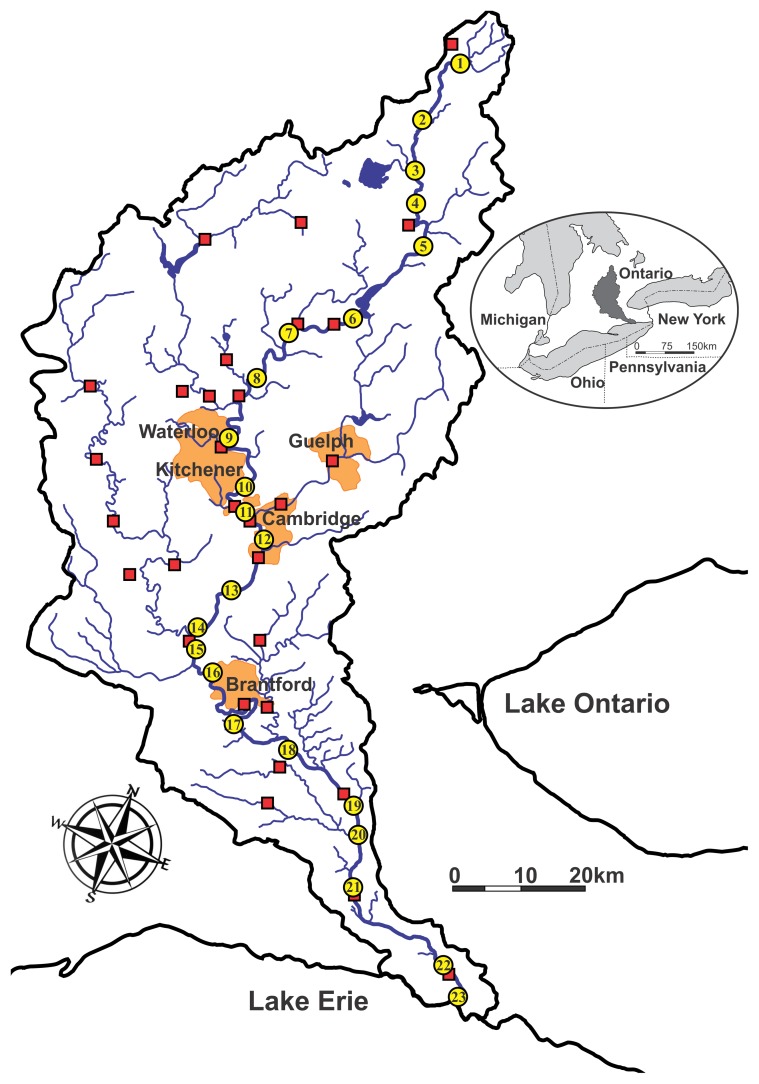
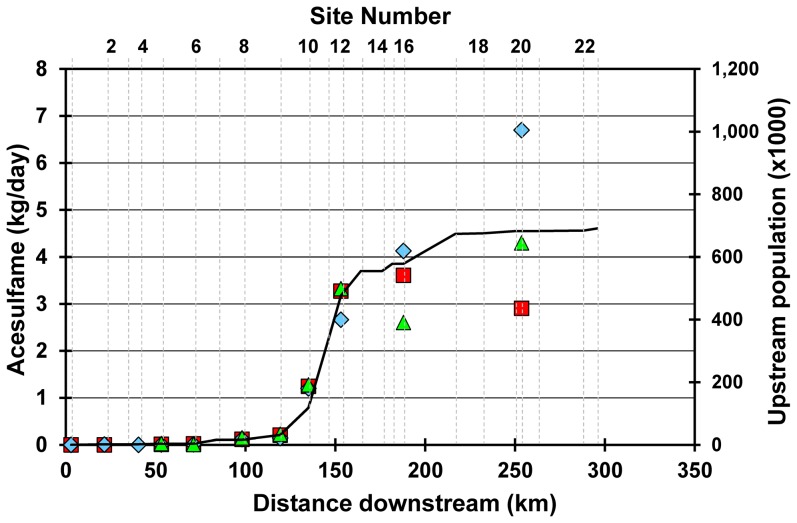
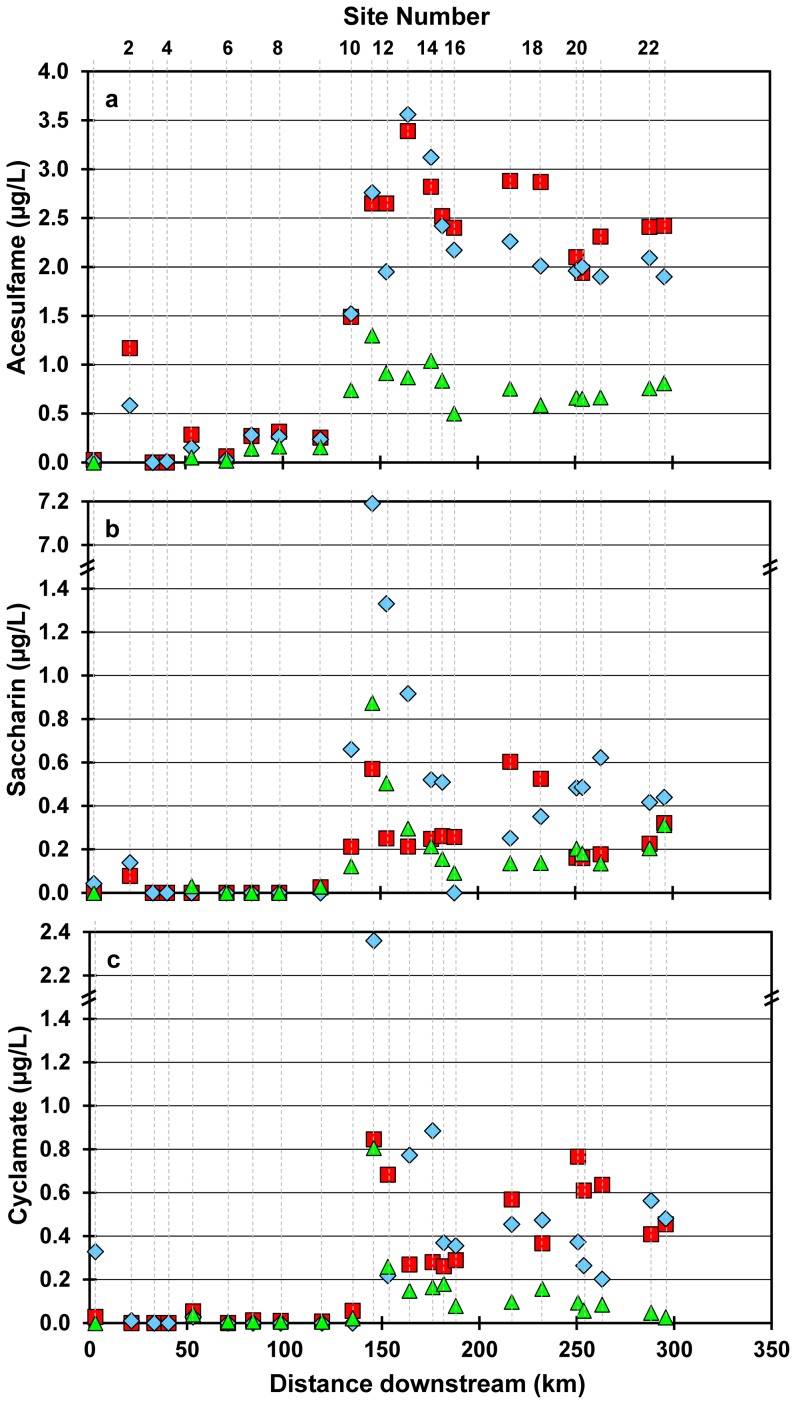
Artificial sweeteners have been widely incorporated in human food products for aid in weight loss regimes, dental health protection and dietary control of diabetes. Some of these widely used compounds can pass non-degraded through wastewater treatment systems and are subsequently discharged to groundwater and surface waters. Measurements of artificial sweeteners in rivers used for drinking water production are scarce. In order to determine the riverine concentrations of artificial sweeteners and their usefulness as a tracer of wastewater at the scale of an entire watershed, we analyzed samples from 23 sites along the entire length of the Grand River, a large river in Southern Ontario, Canada, that is impacted by agricultural activities and urban centres. Municipal water from household taps was also sampled from several cities within the Grand River Watershed. Cyclamate, saccharin, sucralose, and acesulfame were found in elevated concentrations despite high rates of biological activity, large daily cycles in dissolved oxygen and shallow river depth. The maximum concentrations that we measured for sucralose (21 µg/L), cyclamate (2.4 µg/L) [corrected], and saccharin (7.2 µg/L) are the highest reported concentrations of these compounds in surface waters to date anywhere in the world. Acesulfame persists at concentrations that are up to several orders of magnitude above the detection limit over a distance of 300 km and it behaves conservatively in the river, recording the wastewater contribution from the cumulative population in the basin. Acesulfame is a reliable wastewater effluent tracer in rivers. Furthermore, it can be used to assess rates of nutrient assimilation, track wastewater plume dilution, separate human and animal waste contributions and determine the relative persistence of emerging contaminants in impacted watersheds where multiple sources confound the usefulness of other tracers. The effects of artificial sweeteners on aquatic biota in rivers and in the downstream Great Lakes are largely unknown.
人工甜味剂已广泛应用于人类食品产品中,以帮助减肥、保护牙齿健康和控制糖尿病饮食。其中一些广泛使用的化合物可以未经降解通过废水处理系统,并随后排放到地下水和地表水。用于饮用水生产的河流中人工甜味剂的测量数据很少。为了确定人工甜味剂在河流中的浓度及其作为整个流域污水示踪剂的有用性,我们分析了沿加拿大安大略省南部大格兰德河全长 23 个地点的样本,该河受到农业活动和城市中心的影响。还从格兰德河流域的几个城市采集了家庭水龙头的市政用水样本。尽管具有高生物活性、溶解氧的每日大循环和浅河深,环已基氨基磺酸钠、糖精、三氯蔗糖和乙酰磺胺酸钾仍以高浓度存在。我们测量的三氯蔗糖(21μg/L)、环已基氨基磺酸钠(2.4μg/L)[更正]和糖精(7.2μg/L)的最大浓度是迄今为止在世界任何地方报道的这些化合物在地表水中的最高浓度。乙酰磺胺酸钾在长达 300 公里的距离内以远高于检测限的浓度持续存在,并且在河流中表现保守,记录了流域内累积人口的废水贡献。乙酰磺胺酸钾是河流中可靠的污水流出示踪剂。此外,它可用于评估营养物质同化率、跟踪污水羽流稀释、分离人类和动物废物的贡献以及确定受影响流域中新兴污染物的相对持久性,在这些流域中,多个来源使其他示踪剂的有用性复杂化。人工甜味剂对河流中和下游大湖中的水生生物群的影响在很大程度上是未知的。