Emerg Infect Dis. 2014 Jan;20(1):13-20. doi: 10.3201/.eid2001.130428.
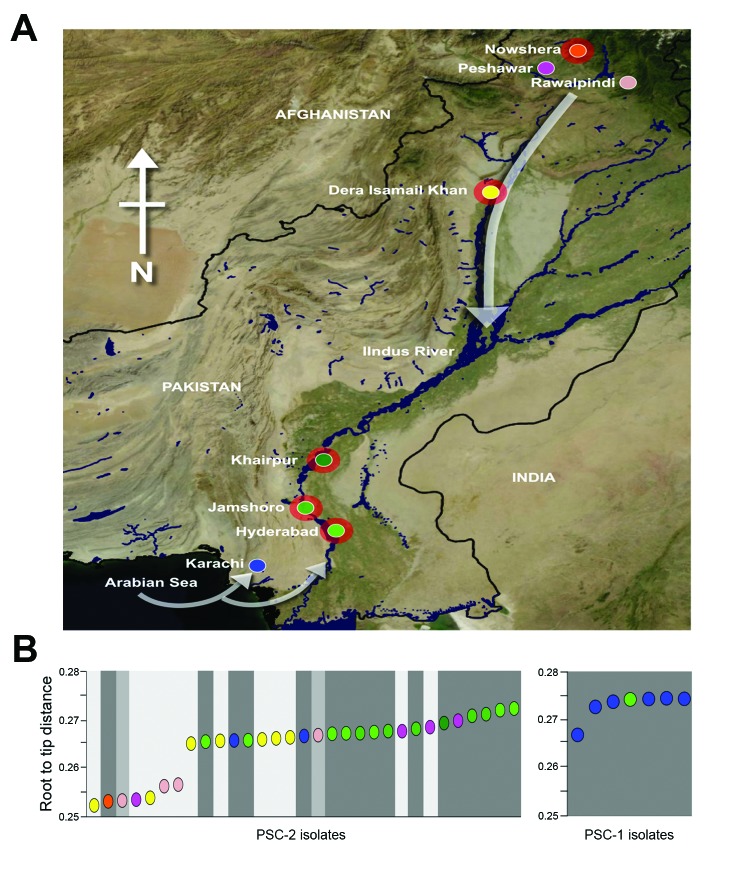
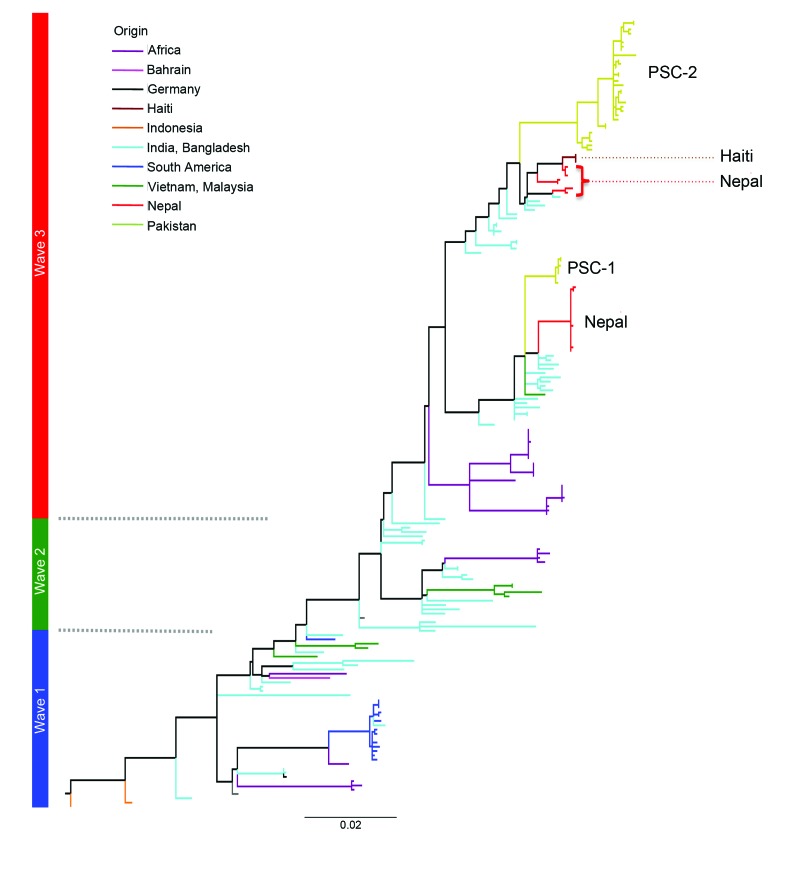
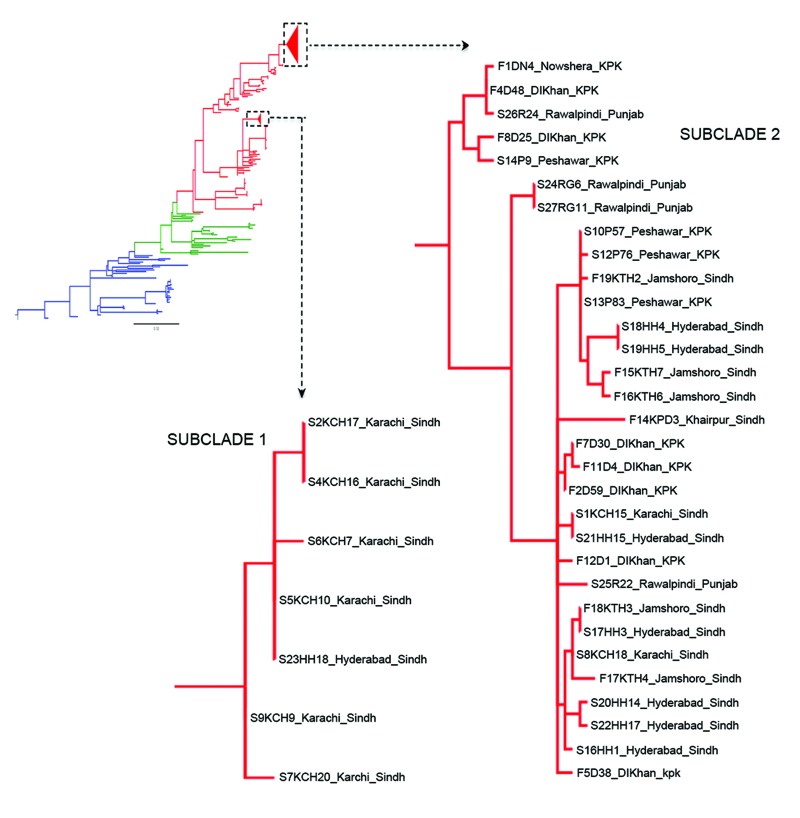
In August 2010, Pakistan experienced major floods and a subsequent cholera epidemic. To clarify the population dynamics and transmission of Vibrio cholerae in Pakistan, we sequenced the genomes of all V. cholerae O1 El Tor isolates and compared the sequences to a global collection of 146 V. cholerae strains. Within the global phylogeny, all isolates from Pakistan formed 2 new subclades (PSC-1 and PSC-2), lying in the third transmission wave of the seventh-pandemic lineage that could be distinguished by signature deletions and their antimicrobial susceptibilities. Geographically, PSC-1 isolates originated from the coast, whereas PSC-2 isolates originated from inland areas flooded by the Indus River. Single-nucleotide polymorphism accumulation analysis correlated river flow direction with the spread of PSC-2. We found at least 2 sources of cholera in Pakistan during the 2010 epidemic and illustrate the value of a global genomic data bank in contextualizing cholera outbreaks.
2010 年 8 月,巴基斯坦遭遇特大洪灾和随后的霍乱疫情。为了阐明巴基斯坦流行的霍乱弧菌的种群动态和传播方式,我们对所有 O1 型埃尔托霍乱弧菌分离株进行了基因组测序,并将序列与全球 146 株霍乱弧菌菌株的序列进行了比较。在全球系统发育树中,所有来自巴基斯坦的分离株形成了 2 个新的亚群(PSC-1 和 PSC-2),位于第七次大流行株系的第三次传播波中,可通过特征性缺失及其对抗菌药物的敏感性来区分。从地理上看,PSC-1 分离株来自沿海地区,而 PSC-2 分离株则来自被印度河洪水淹没的内陆地区。单核苷酸多态性积累分析表明,河流流向与 PSC-2 的传播有关。我们发现,在 2010 年的疫情中,巴基斯坦至少有 2 个霍乱源头,并说明了全球基因组数据库在霍乱疫情背景下的价值。