APDM, Inc., Portland, OR 97201, USA.
Sensors (Basel). 2013 Dec 27;14(1):356-69. doi: 10.3390/s140100356.
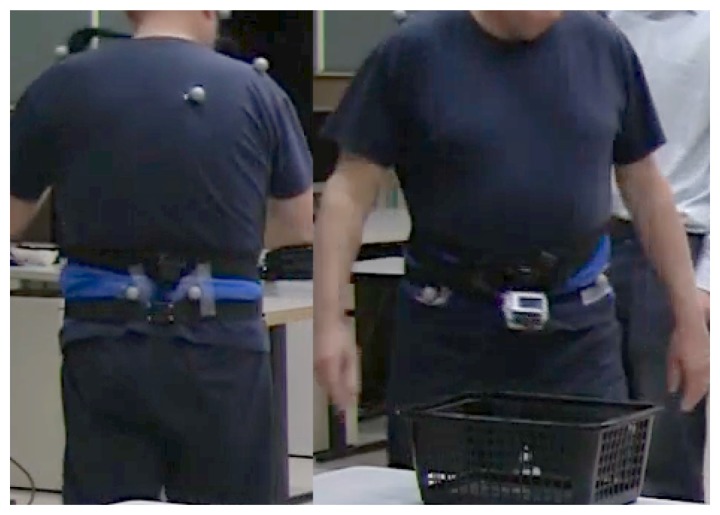
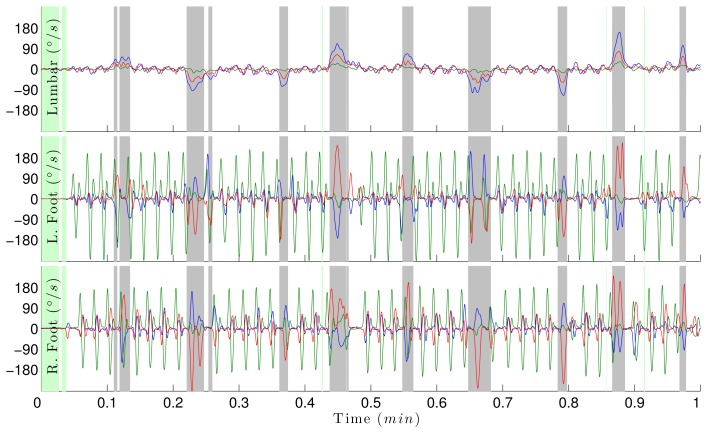
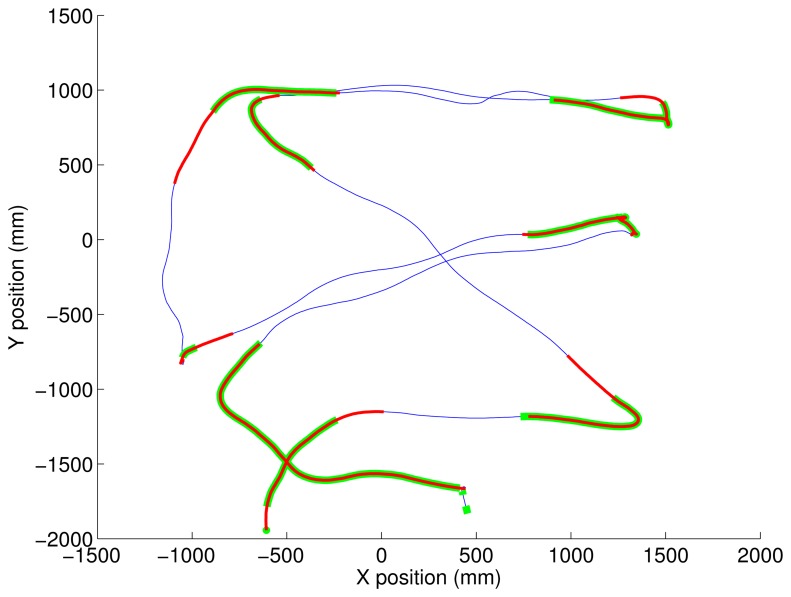
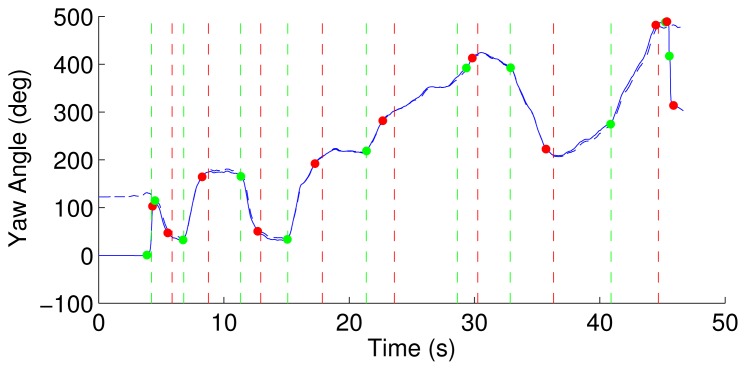
Difficulty with turning is a major contributor to mobility disability and falls in people with movement disorders, such as Parkinson's disease (PD). Turning often results in freezing and/or falling in patients with PD. However, asking a patient to execute a turn in the clinic often does not reveal their impairments. Continuous monitoring of turning with wearable sensors during spontaneous daily activities may help clinicians and patients determine who is at risk of falls and could benefit from preventative interventions. In this study, we show that continuous monitoring of natural turning with wearable sensors during daily activities inside and outside the home is feasible for people with PD and elderly people. We developed an algorithm to detect and characterize turns during gait, using wearable inertial sensors. First, we validate the turning algorithm in the laboratory against a Motion Analysis system and against a video analysis of 21 PD patients and 19 control (CT) subjects wearing an inertial sensor on the pelvis. Compared to Motion Analysis and video, the algorithm maintained a sensitivity of 0.90 and 0.76 and a specificity of 0.75 and 0.65, respectively. Second, we apply the turning algorithm to data collected in the home from 12 PD and 18 CT subjects. The algorithm successfully detects turn characteristics, and the results show that, compared to controls, PD subjects tend to take shorter turns with smaller turn angles and more steps. Furthermore, PD subjects show more variability in all turn metrics throughout the day and the week.
转弯困难是导致运动障碍患者(如帕金森病患者)行动障碍和跌倒的主要原因之一。转弯常常导致帕金森病患者出现冻结和/或跌倒。然而,让患者在诊所进行转弯测试往往无法揭示他们的障碍。在日常生活中使用可穿戴传感器对转弯进行连续监测,可能有助于临床医生和患者确定谁有跌倒风险,并可以从中受益于预防干预措施。在这项研究中,我们表明,在室内和室外的日常活动中,使用可穿戴传感器对自然转弯进行连续监测,对于帕金森病患者和老年人来说是可行的。我们开发了一种算法,使用可穿戴惯性传感器来检测和描述行走过程中的转弯。首先,我们在实验室中将转弯算法与 Motion Analysis 系统和对 21 名帕金森病患者和 19 名对照(CT)受试者进行的惯性传感器佩戴在骨盆上的视频分析进行了比较。与 Motion Analysis 和视频相比,该算法的灵敏度分别保持在 0.90 和 0.76,特异性分别保持在 0.75 和 0.65。其次,我们将转弯算法应用于从 12 名帕金森病患者和 18 名对照受试者家中收集的数据中。该算法成功地检测到转弯特征,结果表明,与对照组相比,帕金森病患者的转弯半径较小,转弯角度更小,转弯时的步数也更少。此外,帕金森病患者在一天和一周的所有转弯指标中都表现出更大的变异性。