Praharaj Ira, Sujatha S, Parija Subhash Chandra
Department of Microbiology, Jawaharlal Institute of Postgraduate Medical Education & Research, Puducherry, India.
Indian J Med Res. 2013 Oct;138(4):549-56.
BACKGROUND & OBJECTIVES: Enterococci have emerged as important nosocomial pathogens and emergence of resistance to many of the antimicrobials used for Gram-positive organisms has made the management of infections due to Enterococcus species difficult. Resistance to glycopeptide antibiotics, especially vancomycin is of special concern. This study was undertaken to perform a phenotypic and genotypic characterization of vancomycin resistant Enterococcus (VRE) isolates obtained from clinical samples in a tertiary care hospital in southern India.
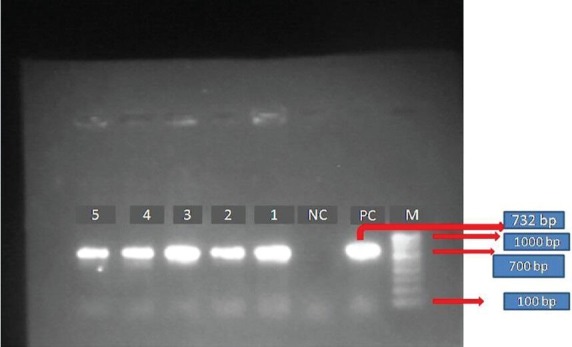
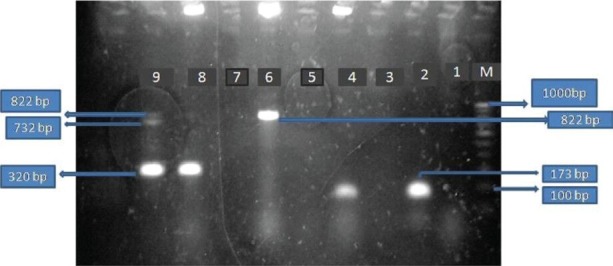
Susceptibility testing was performed for Enterococcus isolates collected over a period of one year (November 2008-October 2009). Minimum inhibitory concentrations (MIC) of vancomycin and teicoplanin were determined for the isolates by the agar dilution method. Genotypic characterization of VRE isolates was done by performing multiplex polymerase chain reaction (PCR) for detecting the various vancomycin resistance genes.
Of the 367 isolates of Enterococcus species isolated, 32 were found to be resistant to vancomycin after MIC testing. VanA was the commonest phenotype of vancomycin resistance and the commonest genotype was vanA. Among the other important findings of the study was the presence of heterogeneity in isolates of VRE with the vanA gene cluster with regards to resistance to teicoplanin and the coexistence of vanA and vanC1 gene clusters in an isolate of E. gallinarum which conferred high level glycopeptide resistance to the isolate.
INTERPRETATION & CONCLUSIONS: Enterococcus species have emerged as important nosocomial pathogens in our patients with a capacity to cause a variety of infections. The vancomycin resistance among Enterococcus isolates was 8.7 per cent in our study which was high compared to other Indian studies. VanA was the commonest phenotype of glycopeptide resistance and vanA was the commonest vancomycin resistance gene. The study also demonstrates phenotypic as well as genotypic heterogeneity among isolates of VRE from clinical specimens.
肠球菌已成为重要的医院感染病原菌,并且对许多用于革兰氏阳性菌的抗菌药物产生耐药性,这使得肠球菌属感染的治疗变得困难。对糖肽类抗生素,尤其是万古霉素的耐药性备受关注。本研究旨在对从印度南部一家三级护理医院的临床样本中分离出的耐万古霉素肠球菌(VRE)菌株进行表型和基因型特征分析。
对收集了一年时间(2008年11月至2009年10月)的肠球菌分离株进行药敏试验。采用琼脂稀释法测定分离株对万古霉素和替考拉宁的最低抑菌浓度(MIC)。通过多重聚合酶链反应(PCR)检测各种万古霉素耐药基因,对VRE分离株进行基因型特征分析。
在分离出的367株肠球菌中,经MIC检测发现32株对万古霉素耐药。VanA是最常见的万古霉素耐药表型,最常见的基因型是vanA。该研究的其他重要发现包括,带有vanA基因簇的VRE分离株在对替考拉宁的耐药性方面存在异质性,以及一株鹑鸡肠球菌中vanA和vanC1基因簇共存,使该分离株具有高水平糖肽类耐药性。
肠球菌属已成为我们患者中重要的医院感染病原菌,能够引起多种感染。在我们的研究中,肠球菌分离株中的万古霉素耐药率为8.7%,与其他印度研究相比偏高。VanA是最常见的糖肽类耐药表型,vanA是最常见的万古霉素耐药基因。该研究还证明了临床标本中VRE分离株存在表型和基因型异质性。