Sigruener Alexander, Kleber Marcus E, Heimerl Susanne, Liebisch Gerhard, Schmitz Gerd, Maerz Winfried
Institute for Laboratory Medicine and Transfusion Medicine, Regensburg University Medical Center, Regensburg, Germany.
Medical Clinic V, Mannheim Medical Faculty, University of Heidelberg, Mannheim, Germany.
PLoS One. 2014 Jan 17;9(1):e85724. doi: 10.1371/journal.pone.0085724. eCollection 2014.
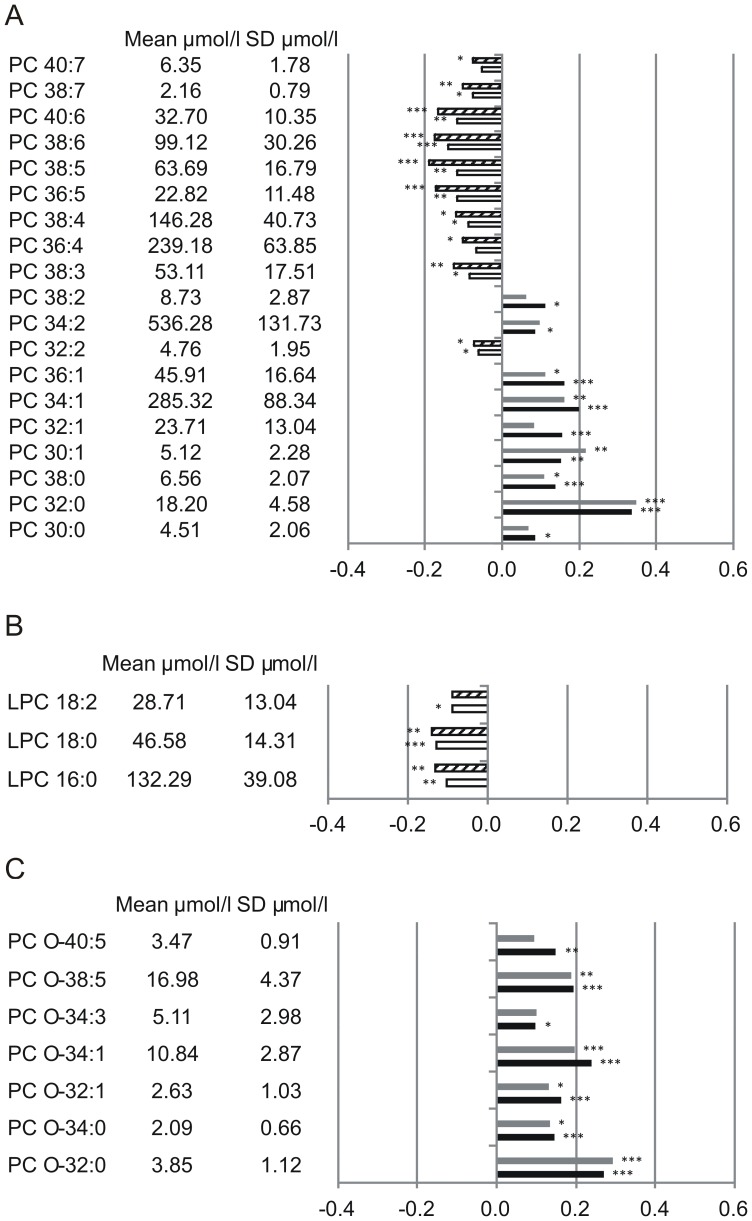
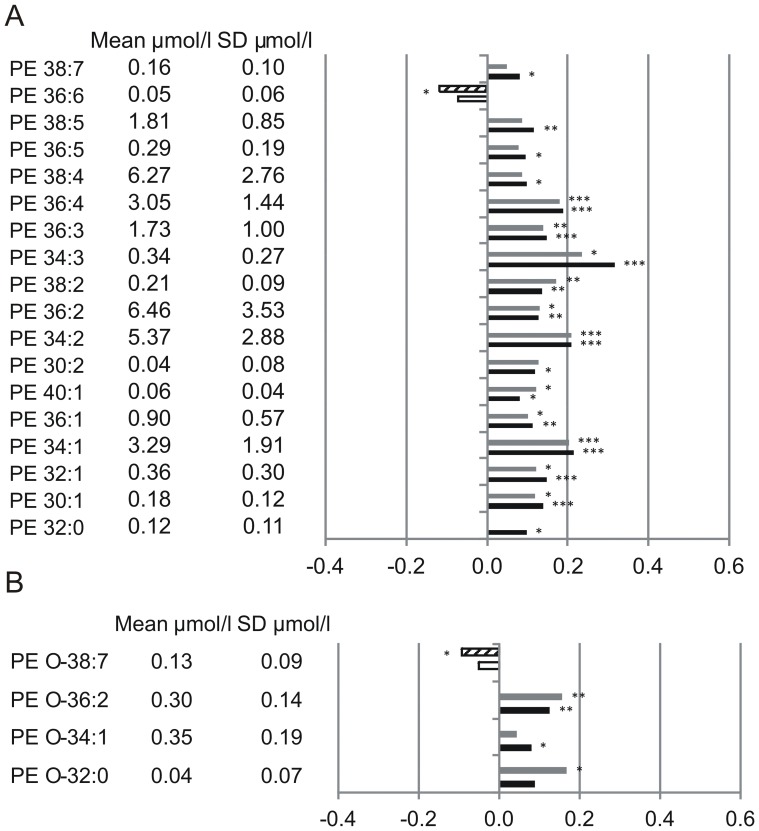
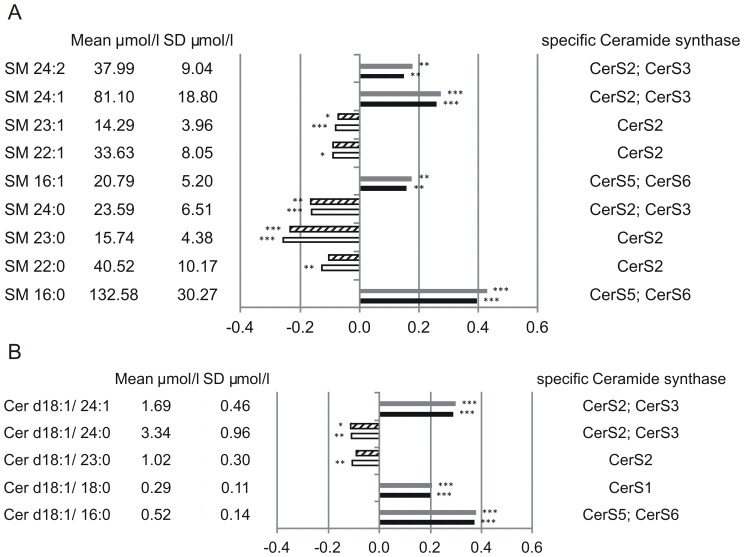
Vascular and metabolic diseases cause half of total mortality in Europe. New prognostic markers would provide a valuable tool to improve outcome. First evidence supports the usefulness of plasma lipid species as easily accessible markers for certain diseases. Here we analyzed association of plasma lipid species with mortality in the Ludwigshafen Risk and Cardiovascular Health (LURIC) study. Plasma lipid species were quantified by electrospray ionization tandem mass spectrometry and Cox proportional hazards regression was applied to assess their association with total and cardiovascular mortality. Overall no differences were detected between total and cardiovascular mortality. Highly polyunsaturated phosphatidylcholine species together with lysophosphatidylcholine species and long chain saturated sphingomyelin and ceramide species seem to be associated with a protective effect. The predominantly circulating phosphatidylcholine-based as well as phosphatidylethanolamine-based ether species and phosphatidylethanolamine species were positively associated with total and cardiovascular mortality. Saturated and monounsaturated phosphatidylcholine species, especially phosphatidylcholine 32∶0 (most probably dipalmitoyl-phosphatidylcholine) and palmitate containing sphingomyelin and ceramide species showed together with 24∶1 containing sphingomyelin and ceramide species strongest positive association with mortality. A quotient of the sums of the six most protective species and the six species with the strongest positive mortality association indicated an almost 3-fold increased risk of mortality, which was higher than the hazard ratio for known risk factors in our cohort. Plasma lipid species levels and especially ratios of certain species may be valuable prognostic marker for cardiovascular and total mortality.
血管和代谢性疾病导致欧洲一半的总死亡率。新的预后标志物将为改善预后提供有价值的工具。初步证据支持血浆脂质种类作为某些疾病易于获取的标志物的有用性。在此,我们在路德维希港风险与心血管健康(LURIC)研究中分析了血浆脂质种类与死亡率的关联。通过电喷雾电离串联质谱法定量血浆脂质种类,并应用Cox比例风险回归评估它们与总死亡率和心血管死亡率的关联。总体而言,总死亡率和心血管死亡率之间未检测到差异。高度多不饱和磷脂酰胆碱种类以及溶血磷脂酰胆碱种类、长链饱和鞘磷脂和神经酰胺种类似乎具有保护作用。主要循环的基于磷脂酰胆碱以及基于磷脂酰乙醇胺的醚种类和磷脂酰乙醇胺种类与总死亡率和心血管死亡率呈正相关。饱和和单不饱和磷脂酰胆碱种类,尤其是磷脂酰胆碱32∶0(很可能是二棕榈酰磷脂酰胆碱)以及含棕榈酸的鞘磷脂和神经酰胺种类,与含24∶1的鞘磷脂和神经酰胺种类一起,与死亡率呈最强的正相关。六种最具保护作用的种类与六种与死亡率呈最强正相关的种类的总和之比表明死亡风险几乎增加了3倍,这高于我们队列中已知风险因素的风险比。血浆脂质种类水平,尤其是某些种类的比例,可能是心血管和总死亡率的有价值的预后标志物。