Schwarzberg Karen, Le Rosalin, Bharti Balambal, Lindsay Suzanne, Casaburi Giorgio, Salvatore Francesco, Saber Mohamed H, Alonaizan Faisal, Slots Jørgen, Gottlieb Roberta A, Caporaso J Gregory, Kelley Scott T
Department of Biology, San Diego State University, San Diego, California, United States of America.
Graduate School of Public Health, San Diego State University, San Diego, California, United States of America.
PLoS One. 2014 Jan 29;9(1):e86708. doi: 10.1371/journal.pone.0086708. eCollection 2014.
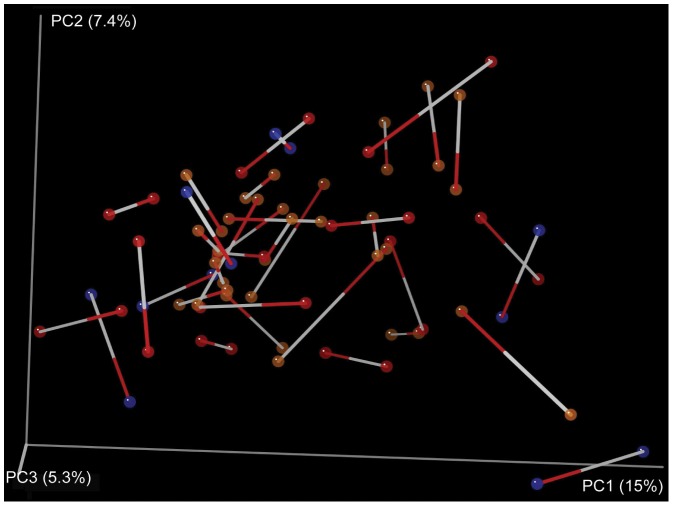
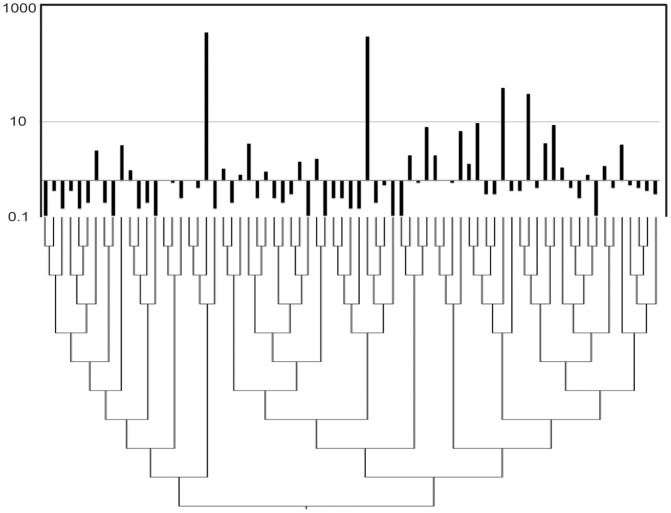
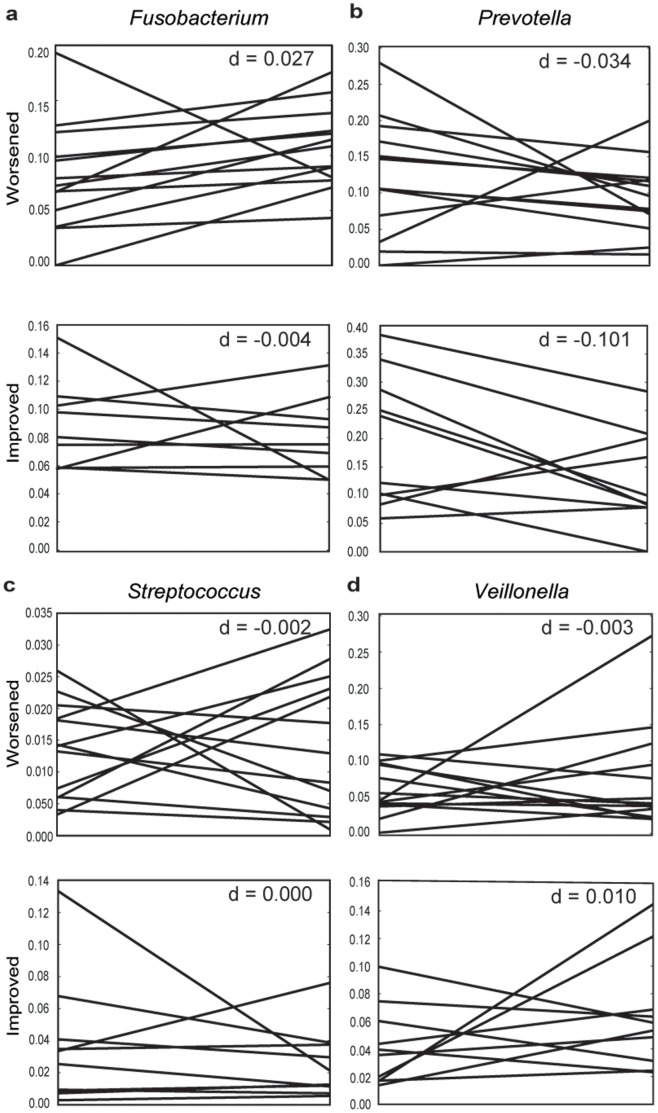
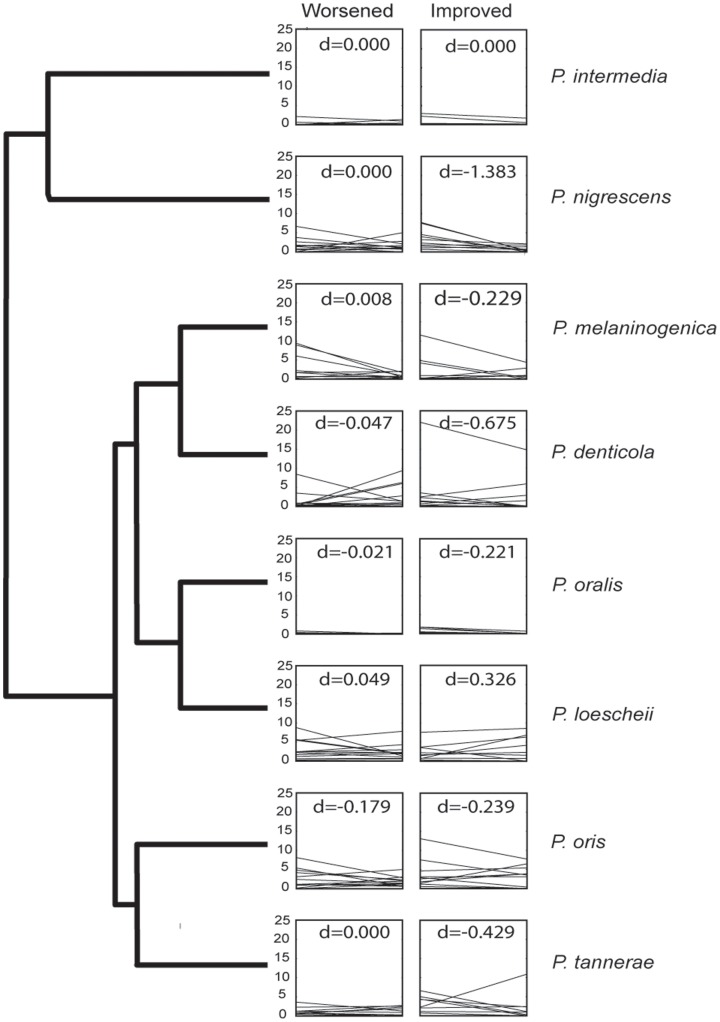
Periodontitis is a progressive disease of the periodontium with a complex, polymicrobial etiology. Recent Next-Generation Sequencing (NGS) studies of the microbial diversity associated with periodontitis have revealed strong, community-level differences in bacterial assemblages associated with healthy or diseased periodontal sites. In this study, we used NGS approaches to characterize changes in periodontal pocket bacterial diversity after standard periodontal treatment. Despite consistent changes in the abundance of certain taxa in individuals whose condition improved with treatment, post-treatment samples retained the highest similarity to pre-treatment samples from the same individual. Deeper phylogenetic analysis of periodontal pathogen-containing genera Prevotella and Fusobacterium found both unexpected diversity and differential treatment response among species. Our results highlight how understanding interpersonal variability among microbiomes is necessary for determining how polymicrobial diseases respond to treatment and disturbance.
牙周炎是一种牙周组织的进行性疾病,病因复杂且为多种微生物所致。最近关于与牙周炎相关的微生物多样性的下一代测序(NGS)研究表明,在健康或患病牙周部位相关的细菌组合中,存在明显的群落水平差异。在本研究中,我们使用NGS方法来表征标准牙周治疗后牙周袋细菌多样性的变化。尽管在治疗后病情改善的个体中某些分类群的丰度发生了一致的变化,但治疗后的样本与来自同一个体的治疗前样本保持了最高的相似性。对含有牙周病原体的普雷沃菌属和梭杆菌属进行更深入的系统发育分析发现,物种之间存在意想不到的多样性和不同的治疗反应。我们的结果强调,了解微生物群之间的个体差异对于确定多微生物疾病如何对治疗和干扰做出反应是必要的。