Abdel-Moneim Ahmed S
Microbiology Department, Virology Division, College of Medicine, Taif University, Al-Taif, 21944, Saudi Arabia,
Arch Virol. 2014 Jul;159(7):1575-84. doi: 10.1007/s00705-014-1995-5. Epub 2014 Feb 11.
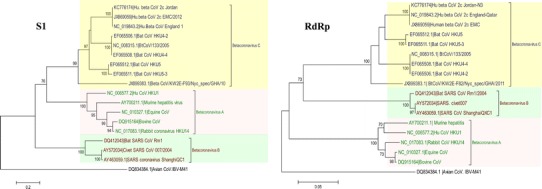
In 2012, a novel human coronavirus emerged and was tentatively named "Middle East respiratory syndrome coronavirus" (MERS-CoV). The high mortality rate of MERS-CoV focused attention on the ecology of the virus. It has been found that MERS-CoV belongs to the group C lineage of the genus Betacoronavirus. Coronavirus surveillance studies in different populations of bats have suggested that they are probable reservoirs for this novel virus, and phylogenetic analysis of both the spike (S1) and RNA-dependent RNA polymerase proteins of MERS-CoV have revealed that it is related to bat viruses. Recently, the MERS-CoV and its neutralizing antibodies were detected in dromedary camels. Despite the limited number of reported cases of person-to-person transmission, the rapid evolution of the virus poses a continuous threat to humans worldwide. This paper reviews the current state of knowledge regarding the virology, clinical spectrum, evolution, diagnosis and treatment of MERS-CoV infections.
2012年,一种新型人类冠状病毒出现,并被暂命名为“中东呼吸综合征冠状病毒”(MERS-CoV)。MERS-CoV的高死亡率引发了人们对该病毒生态学的关注。现已发现MERS-CoV属于β冠状病毒属C组谱系。对不同蝙蝠种群的冠状病毒监测研究表明,蝙蝠可能是这种新型病毒的宿主,对MERS-CoV的刺突(S1)蛋白和RNA依赖性RNA聚合酶蛋白进行的系统发育分析显示,它与蝙蝠病毒有关。最近,在单峰骆驼中检测到了MERS-CoV及其中和抗体。尽管人际传播的报告病例数量有限,但该病毒的快速进化对全球人类构成了持续威胁。本文综述了关于MERS-CoV感染的病毒学、临床谱、进化、诊断和治疗的当前知识状态。