Young Kymberly D, Zotev Vadim, Phillips Raquel, Misaki Masaya, Yuan Han, Drevets Wayne C, Bodurka Jerzy
Laureate Institute for Brain Research, Tulsa, Oklahoma, United States of America.
Laureate Institute for Brain Research, Tulsa, Oklahoma, United States of America ; Janssen Pharmaceuticals, LCC, of Johnson & Johnson, Inc., Titusville, New Jersey, United States of America.
PLoS One. 2014 Feb 11;9(2):e88785. doi: 10.1371/journal.pone.0088785. eCollection 2014.
Amygdala hemodynamic responses to positive stimuli are attenuated in major depressive disorder (MDD), and normalize with remission. Real-time functional MRI neurofeedback (rtfMRI-nf) offers a non-invasive method to modulate this regional activity. We examined whether depressed participants can use rtfMRI-nf to enhance amygdala responses to positive autobiographical memories, and whether this ability alters symptom severity.
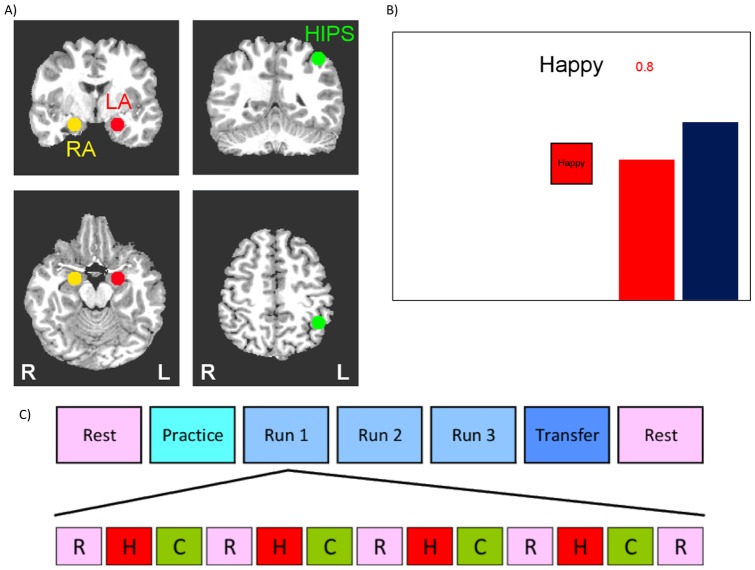
Unmedicated MDD subjects were assigned to receive rtfMRI-nf from either left amygdala (LA; experimental group, n = 14) or the horizontal segment of the intraparietal sulcus (HIPS; control group, n = 7) and instructed to contemplate happy autobiographical memories (AMs) to raise the level of a bar representing the hemodynamic signal from the target region to a target level. This 40s Happy condition alternated with 40s blocks of rest and counting backwards. A final Transfer run without neurofeedback information was included.
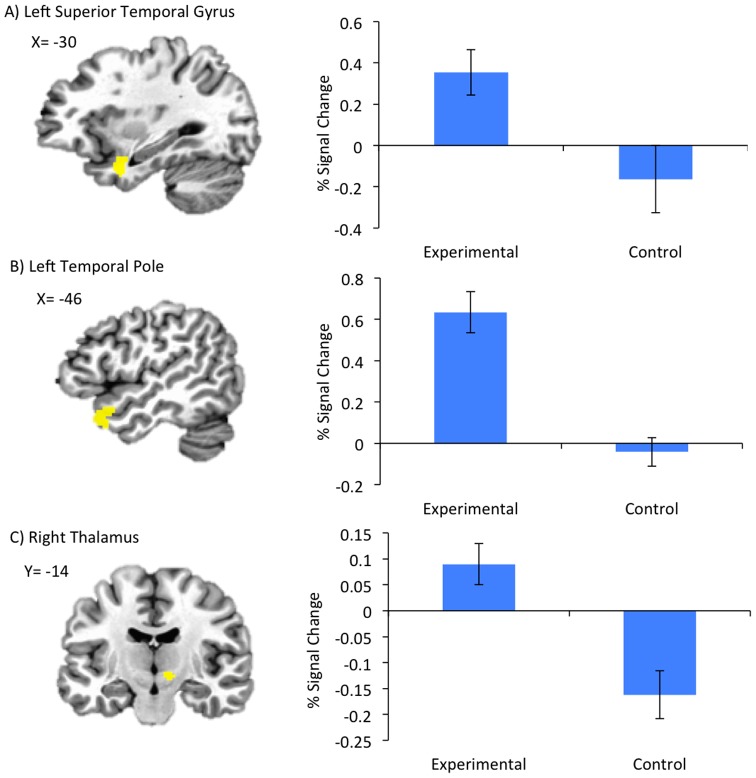
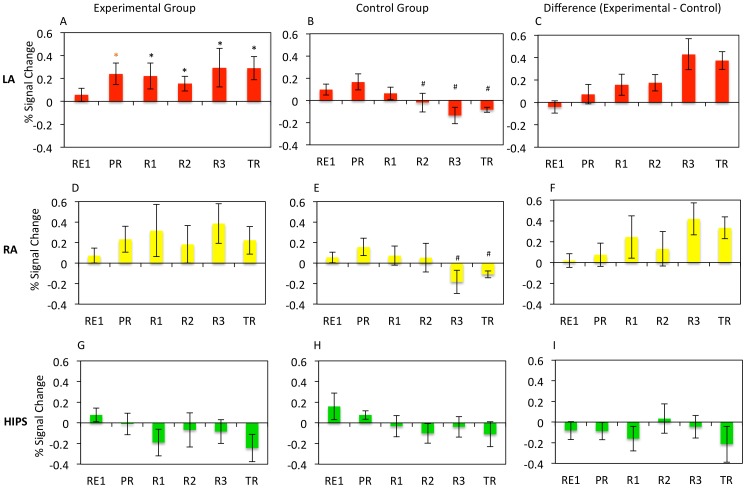
Participants in the experimental group upregulated their amygdala responses during positive AM recall. Significant pre-post scan decreases in anxiety ratings and increases in happiness ratings were evident in the experimental versus control group. A whole brain analysis showed that during the transfer run, participants in the experimental group had increased activity compared to the control group in left superior temporal gyrus and temporal polar cortex, and right thalamus.
Using rtfMRI-nf from the left amygdala during recall of positive AMs, depressed subjects were able to self-regulate their amygdala response, resulting in improved mood. Results from this proof-of-concept study suggest that rtfMRI-nf training with positive AM recall holds potential as a novel therapeutic approach in the treatment of depression.
在重度抑郁症(MDD)中,杏仁核对积极刺激的血流动力学反应减弱,且在症状缓解时恢复正常。实时功能磁共振成像神经反馈(rtfMRI-nf)提供了一种调节该区域活动的非侵入性方法。我们研究了抑郁患者是否能够使用rtfMRI-nf来增强杏仁核对积极自传体记忆的反应,以及这种能力是否会改变症状严重程度。
未接受药物治疗的MDD受试者被分配接受来自左侧杏仁核(LA;实验组,n = 14)或顶内沟水平段(HIPS;对照组,n = 7)的rtfMRI-nf,并被指示思考快乐的自传体记忆(AMs),以将代表目标区域血流动力学信号的条形图水平提高到目标水平。这个40秒的“快乐”状态与40秒的休息和倒数状态交替进行。最后包括一次无神经反馈信息的转移运行。
实验组的参与者在积极的AM回忆期间上调了他们的杏仁核反应。与对照组相比,实验组在扫描前后焦虑评分显著降低,快乐评分显著增加。全脑分析表明,在转移运行期间,实验组的参与者与对照组相比,左侧颞上回、颞极皮质和右侧丘脑的活动增加。
在回忆积极的AMs期间使用来自左侧杏仁核的rtfMRI-nf,抑郁受试者能够自我调节他们的杏仁核反应,从而改善情绪。这项概念验证研究的结果表明,结合积极AM回忆的rtfMRI-nf训练作为一种治疗抑郁症的新型治疗方法具有潜力。