UK CRC Centre for Diet and Activity Research, MRC Epidemiology Unit, University of Cambridge School of Clinical Medicine, Institute of Metabolic Science, Cambridge CB2 0QQ, UK.
BMJ. 2014 Feb 13;348:g425. doi: 10.1136/bmj.g425.
To model the impacts of the bicycle sharing system in London on the health of its users.
Health impact modelling and evaluation, using a stochastic simulation model.
Central and inner London, England.
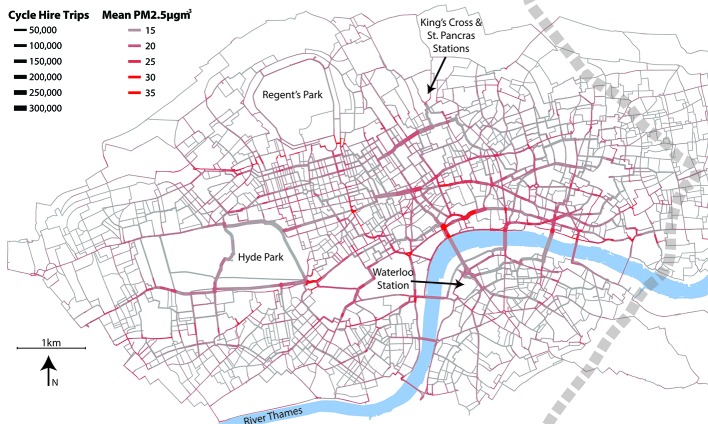
Total population operational registration and usage data for the London cycle hire scheme (collected April 2011-March 2012), surveys of cycle hire users (collected 2011), and London data on travel, physical activity, road traffic collisions, and particulate air pollution (PM2.5, (collected 2005-12).
578,607 users of the London cycle hire scheme, aged 14 years and over, with an estimated 78% of travel time accounted for by users younger than 45 years.
Change in lifelong disability adjusted life years (DALYs) based on one year impacts on incidence of disease and injury, modelled through medium term changes in physical activity, road traffic injuries, and exposure to air pollution.
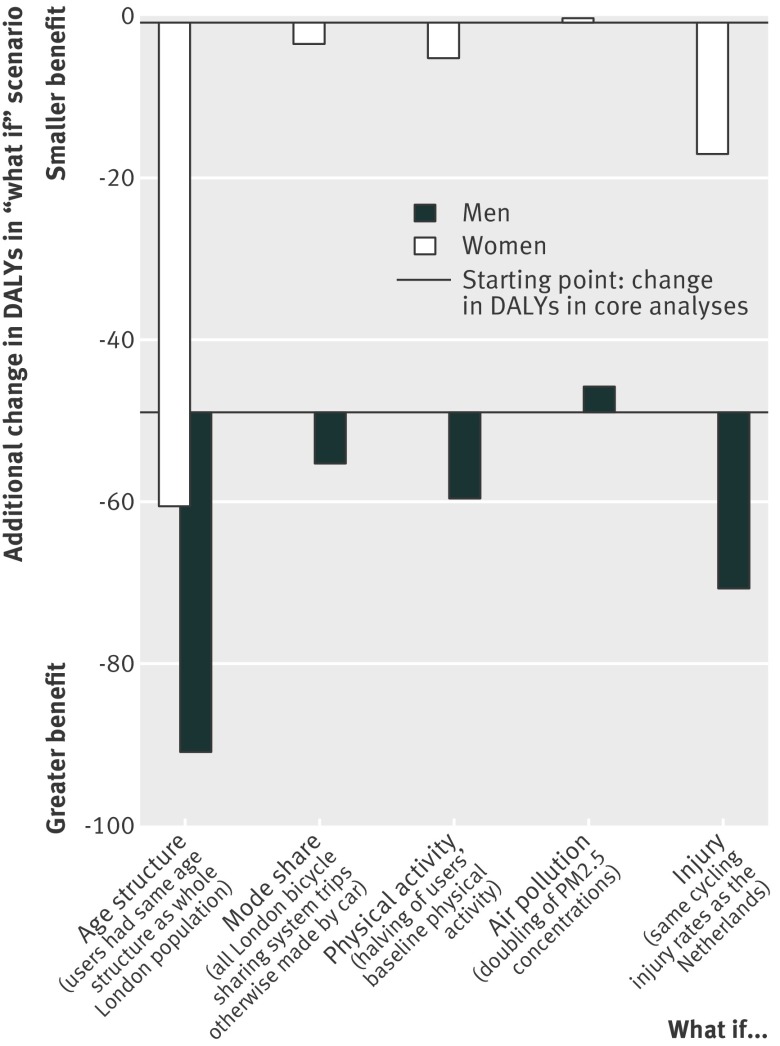
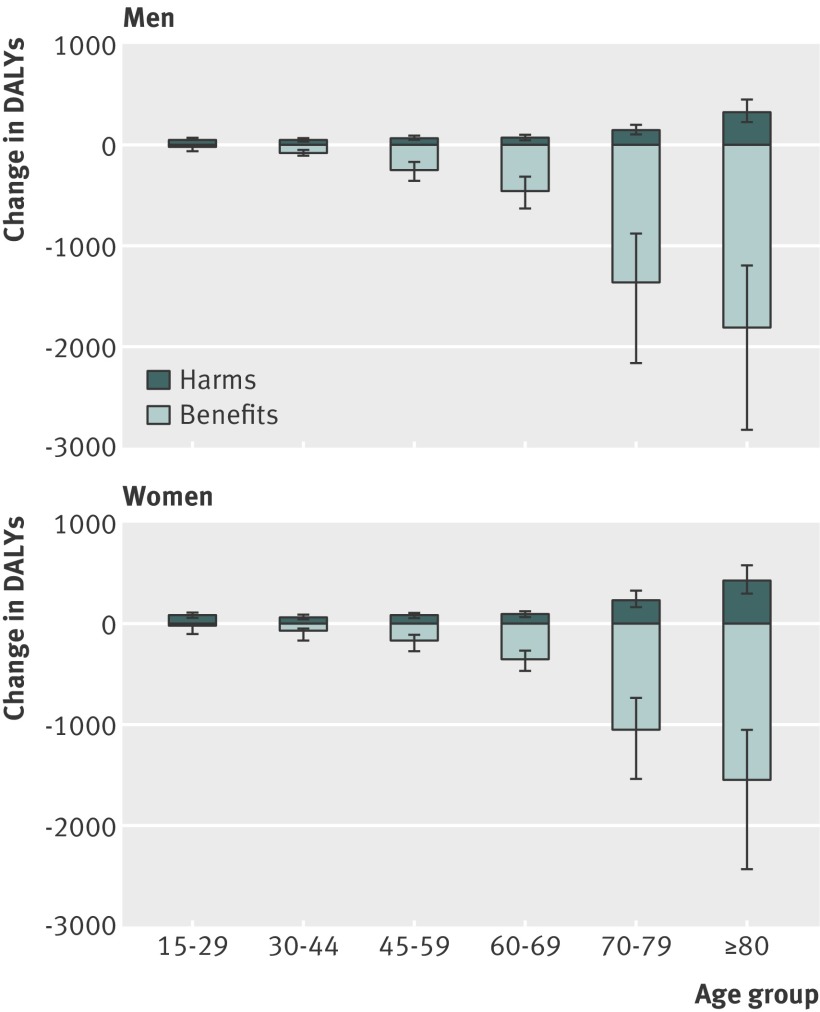
Over the year examined the users made 7.4 million cycle hire trips (estimated 71% of cycling time by men). These trips would mostly otherwise have been made on foot (31%) or by public transport (47%). To date there has been a trend towards fewer fatalities and injuries than expected on cycle hire bicycles. Using these observed injury rates, the population benefits from the cycle hire scheme substantially outweighed harms (net change -72 DALYs (95% credible interval -110 to -43) among men using cycle hire per accounting year; -15 (-42 to -6) among women; note that negative DALYs represent a health benefit). When we modelled cycle hire injury rates as being equal to background rates for all cycling in central London, these benefits were smaller and there was no evidence of a benefit among women (change -49 DALYs (-88 to -17) among men; -1 DALY (-27 to 12) among women). This sex difference largely reflected higher road collision fatality rates for female cyclists. At older ages the modelled benefits of cycling were much larger than the harms. Using background injury rates in the youngest age group (15 to 29 years), the medium term benefits and harms were both comparatively small and potentially negative.
London's bicycle sharing system has positive health impacts overall, but these benefits are clearer for men than for women and for older users than for younger users. The potential benefits of cycling may not currently apply to all groups in all settings.
建立伦敦公共自行车系统对使用者健康影响的模型。
健康影响建模与评估,采用随机模拟模型。
英国伦敦市中心和内伦敦区。
伦敦自行车租赁计划的总人群运营登记和使用数据(2011 年 4 月至 2012 年 3 月收集),自行车租赁使用者调查(2011 年收集),以及伦敦关于出行、体力活动、道路交通碰撞和颗粒物空气污染(PM2.5,2005-12 年收集)的数据。
578607 名使用伦敦公共自行车系统的用户,年龄在 14 岁及以上,其中 78%的出行时间是 45 岁以下的用户。
基于疾病和伤害发生率的一年影响,通过中期体力活动、道路交通伤害和暴露于空气污染的变化,对终生伤残调整生命年(DALYs)的变化进行建模。
在研究期间,使用者共进行了 740 万次自行车租赁出行(估计男性的自行车出行时间占 71%)。这些出行原本大多是步行(31%)或乘坐公共交通(47%)。到目前为止,自行车租赁出行的死亡和受伤人数低于预期。使用这些观察到的伤害率,公共自行车租赁系统给使用者带来的收益大大超过了危害(男性使用者每会计年度每辆自行车净收益为-72 个 DALYs(95%可信区间-110 至-43);女性为-15(-42 至-6);注意,负的 DALYs 表示健康获益)。当我们将自行车租赁出行的伤害率建模为伦敦市中心所有自行车骑行的背景率时,这些收益较小,而且女性没有获益的迹象(男性为-49 个 DALYs(-88 至-17);女性为-1 个 DALY(-27 至 12))。这种性别差异主要反映了女性自行车骑手更高的道路碰撞死亡率。在年龄较大的人群中,自行车骑行的中短期获益远大于危害。在最年轻的年龄组(15 至 29 岁)中使用背景伤害率,中短期的获益和危害都相对较小,而且可能是负面的。
伦敦公共自行车系统对健康有积极影响,但对男性的影响比对女性的影响更明显,对年龄较大的使用者的影响比对年龄较小的使用者的影响更明显。在某些情况下,自行车出行的潜在好处可能不适用于所有人群。