Centre for Performance Science, Royal College of Music London, UK.
Department of Research and Development, Conservatory of Southern Switzerland Lugano, Switzerland.
Front Psychol. 2014 Feb 4;5:25. doi: 10.3389/fpsyg.2014.00025. eCollection 2014.
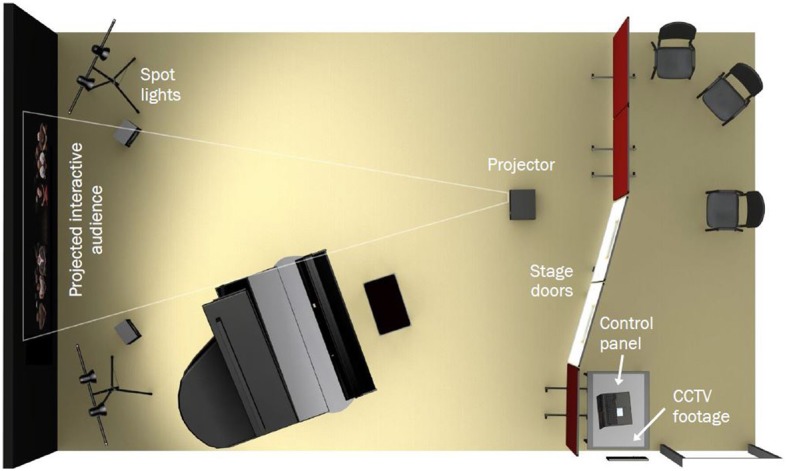
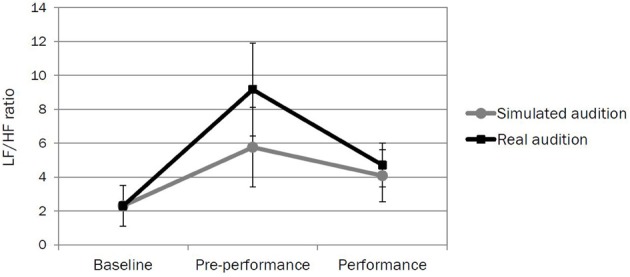
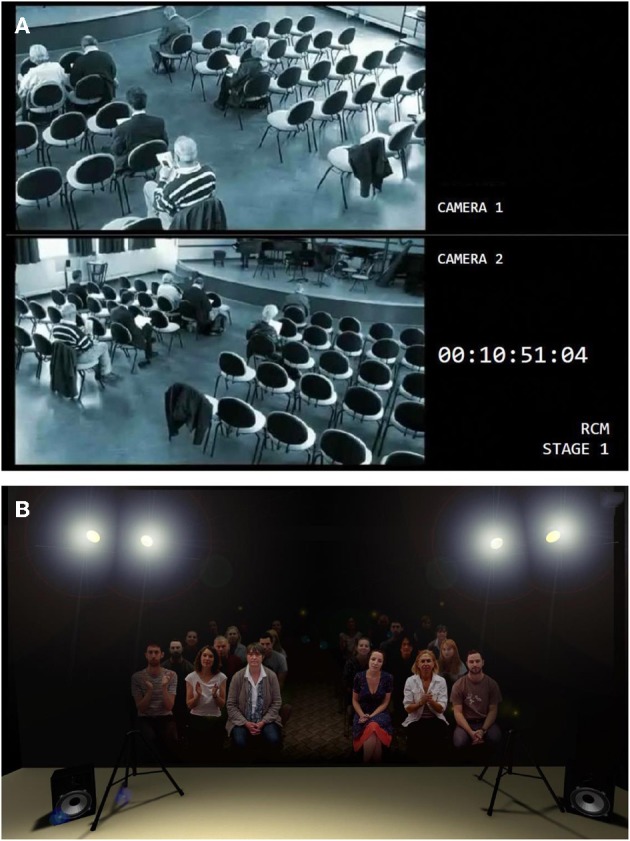
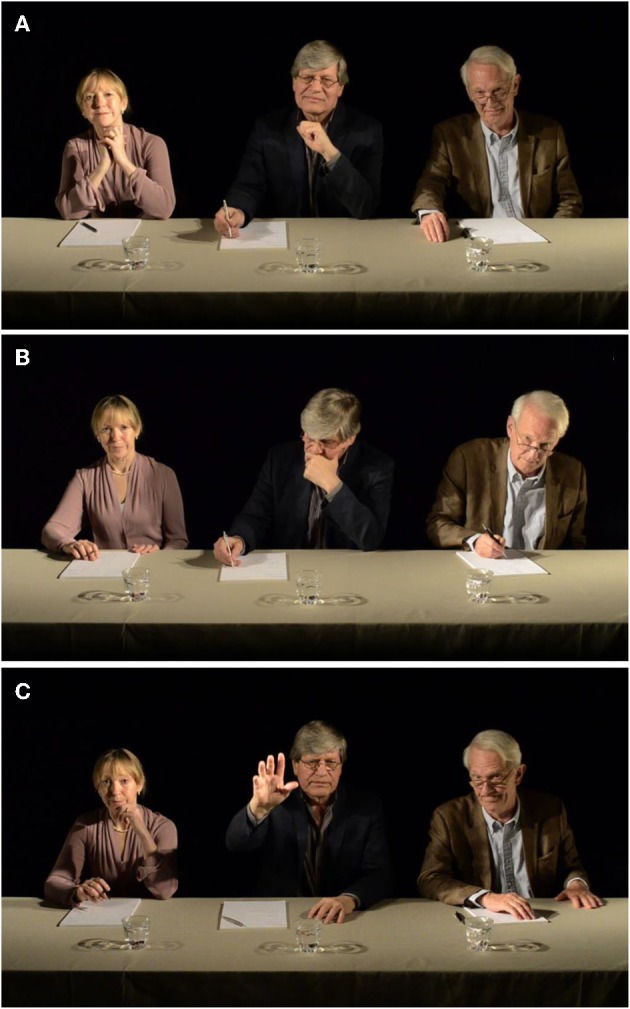
Musicians typically rehearse far away from their audiences and in practice rooms that differ significantly from the concert venues in which they aspire to perform. Due to the high costs and inaccessibility of such venues, much current international music training lacks repeated exposure to realistic performance situations, with students learning all too late (or not at all) how to manage performance stress and the demands of their audiences. Virtual environments have been shown to be an effective training tool in the fields of medicine and sport, offering practitioners access to real-life performance scenarios but with lower risk of negative evaluation and outcomes. The aim of this research was to design and test the efficacy of simulated performance environments in which conditions of "real" performance could be recreated. Advanced violin students (n = 11) were recruited to perform in two simulations: a solo recital with a small virtual audience and an audition situation with three "expert" virtual judges. Each simulation contained back-stage and on-stage areas, life-sized interactive virtual observers, and pre- and post-performance protocols designed to match those found at leading international performance venues. Participants completed a questionnaire on their experiences of using the simulations. Results show that both simulated environments offered realistic experience of performance contexts and were rated particularly useful for developing performance skills. For a subset of 7 violinists, state anxiety and electrocardiographic data were collected during the simulated audition and an actual audition with real judges. Results display comparable levels of reported state anxiety and patterns of heart rate variability in both situations, suggesting that responses to the simulated audition closely approximate those of a real audition. The findings are discussed in relation to their implications, both generalizable and individual-specific, for performance training.
音乐家通常在远离观众的地方和与他们渴望表演的演奏厅有很大差异的练习室进行排练。由于这些场地的成本高昂且难以接近,因此目前许多国际音乐培训都缺乏对现实表演情况的反复接触,学生们学习如何管理表演压力和观众的需求为时已晚(或根本没有)。虚拟环境已被证明是医学和运动领域的有效培训工具,为从业者提供了接触真实表演场景的机会,但风险较低,不会受到负面评价和结果的影响。本研究旨在设计和测试模拟表演环境的效果,以重新创造“真实”表演的条件。高级小提琴学生(n=11)被招募来参加两种模拟表演:独奏音乐会,有一个小型虚拟观众;以及面试情景,有三位“专家”虚拟评委。每个模拟表演都包含后台和前台区域、真人大小的互动虚拟观察者,以及预演和后演协议,旨在与主要的国际表演场地相匹配。参与者完成了一份关于他们使用模拟表演体验的调查问卷。结果表明,两种模拟环境都提供了真实的表演环境体验,并且被评为特别有助于发展表演技能。对于 7 位小提琴手的一个子集,在模拟面试和与真实评委的实际面试中收集了状态焦虑和心电图数据。结果显示,在两种情况下,报告的状态焦虑和心率变异性模式都具有可比性,这表明对模拟面试的反应与实际面试的反应非常相似。研究结果从普遍和个体特定的角度讨论了其对表演训练的影响。