ERC Advanced Investigator Grant Research Group, Institute for Physiological Chemistry, University Medical Center, Johannes Gutenberg University, Duesbergweg 6, D-55128 Mainz, Germany.
NanotecMARIN GmbH, 55128 Mainz, Germany.
Mar Drugs. 2014 Feb 21;12(2):1131-47. doi: 10.3390/md12021131.
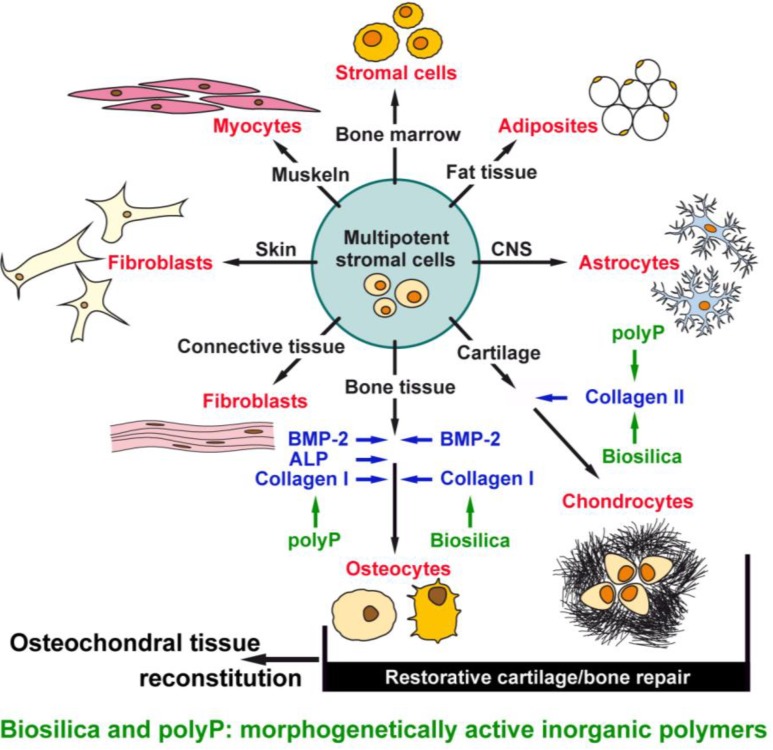
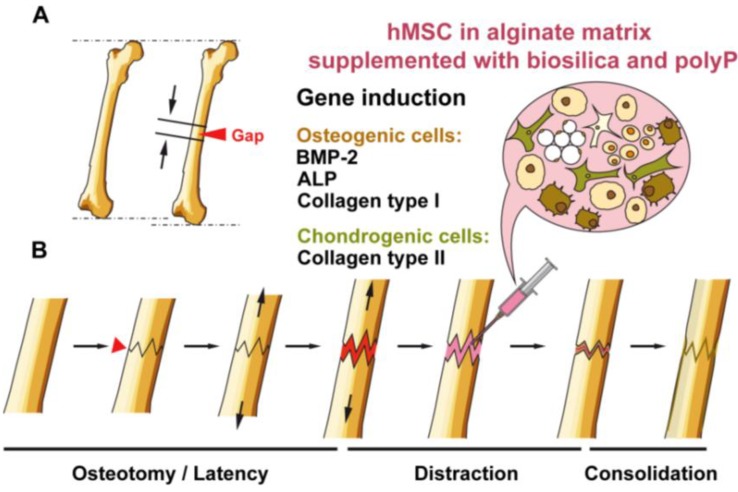
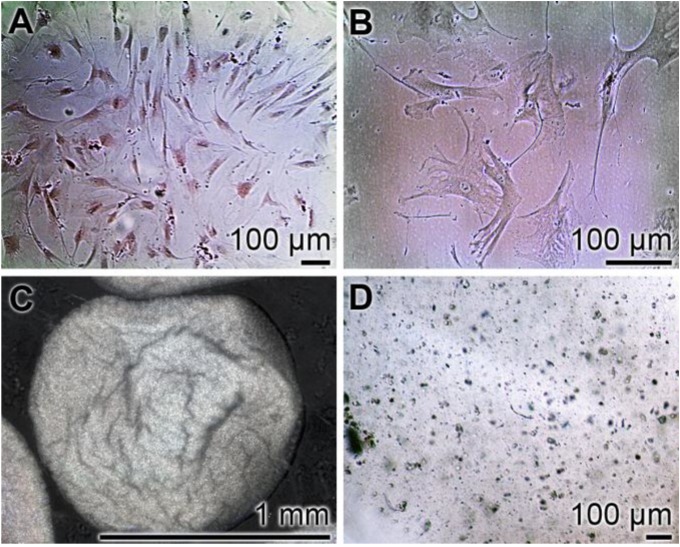
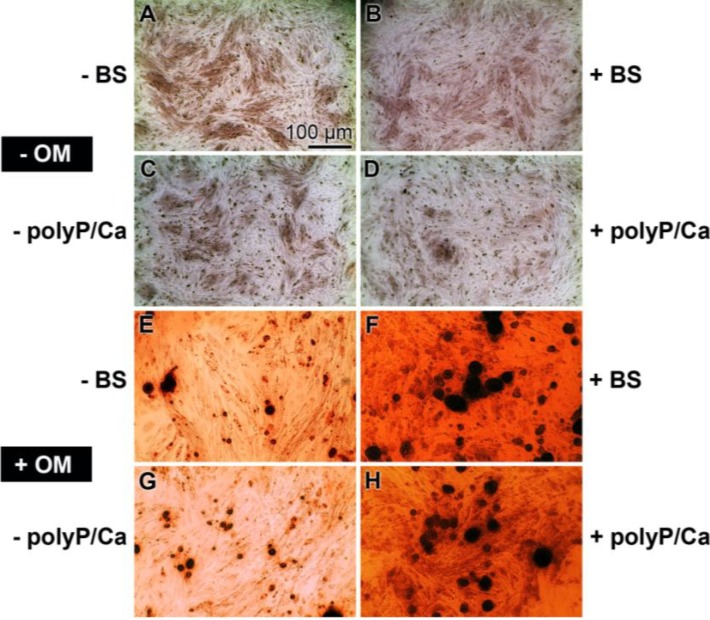
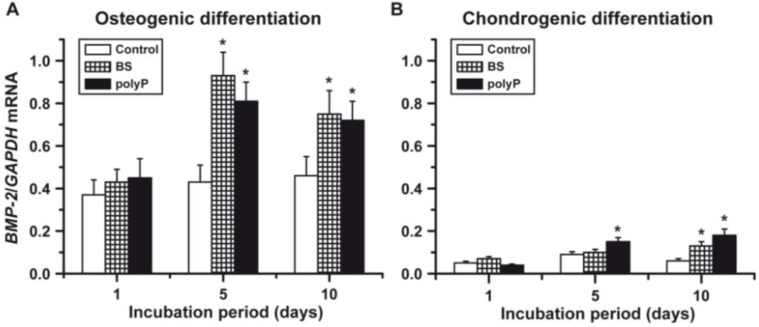
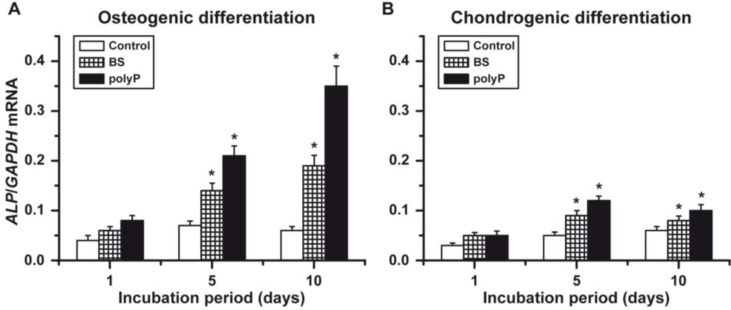
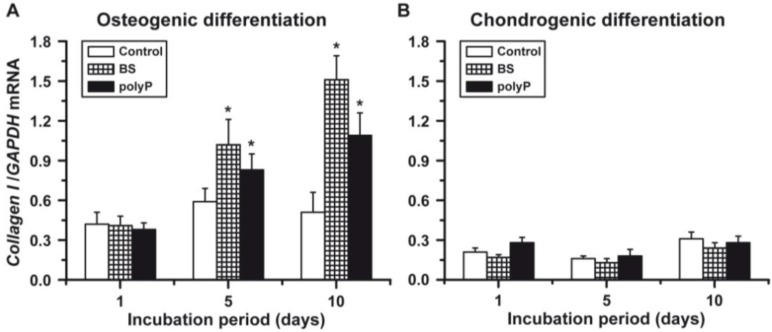
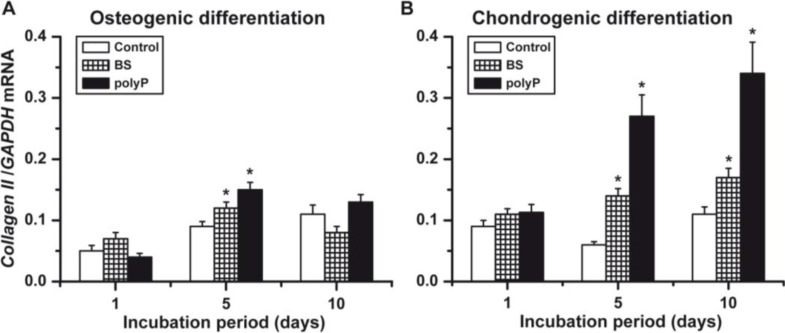
The two marine inorganic polymers, biosilica (BS), enzymatically synthesized from ortho-silicate, and polyphosphate (polyP), a likewise enzymatically synthesized polymer consisting of 10 to >100 phosphate residues linked by high-energy phosphoanhydride bonds, have previously been shown to display a morphogenetic effect on osteoblasts. In the present study, the effect of these polymers on the differential differentiation of human multipotent stromal cells (hMSC), mesenchymal stem cells, that had been encapsulated into beads of the biocompatible plant polymer alginate, was studied. The differentiation of the hMSCs in the alginate beads was directed either to the osteogenic cell lineage by exposure to an osteogenic medium (mineralization activation cocktail; differentiation into osteoblasts) or to the chondrogenic cell lineage by incubating in chondrocyte differentiation medium (triggering chondrocyte maturation). Both biosilica and polyP, applied as Ca²⁺ salts, were found to induce an increased mineralization in osteogenic cells; these inorganic polymers display also morphogenetic potential. The effects were substantiated by gene expression studies, which revealed that biosilica and polyP strongly and significantly increase the expression of bone morphogenetic protein 2 (BMP-2) and alkaline phosphatase (ALP) in osteogenic cells, which was significantly more pronounced in osteogenic versus chondrogenic cells. A differential effect of the two polymers was seen on the expression of the two collagen types, I and II. While collagen Type I is highly expressed in osteogenic cells, but not in chondrogenic cells after exposure to biosilica or polyP, the upregulation of the steady-state level of collagen Type II transcripts in chondrogenic cells is comparably stronger than in osteogenic cells. It is concluded that the two polymers, biosilica and polyP, are morphogenetically active additives for the otherwise biologically inert alginate polymer. It is proposed that alginate, supplemented with polyP and/or biosilica, is a suitable biomaterial that promotes the growth and differentiation of hMSCs and might be beneficial for application in 3D tissue printing of hMSCs and for the delivery of hMSCs in fractures, surgically created during distraction osteogenesis.
两种海洋无机聚合物,生物硅(BS),由正硅酸酯酶合成,以及多磷酸盐(polyP),一种同样由酶合成的聚合物,由通过高能磷酸酐键连接的 10 到 >100 个磷酸盐残基组成,先前已显示对成骨细胞具有形态发生作用。在本研究中,研究了这些聚合物对包封在生物相容性植物聚合物藻酸盐珠中的人多能基质细胞(hMSC)、间充质干细胞的差异分化的影响。通过暴露于成骨培养基(矿化激活鸡尾酒;分化为成骨细胞)或在软骨细胞分化培养基中孵育(触发软骨细胞成熟),将 hMSC 在藻酸盐珠中的分化导向成骨细胞谱系或软骨细胞谱系。发现作为 Ca²⁺盐施加的生物硅和多磷酸盐都能诱导成骨细胞中矿化增加;这些无机聚合物也具有形态发生潜力。基因表达研究证实了这一点,该研究表明生物硅和多磷酸盐强烈且显著增加成骨细胞中骨形态发生蛋白 2(BMP-2)和碱性磷酸酶(ALP)的表达,在成骨细胞中比在成软骨细胞中更为明显。两种聚合物的作用在两种胶原蛋白类型 I 和 II 的表达上有所不同。虽然胶原蛋白 I 在暴露于生物硅或多磷酸盐后在成骨细胞中高度表达,但不在成软骨细胞中表达,而在软骨细胞中,胶原蛋白 II 转录本的稳态水平上调则比在成骨细胞中更强。结论是,两种聚合物,生物硅和多磷酸盐,是否则为生物惰性藻酸盐聚合物的形态发生活性添加剂。建议补充多磷酸盐和/或生物硅的藻酸盐是一种合适的生物材料,可促进 hMSC 的生长和分化,并可能有益于 3D hMSC 组织打印和在分散性成骨术中用于递送 hMSC。