Medina Benavente Johan Jaime, Mogami Hideo, Sakurai Takashi, Sawada Kazuaki
Department of Electrical and Electronic Information Engineering, Toyohashi University of Technology, Toyohashi, Japan ; Core Research for Evolutional Science and Technology Program, Japan Science and Technology Agency, Tokyo, Japan.
Core Research for Evolutional Science and Technology Program, Japan Science and Technology Agency, Tokyo, Japan ; Faculty of Health Promotional Sciences, Hamamatsu University, Hamamatsu, Japan.
PLoS One. 2014 Feb 27;9(2):e90189. doi: 10.1371/journal.pone.0090189. eCollection 2014.
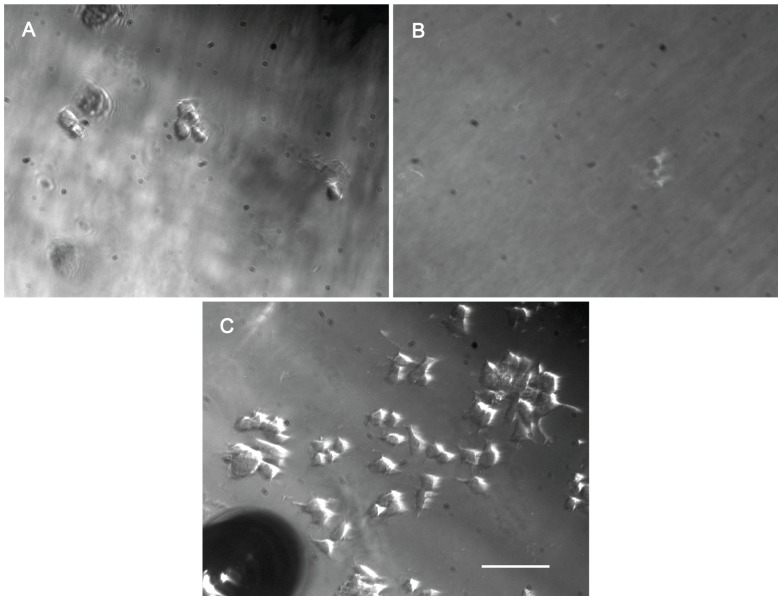
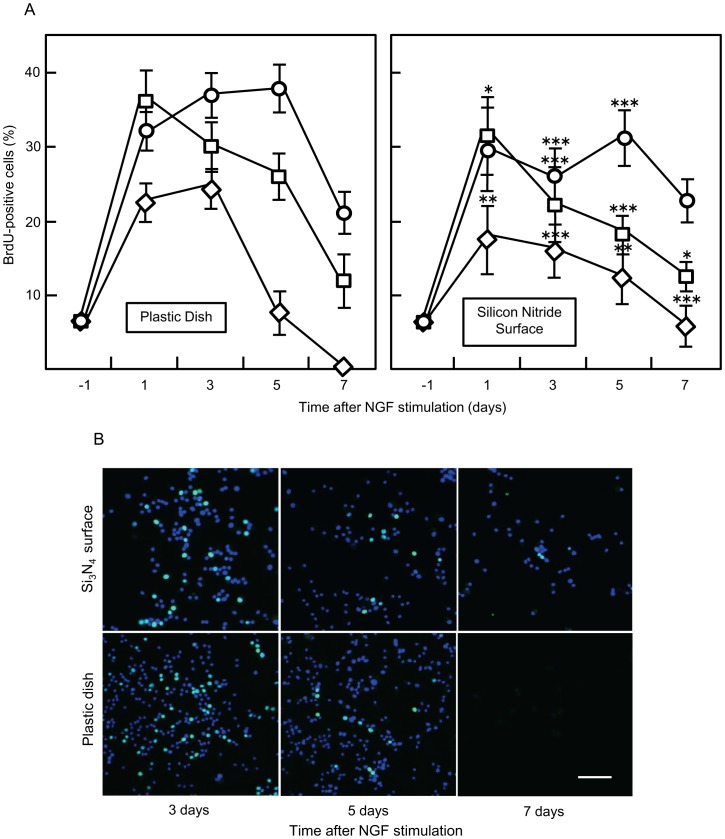
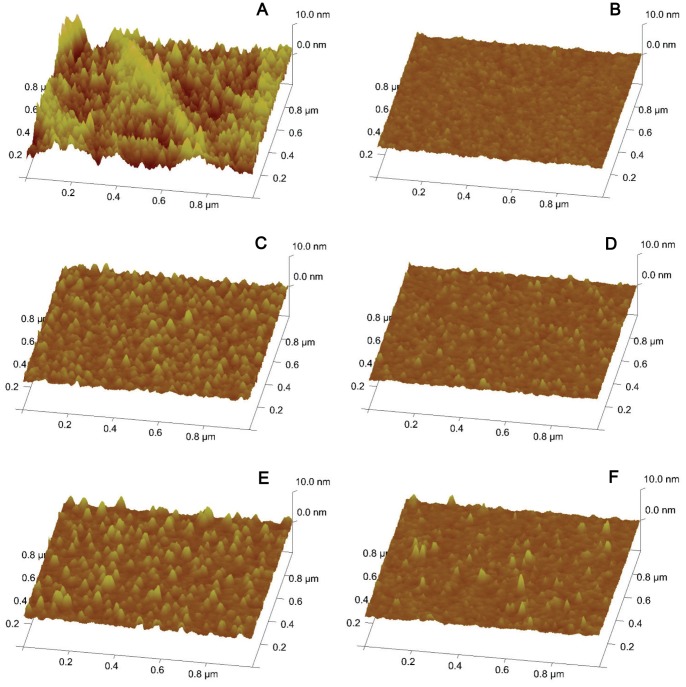
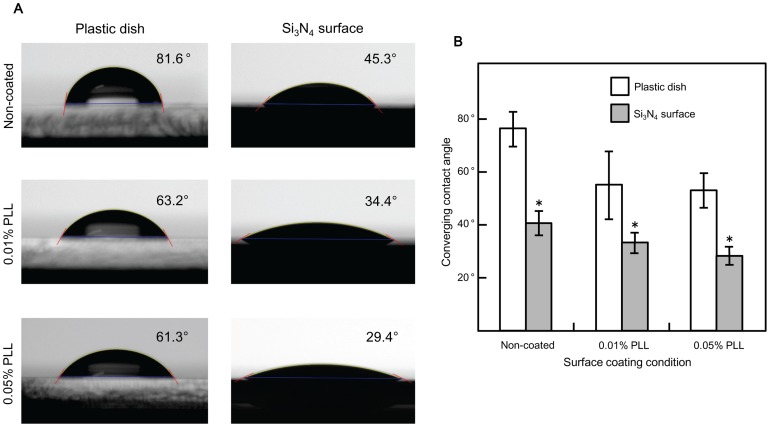
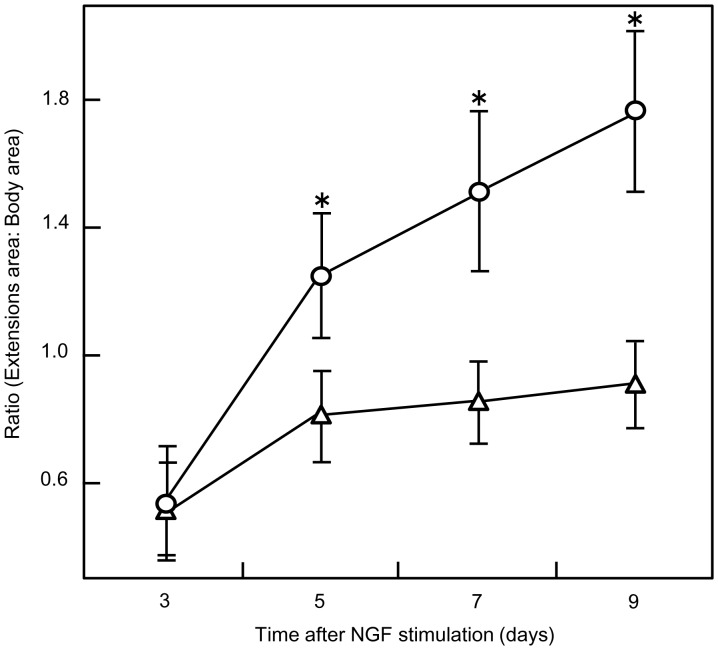
Silicon nitride is a biocompatible material that is currently used as an interfacial surface between cells and large-scale integration devices incorporating ion-sensitive field-effect transistor technology. Here, we investigated whether a poly-L-lysine coated silicon nitride surface is suitable for the culture of PC12 cells, which are widely used as a model for neural differentiation, and we characterized their interaction based on cell behavior when seeded on the tested material. The coated surface was first examined in terms of wettability and topography using contact angle measurements and atomic force microscopy and then, conditioned silicon nitride surface was used as the substrate for the study of PC12 cell culture properties. We found that coating silicon nitride with poly-L-lysine increased surface hydrophilicity and that exposing this coated surface to an extracellular aqueous environment gradually decreased its roughness. When PC12 cells were cultured on a coated silicon nitride surface, adhesion and spreading were facilitated, and the cells showed enhanced morphological differentiation compared to those cultured on a plastic culture dish. A bromodeoxyuridine assay demonstrated that, on the coated silicon nitride surface, higher proportions of cells left the cell cycle, remained in a quiescent state and had longer survival times. Therefore, our study of the interaction of the silicon nitride surface with PC12 cells provides important information for the production of devices that need to have optimal cell culture-supporting properties in order to be used in the study of neuronal functions.
氮化硅是一种生物相容性材料,目前用作细胞与采用离子敏感场效应晶体管技术的大规模集成器件之间的界面。在此,我们研究了聚-L-赖氨酸包被的氮化硅表面是否适合用于培养PC12细胞(该细胞被广泛用作神经分化模型),并基于接种在测试材料上时的细胞行为对它们之间的相互作用进行了表征。首先使用接触角测量和原子力显微镜对包被表面的润湿性和形貌进行了检测,然后将经预处理的氮化硅表面用作研究PC12细胞培养特性的底物。我们发现用聚-L-赖氨酸包被氮化硅可增加表面亲水性,并且将该包被表面暴露于细胞外水环境会使其粗糙度逐渐降低。当在包被的氮化硅表面培养PC12细胞时,细胞的黏附和铺展得到促进,并且与在塑料培养皿上培养的细胞相比,这些细胞表现出更强的形态分化。一项溴脱氧尿苷检测表明,在包被的氮化硅表面,更高比例的细胞退出细胞周期,保持静止状态且存活时间更长。因此,我们对氮化硅表面与PC12细胞相互作用的研究为生产在神经元功能研究中需要具备最佳细胞培养支持特性的器件提供了重要信息。