Jonach Beata, Boye Mette, Stockmarr Anders, Jensen Tim Kåre
National Veterinary Institute, Technical University of Denmark, Bülowsvej 27, Frederiksberg 1870, Denmark.
BMC Vet Res. 2014 Mar 14;10:68. doi: 10.1186/1746-6148-10-68.
Neonatal diarrhea is a multifactorial condition commonly present on pig farms and leads to economic losses due to increased morbidity and mortality of piglets. Immature immune system and lack of fully established microbiota at birth predispose neonatal piglets to infection with enteric pathogens. The microorganisms that for decades have been associated with enteritis and diarrhea in suckling piglets are: rotavirus A, coronavirus, enterotoxigenic Escherichia coli (ETEC), Clostridium perfringens type C, Cryptosporidium spp., Giardia spp., Cystoisospora suis and Strongyloides ransomi. However, in recent years, the pig industry has experienced an increased number of neonatal diarrhea cases in which the above mentioned pathogens are no longer detected. Potentially pathogenic bacteria have recently received focus in the research on the possible etiology of neonatal diarrhea not caused by common pathogens. The primary aim of this study was to investigate the role of E. coli, Enterococcus spp., C. perfringens and C. difficile in the pathogenesis of neonatal porcine diarrhea with no established casual agents. Fluorescence in situ hybridization with oligonucleotide probes was applied on the fixed intestinal tissue samples from 51 diarrheic and 50 non-diarrheic piglets collected from four Danish farms during outbreaks of neonatal diarrhea not caused by well-known enteric pathogens. Furthermore, an association between the presence of these bacteria and histological lesions was evaluated.
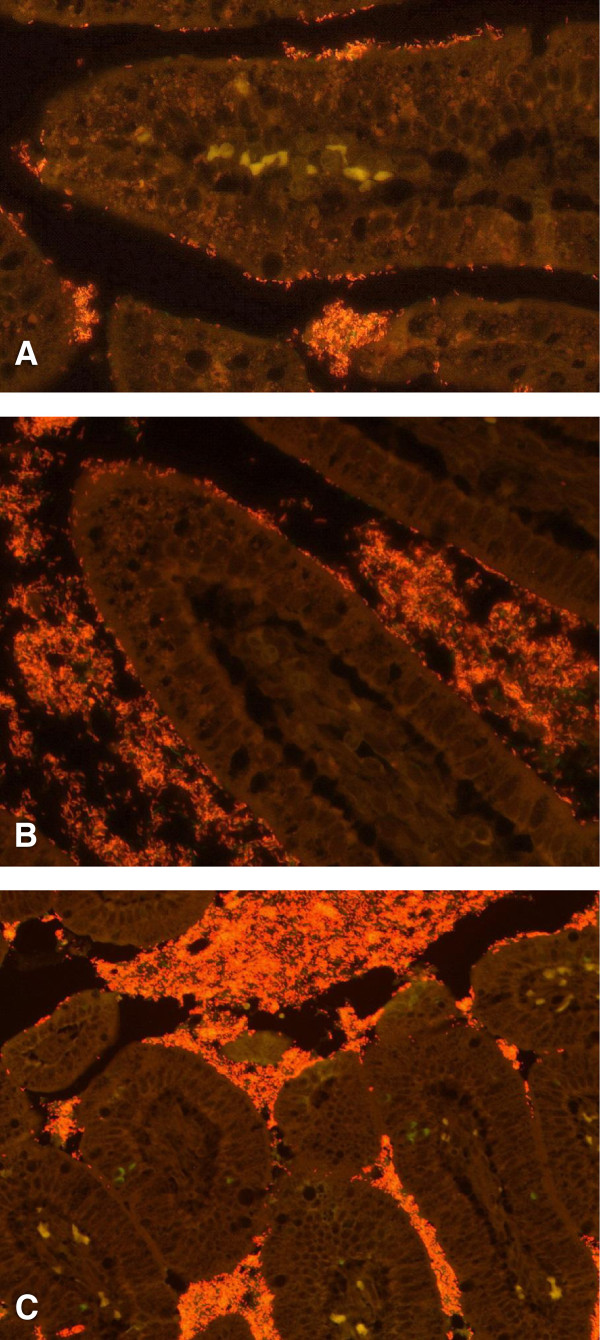
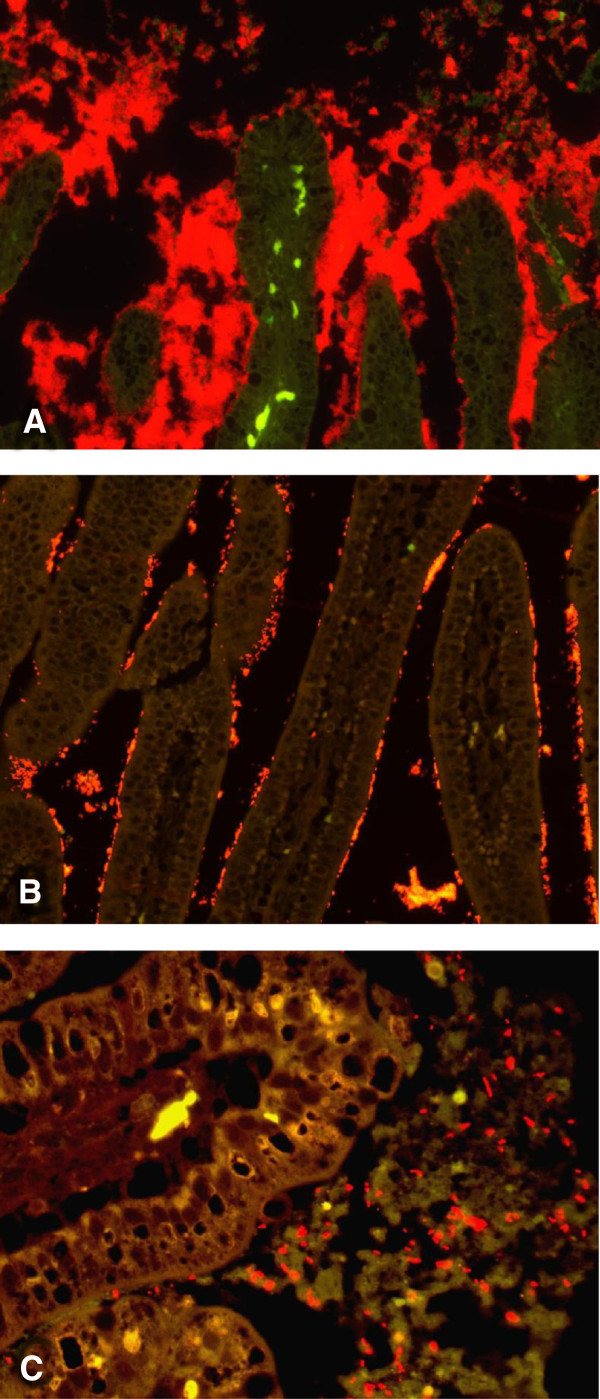
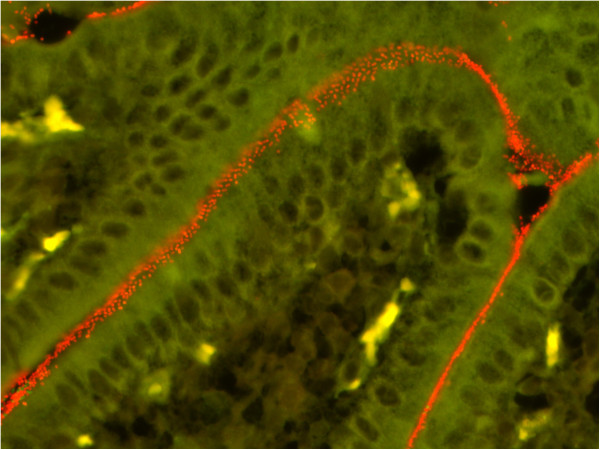
The prevalence of fluorescence signals specific for E. coli, C. perfringens and C. difficile was similar in both groups of piglets. However, Enterococcus spp. was primarily detected in the diarrheic piglets. Furthermore, adherent bacteria were detected in 37 % diarrheic and 14 % non-diarrheic piglets. These bacteria were identified as E. coli and Enterococcus spp. and their presence in the intestinal mucosa was associated with histopathological changes.
The results of this study showed that simultaneous colonization of the intestinal mucosa by adherent non-ETEC E. coli and Enterococcus spp. can be involved in the pathogenesis of neonatal porcine diarrhea. These bacteria should be considered in diagnosis of diarrhea in piglets, when detection of common, well-known enteric agents is unsuccessful.
新生仔猪腹泻是一种在养猪场普遍存在的多因素疾病,由于仔猪发病率和死亡率增加而导致经济损失。新生仔猪免疫系统不成熟且出生时缺乏完全建立的微生物群,使其易感染肠道病原体。几十年来,与哺乳仔猪肠炎和腹泻相关的微生物有:A型轮状病毒、冠状病毒、产肠毒素大肠杆菌(ETEC)、C型产气荚膜梭菌、隐孢子虫属、贾第虫属、猪等孢球虫和兰氏类圆线虫。然而,近年来,养猪业中新生仔猪腹泻病例增多,而上述病原体却未被检测到。潜在病原菌最近在关于非常见病原体引起的新生仔猪腹泻可能病因的研究中受到关注。本研究的主要目的是调查大肠杆菌、肠球菌属、产气荚膜梭菌和艰难梭菌在无明确病因的新生仔猪腹泻发病机制中的作用。在丹麦四个农场爆发由非知名肠道病原体引起的新生仔猪腹泻期间,对从51头腹泻仔猪和50头非腹泻仔猪采集的固定肠道组织样本应用寡核苷酸探针进行荧光原位杂交。此外,评估了这些细菌的存在与组织学病变之间的关联。
两组仔猪中,针对大肠杆菌、产气荚膜梭菌和艰难梭菌的荧光信号发生率相似。然而,肠球菌属主要在腹泻仔猪中检测到。此外,在37%的腹泻仔猪和14%的非腹泻仔猪中检测到黏附细菌。这些细菌被鉴定为大肠杆菌和肠球菌属,它们在肠黏膜中的存在与组织病理学变化相关。
本研究结果表明,黏附性非ETEC大肠杆菌和肠球菌属同时定植于肠黏膜可能参与新生仔猪腹泻的发病机制。当检测常见的知名肠道病原体未成功时,在仔猪腹泻诊断中应考虑这些细菌。