Thurston George D, Ito Kazuhiko, Lall Ramona
New York University, School of Medicine, Department of Environmental Medicine, 57 Old Forge Rd, Tuxedo, NY 10987.
Atmos Environ (1994). 2011 Aug;45(24):3924-3936. doi: 10.1016/j.atmosenv.2011.04.070.
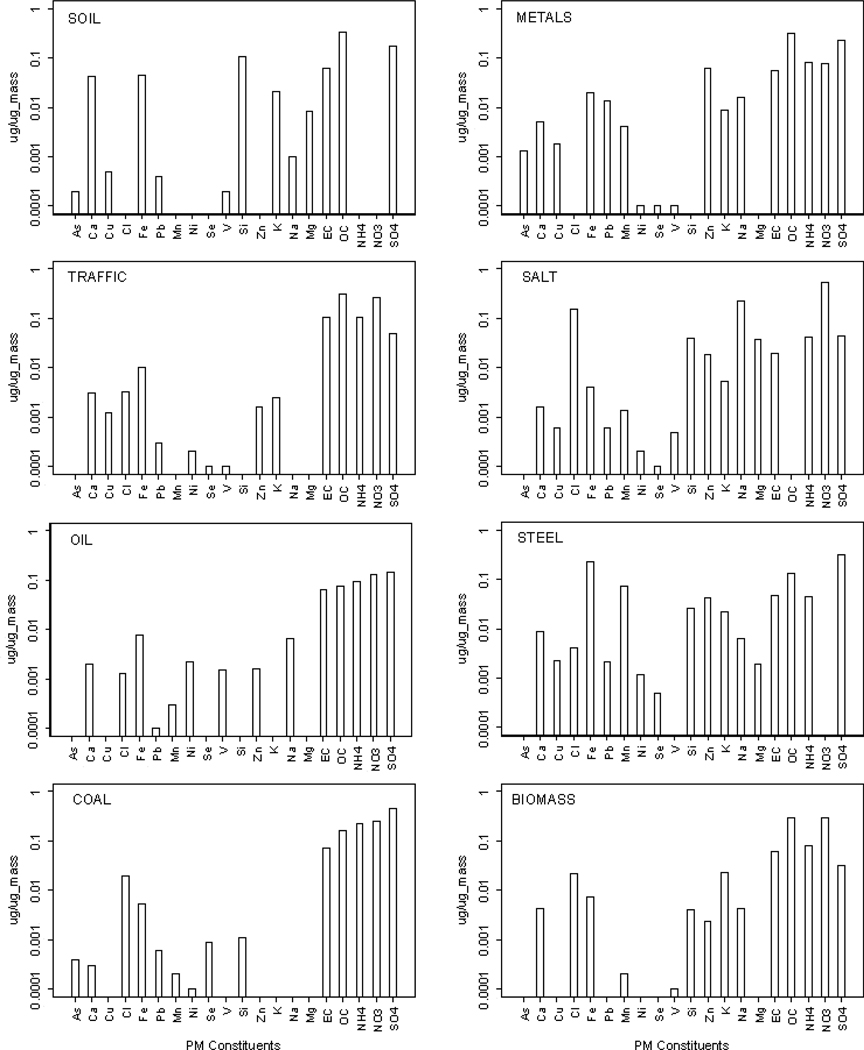
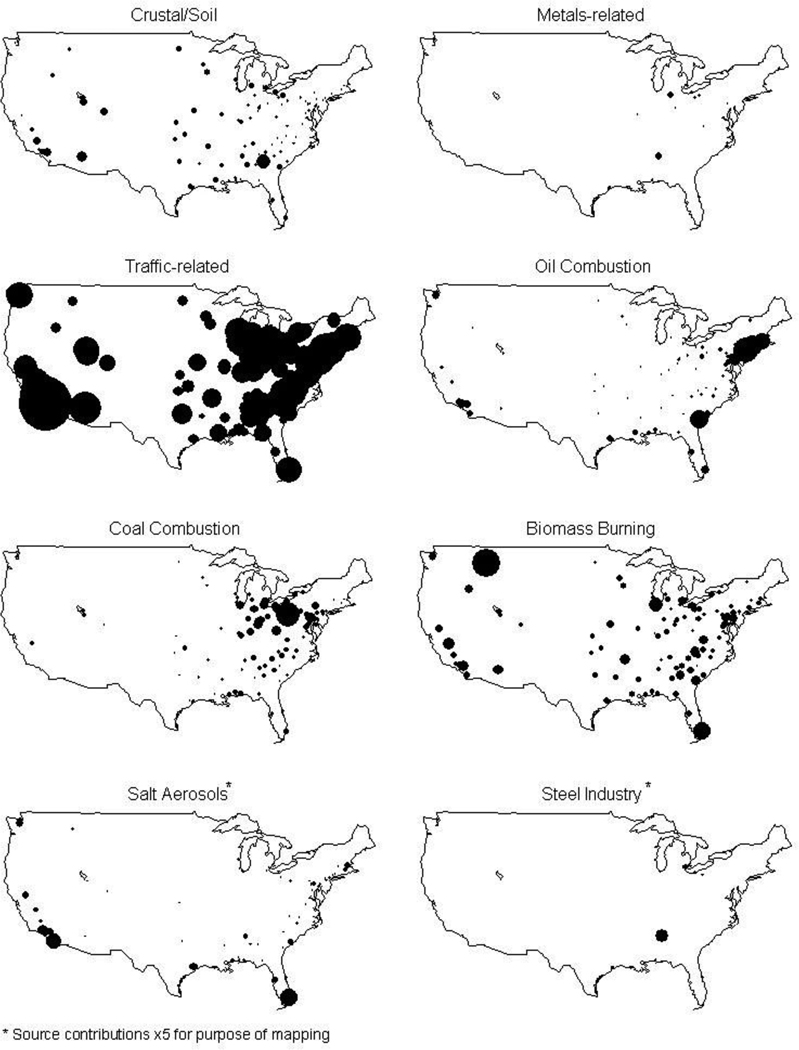
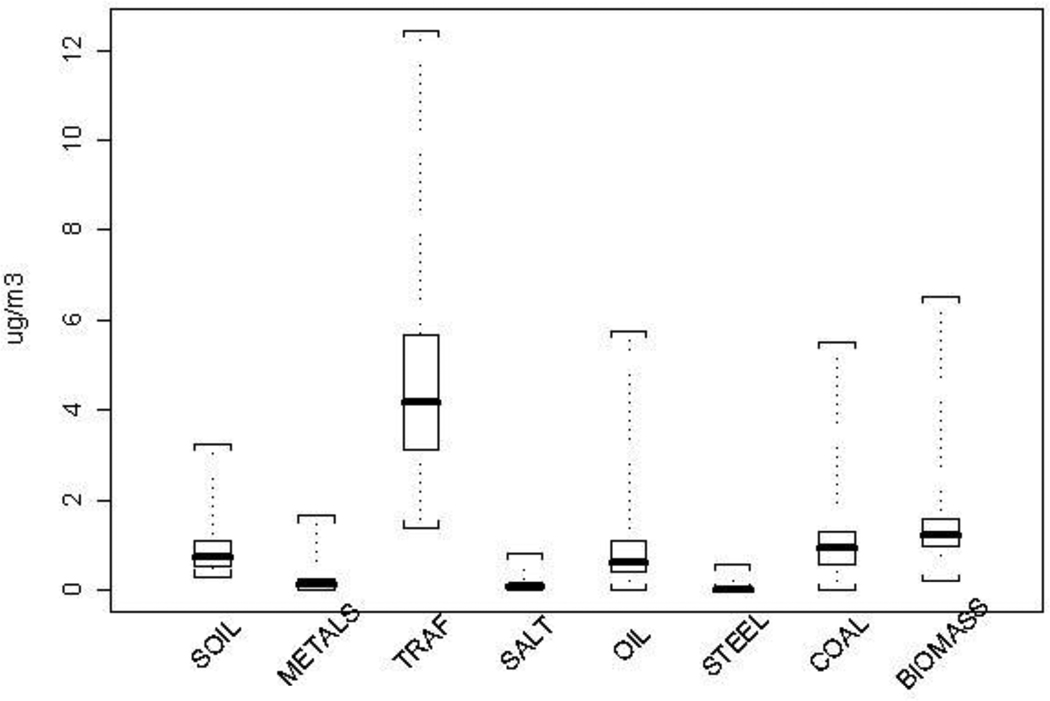
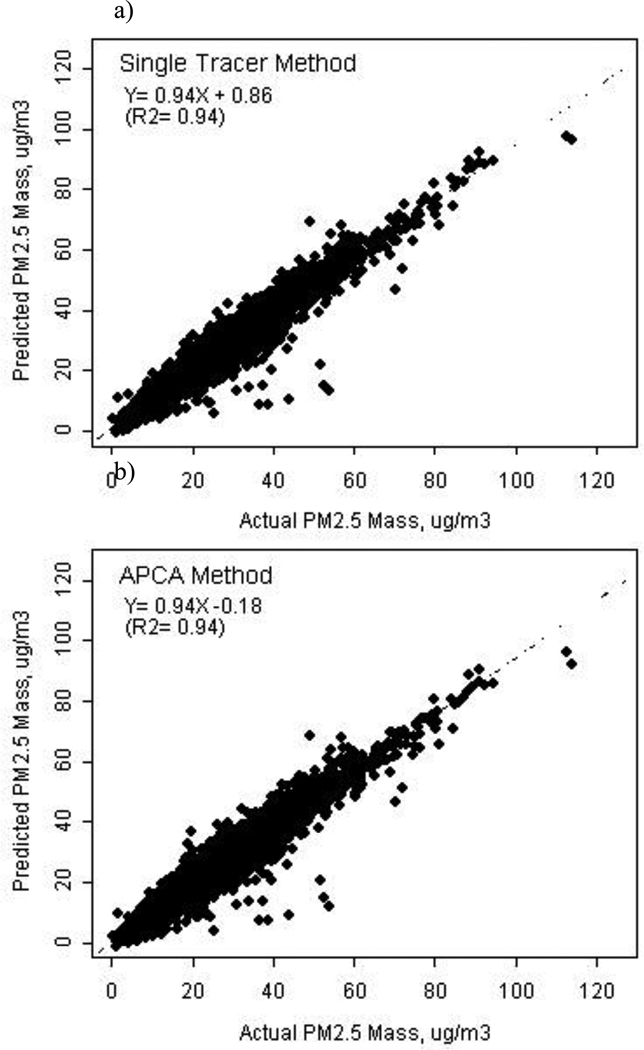
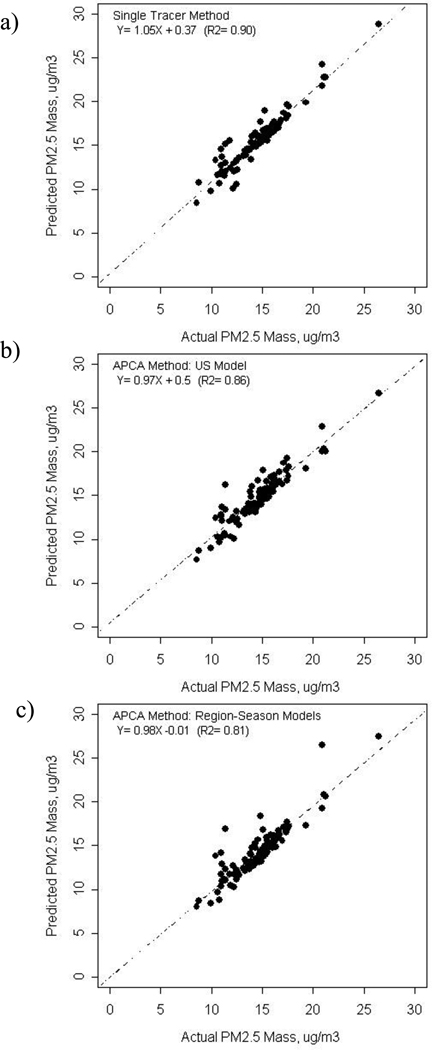
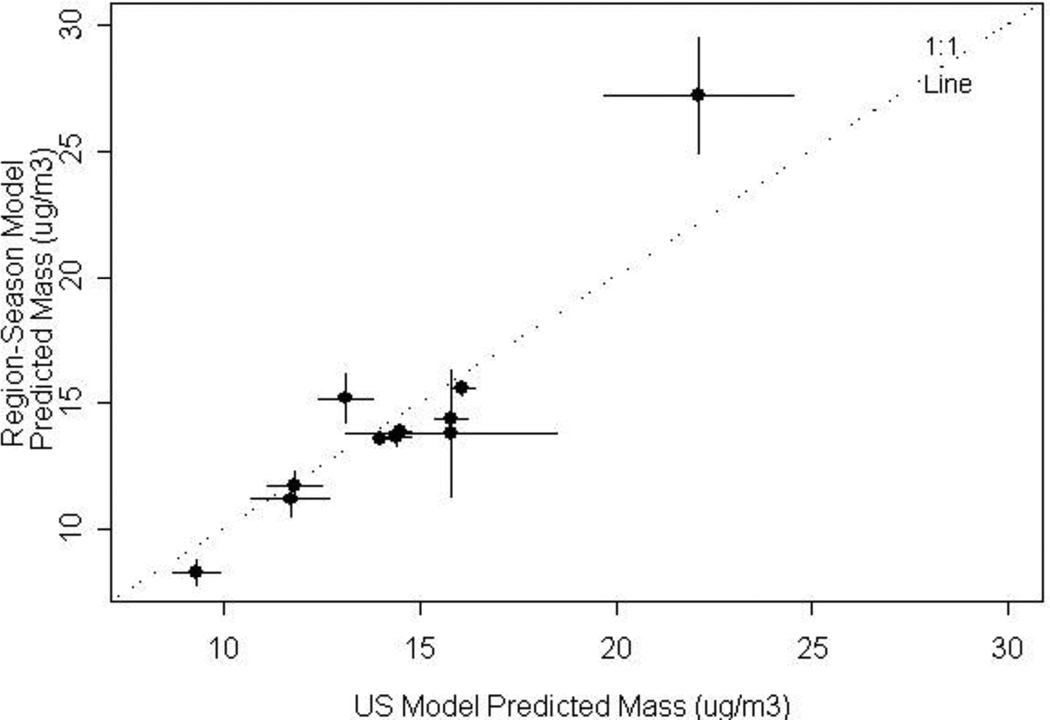
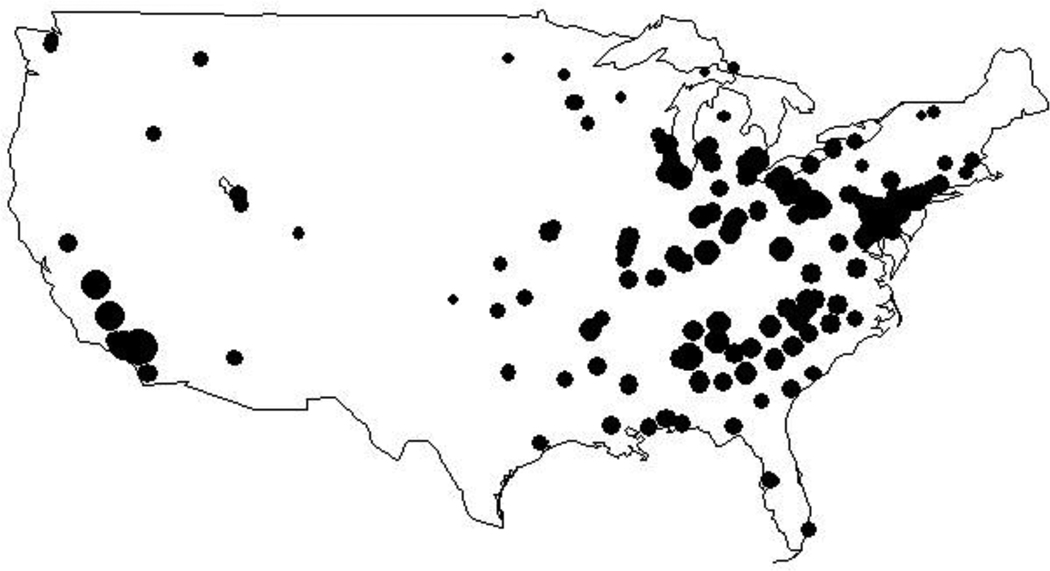
Using daily fine particulate matter (PM) composition data from the 2000-2005 U.S. EPA Chemical Speciation Network (CSN) for over 200 sites, we applied multivariate methods to identify and quantify the major fine particulate matter (PM) source components in the U.S. Novel aspects of this work were: (1) the application of factor analysis (FA) to multi-city daily data, drawing upon both spatial and temporal variations of chemical species; and, (2) the exclusion of secondary components (sulfates, nitrates and organic carbon) from the source identification FA to more clearly discern and apportion the PM mass to primary emission source categories. For the quantification of source-related mass, we considered two approaches based upon the FA results: 1) using single key tracers for sources identified by FA in a mass regression; and, 2) applying Absolute Principal Component Analysis (APCA). In each case, we followed a two-stage mass regression approach, in which secondary components were first apportioned among the identified sources, and then mass was apportioned to the sources and to other secondary mass not explained by the individual sources. The major U.S. PM source categories identified via FA (and their key elements) were: Metals Industry (Pb, Zn); Crustal/Soil Particles (Ca, Si); Motor Vehicle Traffic (EC, NO); Steel Industry (Fe, Mn); Coal Combustion (As, Se); Oil Combustion (V, Ni); Salt Particles (Na, Cl) and Biomass Burning (K). Nationwide spatial plots of the source-related PM impacts were confirmatory of the factor interpretations: ubiquitous sources, such as Traffic and Soil, were found to be spread across the nation, more unique sources (such as Steel and Metals Processing) being highest in select industrialized cities, Biomass Burning was highest in the U.S. Northwest, while Residual Oil combustion was highest in cities in the Northeastern U.S. and in cities with major seaports. The sum of these source contributions and the secondary PM components agreed well with the U.S. PM observed during the study period (mean=14.3 g/m; R= 0.91). Apportionment regression analyses using single-element tracers for each source category gave results consistent with the APCA estimates. Comparisons of nearby sites indicated that the PM mass and the secondary aerosols were most homogenous spatially, while traffic PM and its tracer, EC, were among the most spatially representative of the source-related components. Comparison of apportionment results to a previous analysis of the 1979-1982 IP Network revealed similar and correlated major U.S. source category factors, albeit at lower levels than in the earlier period, suggesting a consistency in the U.S. spatial patterns of these source-related exposures over time, as well. These results indicate that applying source apportionment methods to the nationwide CSN can be an informative avenue for identifying and quantifying source components for the subsequent estimation of source-specific health effects, potentially contributing to more efficient regulation of PM.
利用2000 - 2005年美国环境保护局化学形态网络(CSN)200多个站点的每日细颗粒物(PM)成分数据,我们应用多元方法来识别和量化美国细颗粒物(PM)的主要来源成分。这项工作的新特点包括:(1)将因子分析(FA)应用于多城市每日数据,利用化学物种的时空变化;(2)在源识别FA中排除二次成分(硫酸盐、硝酸盐和有机碳),以便更清晰地辨别并将PM质量分配到主要排放源类别。为了量化与源相关的质量,我们基于FA结果考虑了两种方法:1)在质量回归中使用FA识别出的源的单个关键示踪剂;2)应用绝对主成分分析(APCA)。在每种情况下,我们都采用两阶段质量回归方法,其中首先将二次成分分配到已识别的源中,然后将质量分配到这些源以及未由单个源解释的其他二次质量中。通过FA识别出的美国主要PM源类别(及其关键元素)为:金属工业(铅、锌);地壳/土壤颗粒(钙、硅);机动车交通(元素碳、氮氧化物);钢铁工业(铁、锰);煤炭燃烧(砷、硒);石油燃烧(钒、镍);盐颗粒(钠、氯)和生物质燃烧(钾)。与源相关的PM影响的全国空间图证实了因子解释:交通和土壤等普遍存在的源在全国范围内分布,更具独特性的源(如钢铁和金属加工)在特定工业化城市中含量最高,生物质燃烧在美国西北部最高,而残余油燃烧在美国东北部城市和主要海港城市中最高。这些源贡献和二次PM成分的总和与研究期间观测到的美国PM值吻合良好(平均值 = 14.3 μg/m³;R = 0.91)。使用每个源类别的单元素示踪剂进行的分配回归分析结果与APCA估计值一致。附近站点的比较表明,PM质量和二次气溶胶在空间上最为均匀,而交通PM及其示踪剂元素碳是与源相关成分中空间代表性最强的。将分配结果与先前对1979 - 1982年IP网络的分析进行比较,发现美国主要源类别因素相似且相关,尽管水平低于早期,这也表明这些与源相关暴露的美国空间模式随时间具有一致性。这些结果表明,将源分配方法应用于全国性的CSN可以成为识别和量化源成分的有益途径,以便随后估计特定源的健康影响,可能有助于更有效地对PM进行监管。