Department of Cognitive Psychology in Education, Graduate School of Education, Kyoto University Kyoto, Japan.
Kokoro Research Center, Kyoto University Kyoto, Japan.
Front Psychol. 2014 Mar 5;5:135. doi: 10.3389/fpsyg.2014.00135. eCollection 2014.
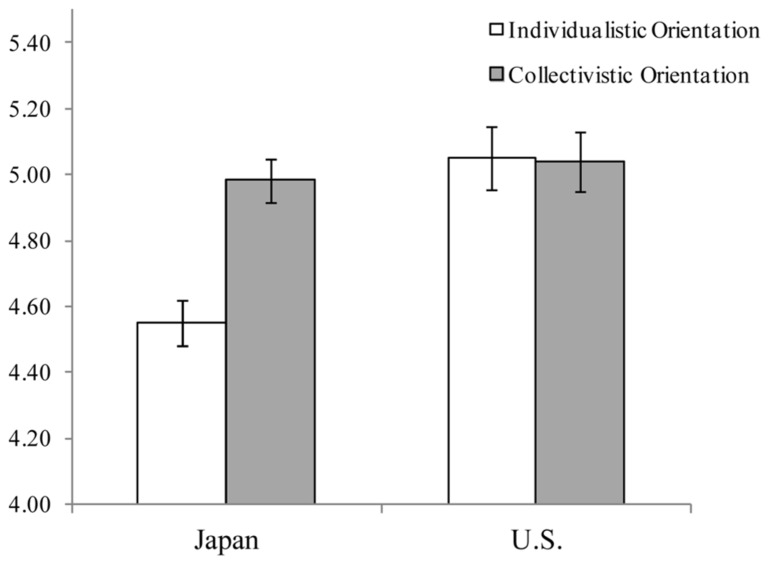
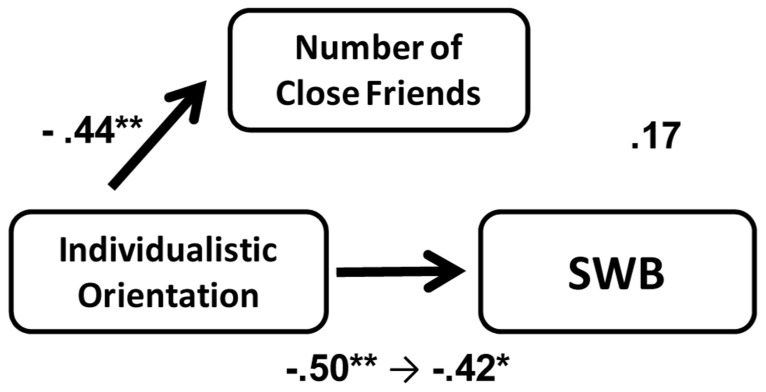
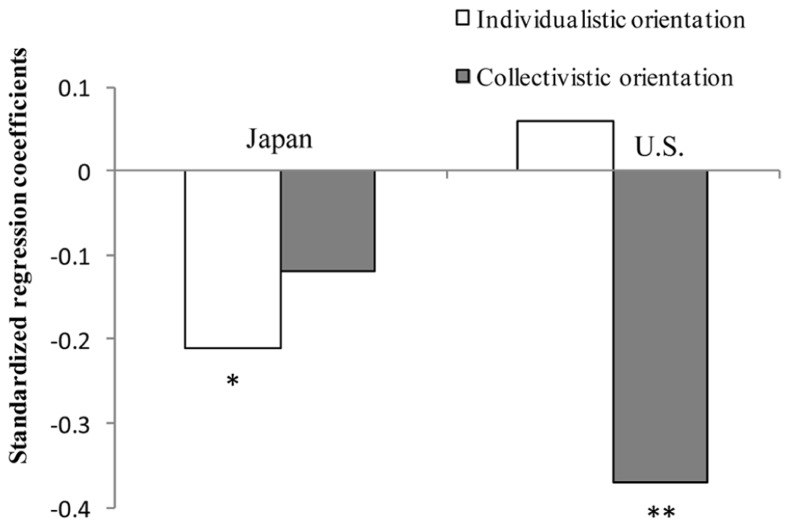
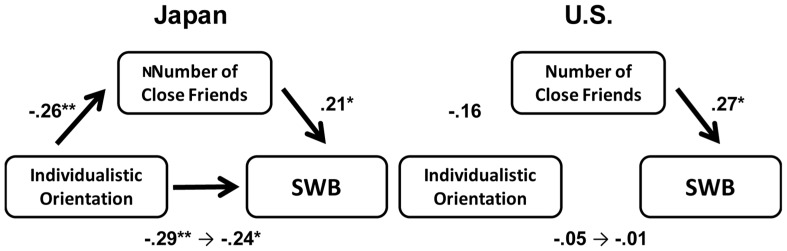
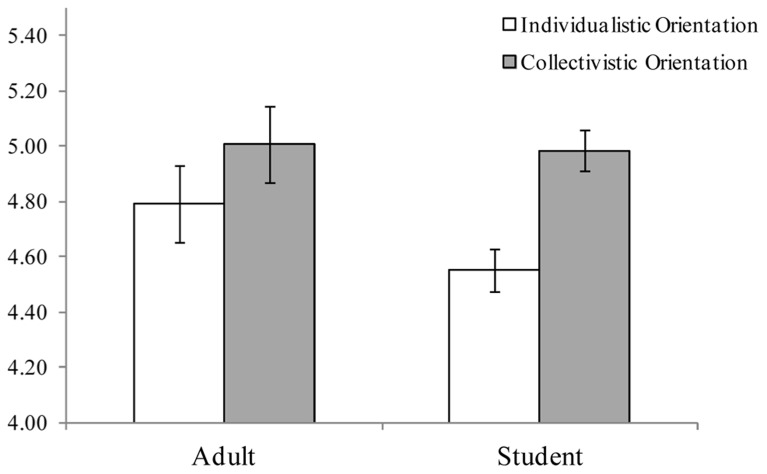
We examined the negative effects of individualism in an East Asian culture. Although individualistic systems decrease interpersonal relationships through competition, individualistic values have prevailed in European American cultures. One reason is because individuals could overcome negativity by actively constructing interpersonal relationships. In contrast, people in East Asian cultures do not have such strategies to overcome the negative impact of individualistic systems, leading to decreased well-being. To test this hypothesis, we investigated the relationship between individualistic values, number of close friends, and subjective well-being (SWB). Study 1 indicated that individualistic values were negatively related with the number of close friends and SWB for Japanese college students but not for American college students. Moreover, Study 2 showed that even in an individualistic workplace in Japan, individualistic values were negatively related with the number of close friends and SWB. We discuss how cultural change toward increasing individualism might affect interpersonal relationships and well-being.
我们考察了个人主义在东亚文化中的负面影响。尽管个人主义体系通过竞争减少了人际关系,但个人主义价值观在欧美文化中占据了主导地位。一个原因是因为个体可以通过积极构建人际关系来克服消极因素。相比之下,东亚文化中的人们没有这样的策略来克服个人主义体系的负面影响,导致幸福感降低。为了验证这一假设,我们调查了个人主义价值观、亲密朋友数量和主观幸福感(SWB)之间的关系。研究 1 表明,个人主义价值观与日本大学生的亲密朋友数量和 SWB 呈负相关,但与美国大学生的亲密朋友数量和 SWB 无关。此外,研究 2 表明,即使在日本的个人主义工作场所,个人主义价值观也与亲密朋友数量和 SWB 呈负相关。我们讨论了个人主义的文化变迁如何影响人际关系和幸福感。