Ogihara Yuji
Department of Cognitive Psychology in Education, Graduate School of Education, Kyoto UniversityKyoto, Japan.
Department of Psychology, University of California, Los AngelesLos Angeles, CA, USA.
Front Psychol. 2017 May 23;8:695. doi: 10.3389/fpsyg.2017.00695. eCollection 2017.
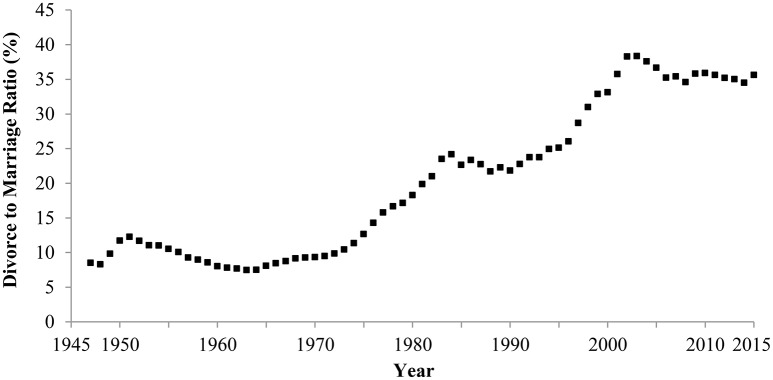
Many studies have shown that American culture has become more individualistic over time. However, it was unclear whether other cultures, especially East Asian cultures, have also shifted toward greater individualism. Therefore, this article reviewed studies investigating temporal changes in individualism in Japan and their ramifications on psychology and behavior. Japan has experienced rapid and dramatic economic growth and urbanization and has adopted more social systems based on individualistic concepts in various contexts (e.g., workplace, school). Recent studies have suggested that, along with these socioeconomic changes, Japanese culture has become more individualistic over time. Specifically, the divorce rate increased and household size decreased. Moreover, people give more unique names to their children and dogs, and individualistic words such as "individual" and "uniqueness" appear more frequently in newspapers. Furthermore, social values became more individualistic. Yet, it has also been shown that some collectivistic values still remain. As a result, people have difficulty in adapting to this coexistence, which injures interpersonal relationships and well-being. This paper discussed how Japanese culture changed over time and how such changes affected Japanese psychology and behavior.
许多研究表明,随着时间的推移,美国文化变得更加个人主义。然而,尚不清楚其他文化,尤其是东亚文化,是否也朝着更大程度的个人主义转变。因此,本文回顾了有关日本个人主义时间变化及其对心理和行为影响的研究。日本经历了快速且巨大的经济增长和城市化,并在各种背景下(如工作场所、学校)采用了更多基于个人主义概念的社会制度。最近的研究表明,随着这些社会经济变化,日本文化随着时间的推移变得更加个人主义。具体而言,离婚率上升,家庭规模缩小。此外,人们给孩子和宠物狗起更独特的名字,“个人”和“独特性”等个人主义词汇在报纸上出现得更频繁。此外,社会价值观变得更加个人主义。然而,研究也表明一些集体主义价值观仍然存在。结果,人们难以适应这种共存状态,这损害了人际关系和幸福感。本文讨论了日本文化如何随时间变化以及这些变化如何影响日本的心理和行为。