Department of Gynecology & Obstetrics, Sun Yat-sen Memorial Hospital of Sun Yat-sen University, Guangzhou, China.
PLoS One. 2014 Mar 18;9(3):e91796. doi: 10.1371/journal.pone.0091796. eCollection 2014.
To review published randomized controlled trials (RCTs) evaluating the outcomes of in vitro fertilization/intra-cytoplasmic sperm injection (IVF/ICSI) utilization of gonadotropin-releasing hormone (GnRH) antagonists for ovarian stimulation in polycystic ovarian syndrome (PCOS) patients compared with classic luteal long agonist protocols.
A meta-analysis of prospective randomized trials published in English between 2002 and 2013.
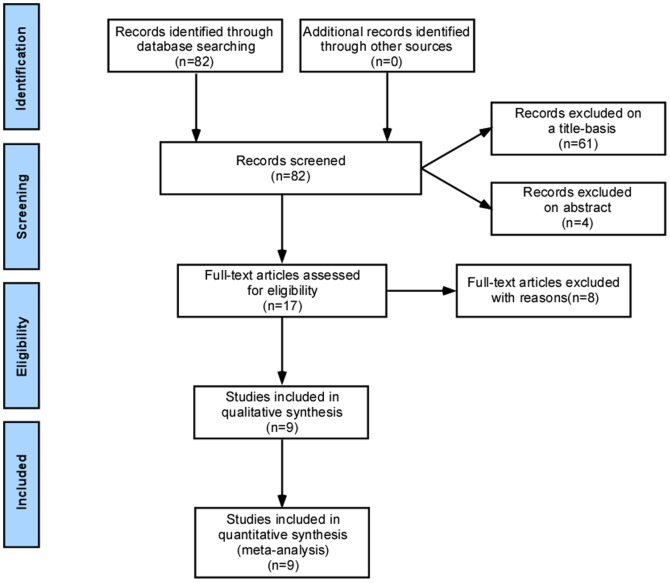
PATIENT(S) AND INTERVENTIONS: Nine RCTs examining PCOS patients undergoing IVF/ICSI including 588 women who underwent long agonist protocols and 554 women who underwent GnRH antagonist protocols.
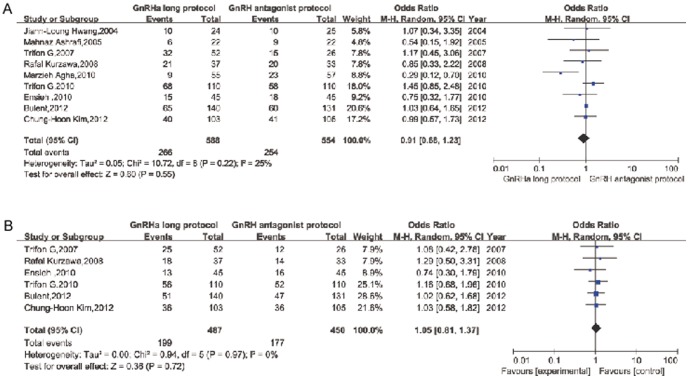
MAIN OUTCOME MEASURE(S): Clinical pregnancy rate (CPR), ongoing pregnancy rate (OPR) and ovarian hyperstimulation syndrome (OHSS) rate.
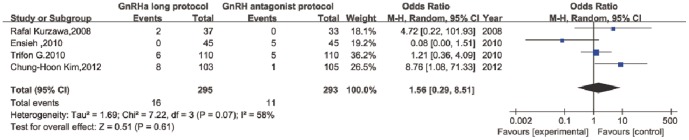
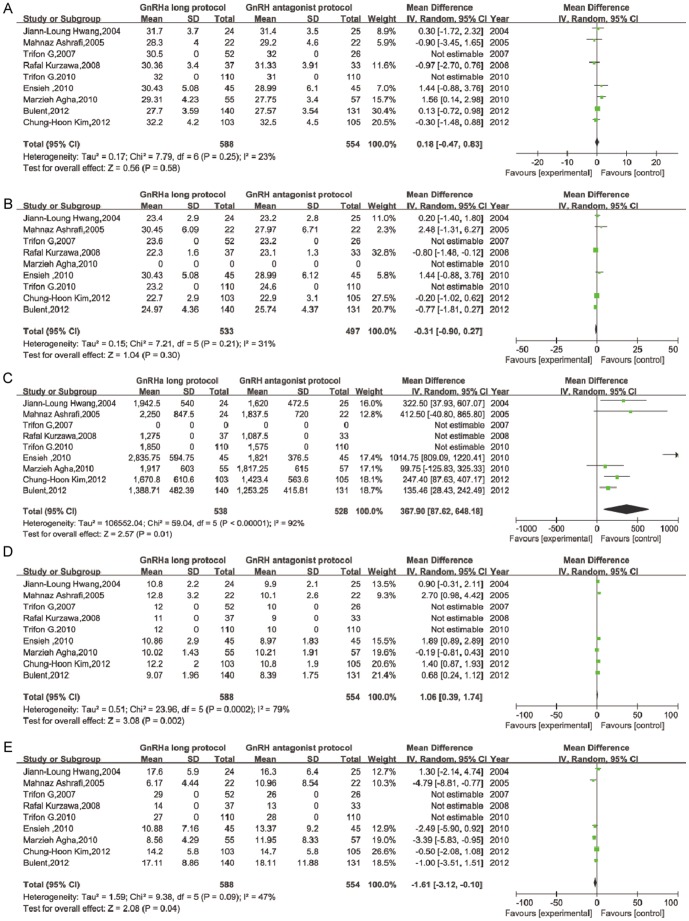
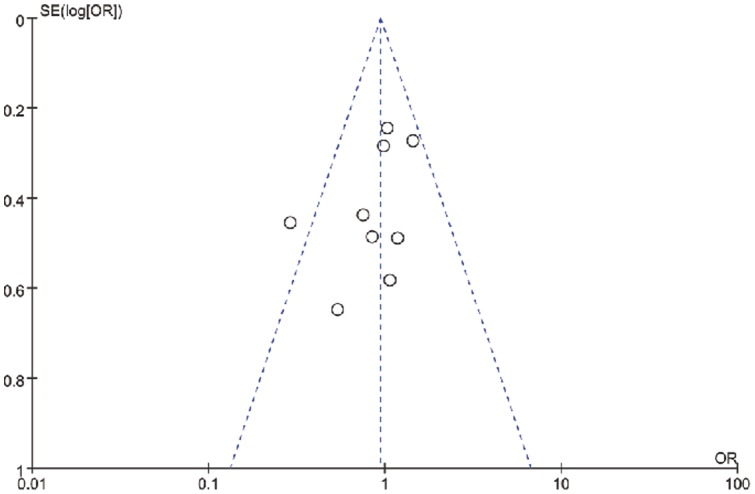
RESULT(S): Nine RCTs were included in this analysis. The CPR-per-embryo transferred was similar in the two groups (relative risk (RR): 0.97, 95% confidence interval (CI): 0.85-1.10). Non-significant estimates comparing the two protocols were found for age, BMI, total dose of gonadotropin administered, number of days of stimulation and number of oocytes retrieved. After meta-analysis of 4 of the RCTs, it was concluded that a GnRH antagonist protocol is better than an agonist long protocol to reduce the rate of severe OHSS (odds ratio (OR): 1.56, 95% CI: 0.29-8.51).
CONCLUSION(S): With respect to CPR, a GnRH antagonist protocol is similar to a GnRH agonist long protocol. However, for severe OHSS, a GnRH antagonist protocol is significantly better in PCOS patients.
回顾已发表的随机对照试验(RCT),评估促性腺激素释放激素(GnRH)拮抗剂在多囊卵巢综合征(PCOS)患者体外受精/卵胞浆内单精子注射(IVF/ICSI)促排卵中的应用与经典黄体期长激动剂方案相比的结局。
2002 年至 2013 年发表的英语前瞻性随机试验的荟萃分析。
九项 RCT 检查接受 IVF/ICSI 的 PCOS 患者,包括 588 名接受长激动剂方案和 554 名接受 GnRH 拮抗剂方案的患者。
临床妊娠率(CPR)、持续妊娠率(OPR)和卵巢过度刺激综合征(OHSS)率。
共有 9 项 RCT 纳入本分析。两组胚胎移植的 CPR 相似(相对风险(RR):0.97,95%置信区间(CI):0.85-1.10)。比较两种方案时,年龄、BMI、给予的促性腺激素总剂量、刺激天数和取卵数均无显著差异。对 4 项 RCT 进行荟萃分析后得出结论,与长激动剂方案相比,GnRH 拮抗剂方案可降低严重 OHSS 的发生率(比值比(OR):1.56,95%CI:0.29-8.51)。
就 CPR 而言,GnRH 拮抗剂方案与 GnRH 激动剂长方案相似。然而,对于严重 OHSS,GnRH 拮抗剂方案在 PCOS 患者中明显更好。