Anyamba Assaf, Small Jennifer L, Britch Seth C, Tucker Compton J, Pak Edwin W, Reynolds Curt A, Crutchfield James, Linthicum Kenneth J
National Aeronautics and Space Administration, Goddard Space Flight Center, Biospheric Sciences Laboratory, Greenbelt, Maryland, United States of America; Universities Space Research Association, Columbia, Maryland, United States of America.
National Aeronautics and Space Administration, Goddard Space Flight Center, Biospheric Sciences Laboratory, Greenbelt, Maryland, United States of America; Science Systems and Applications Incorporated, Lanham, Maryland, United States of America.
PLoS One. 2014 Mar 21;9(3):e92538. doi: 10.1371/journal.pone.0092538. eCollection 2014.
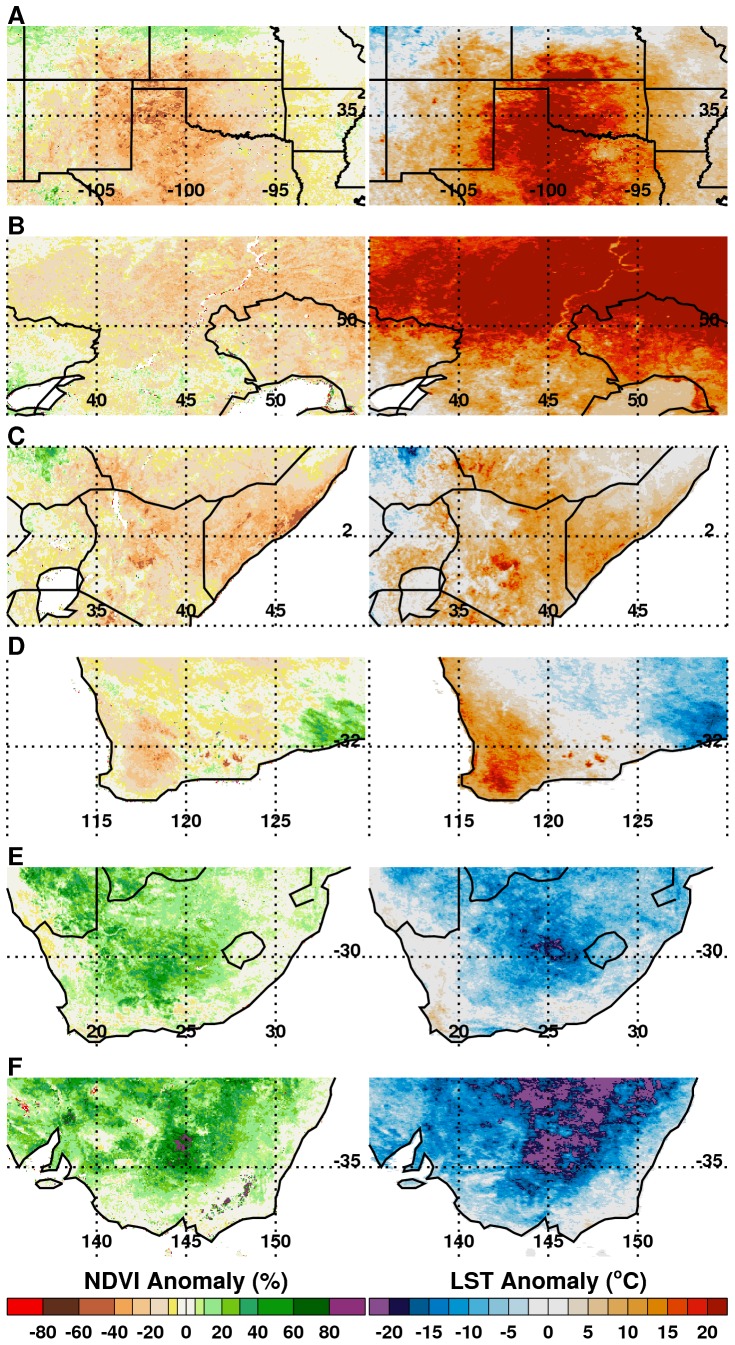
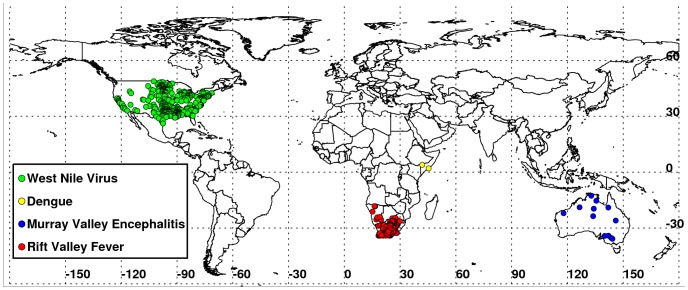
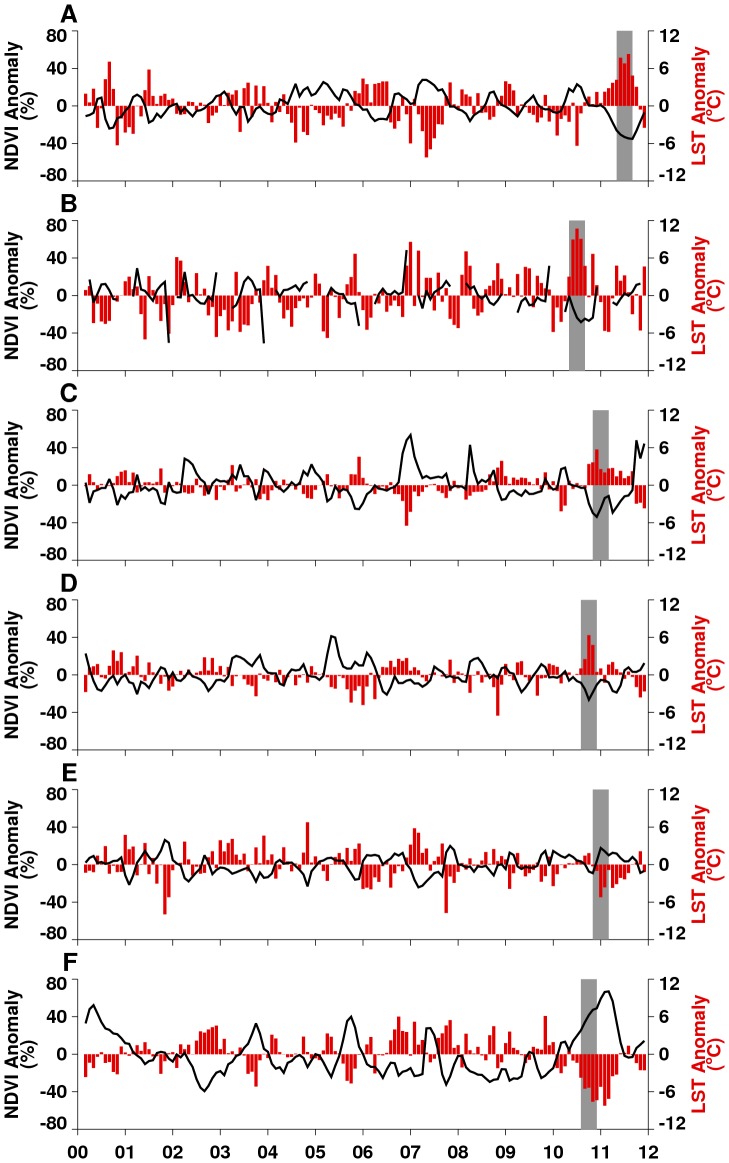
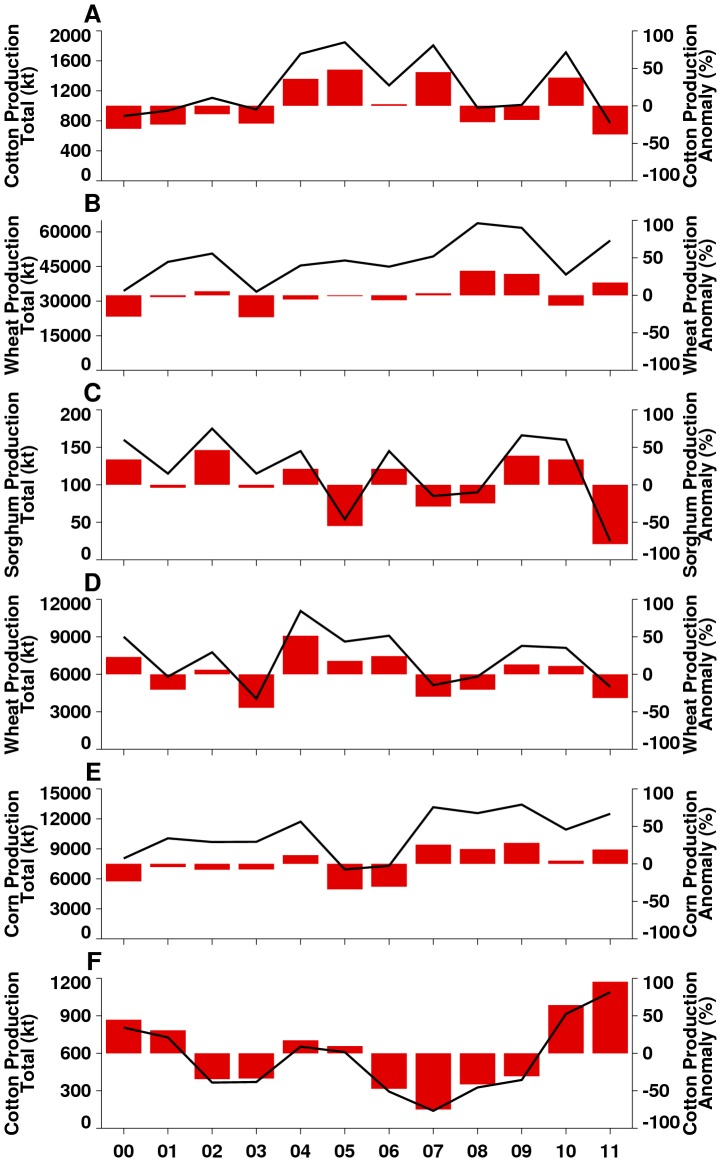
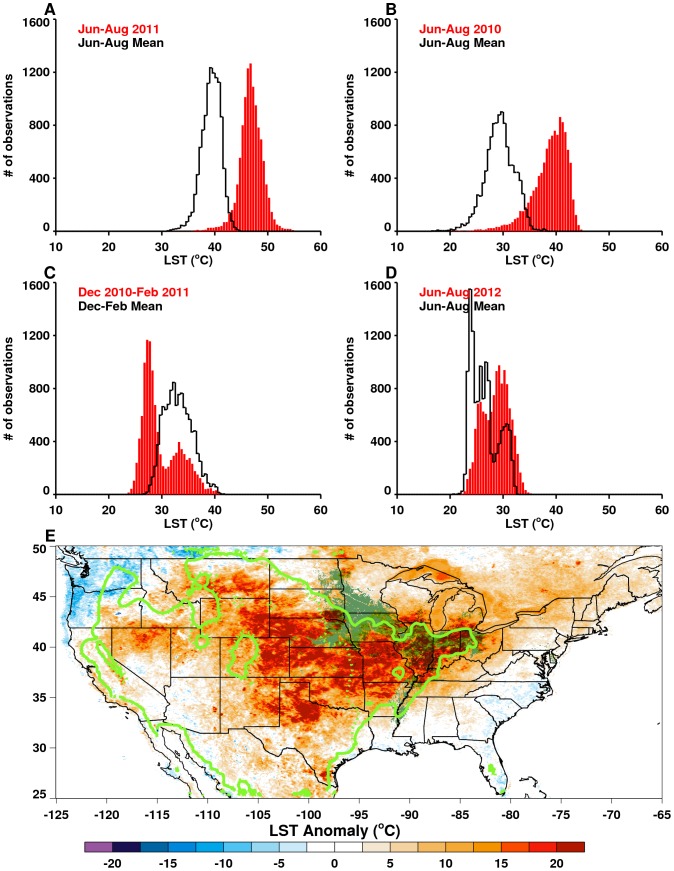
We document significant worldwide weather anomalies that affected agriculture and vector-borne disease outbreaks during the 2010-2012 period. We utilized 2000-2012 vegetation index and land surface temperature data from NASA's satellite-based Moderate Resolution Imaging Spectroradiometer (MODIS) to map the magnitude and extent of these anomalies for diverse regions including the continental United States, Russia, East Africa, Southern Africa, and Australia. We demonstrate that shifts in temperature and/or precipitation have significant impacts on vegetation patterns with attendant consequences for agriculture and public health. Weather extremes resulted in excessive rainfall and flooding as well as severe drought, which caused ∼10 to 80% variation in major agricultural commodity production (including wheat, corn, cotton, sorghum) and created exceptional conditions for extensive mosquito-borne disease outbreaks of dengue, Rift Valley fever, Murray Valley encephalitis, and West Nile virus disease. Analysis of MODIS data provided a standardized method for quantifying the extreme weather anomalies observed during this period. Assessments of land surface conditions from satellite-based systems such as MODIS can be a valuable tool in national, regional, and global weather impact determinations.
我们记录了2010 - 2012年期间影响农业和媒介传播疾病暴发的重大全球天气异常情况。我们利用了美国国家航空航天局基于卫星的中分辨率成像光谱仪(MODIS)在2000 - 2012年期间的植被指数和地表温度数据,来绘制包括美国大陆、俄罗斯、东非、南非和澳大利亚等不同地区这些异常情况的规模和范围。我们证明,温度和/或降水的变化对植被格局有重大影响,随之对农业和公共卫生产生影响。极端天气导致降雨过多和洪水泛滥以及严重干旱,这使得主要农产品(包括小麦、玉米、棉花、高粱)产量出现约10%至80%的波动,并为登革热、裂谷热、墨累谷脑炎和西尼罗河病毒病等广泛的蚊媒疾病暴发创造了特殊条件。对MODIS数据的分析提供了一种标准化方法,用于量化在此期间观测到的极端天气异常情况。基于卫星系统(如MODIS)对地表状况的评估,在国家、区域和全球天气影响判定中可以成为一种有价值的工具。