Department of Bioengineering, University of Washington, Seattle, WA 98195, USA.
Department of Pathology, University of Washington, Seattle, WA 98195, USA ; Center for Cardiovascular Biology, Institute for Stem Cell and Regenerative Medicine, University of Washington, Seattle, WA 98109, USA.
Stem Cell Reports. 2014 Feb 27;2(3):271-81. doi: 10.1016/j.stemcr.2014.01.011. eCollection 2014 Mar 11.
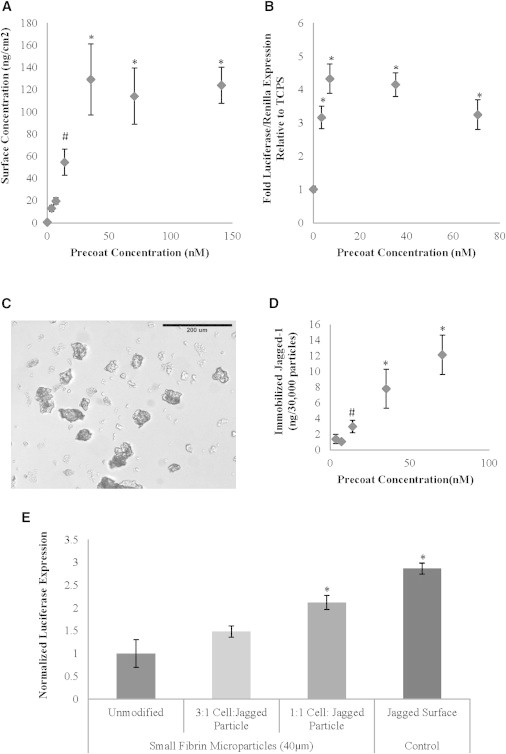
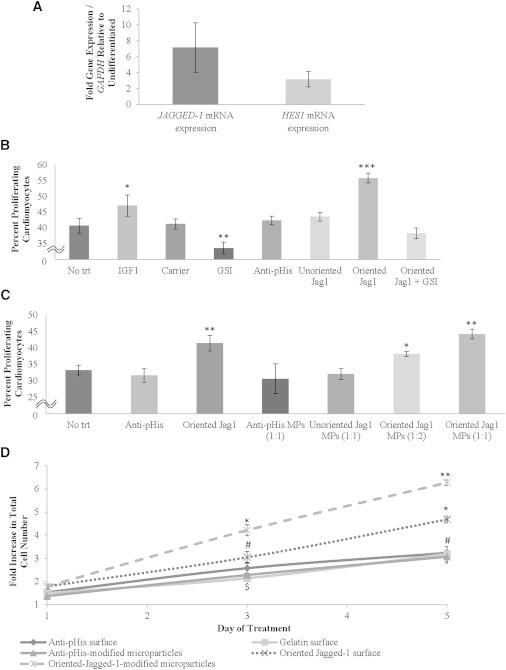
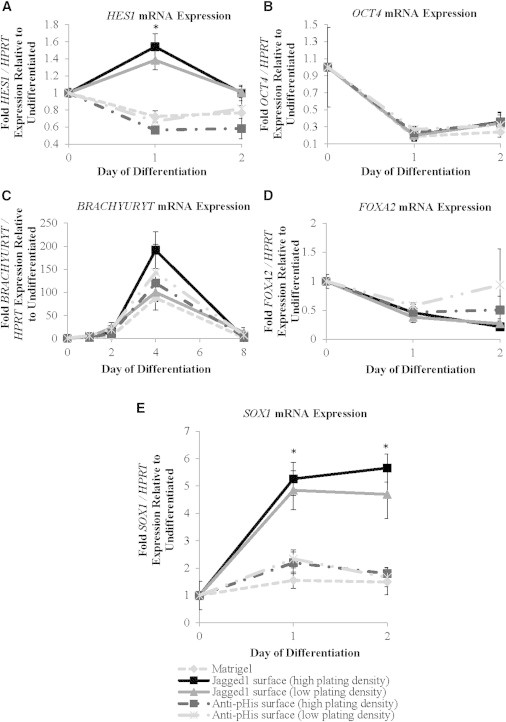
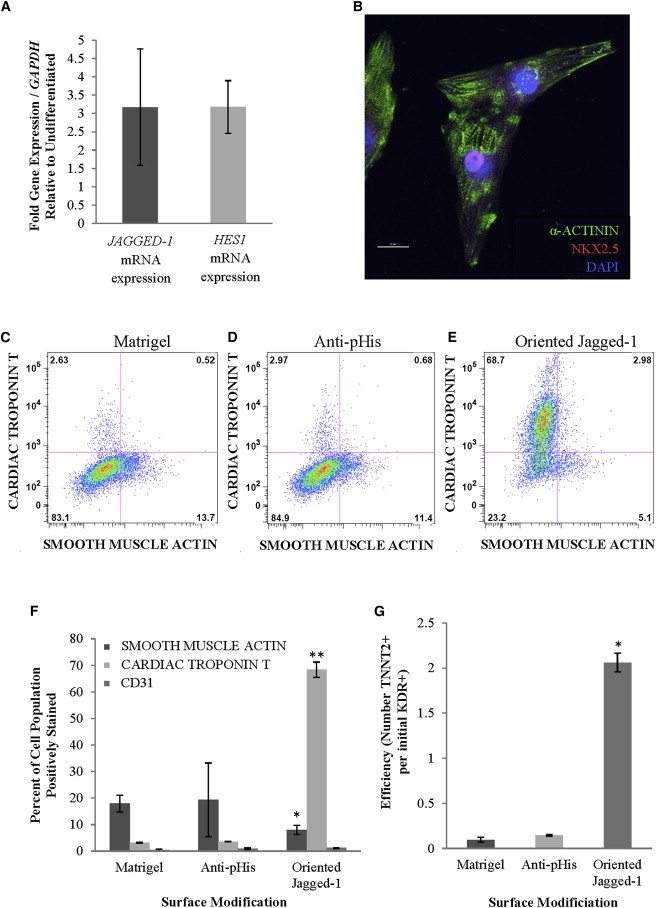
For cell-based treatments of myocardial infarction, a better understanding of key developmental signaling pathways and more robust techniques for producing cardiomyocytes are required. Manipulation of Notch signaling has promise as it plays an important role during cardiovascular development, but previous studies presented conflicting results that Notch activation both positively and negatively regulates cardiogenesis. We developed surface- and microparticle-based Notch-signaling biomaterials that function in a time-specific activation-tunable manner, enabling precise investigation of Notch activation at specific developmental stages. Using our technologies, a biphasic effect of Notch activation on cardiac differentiation was found: early activation in undifferentiated human embryonic stem cells (hESCs) promotes ectodermal differentiation, activation in specified cardiovascular progenitor cells increases cardiac differentiation. Signaling also induces cardiomyocyte proliferation, and repeated doses of Notch-signaling microparticles further enhance cardiomyocyte population size. These results highlight the diverse effects of Notch activation during cardiac development and provide approaches for generating large quantities of cardiomyocytes.
对于心肌梗死的细胞治疗,需要更好地了解关键的发育信号通路,并拥有更强大的心肌细胞生产技术。 Notch 信号的操纵具有很大的潜力,因为它在心血管发育过程中起着重要作用,但以前的研究结果存在矛盾,即 Notch 的激活既正面又负面地调节了心肌发生。我们开发了基于表面和微粒的 Notch 信号生物材料,它们以时间特异性激活可调的方式发挥作用,能够在特定的发育阶段精确研究 Notch 的激活。使用我们的技术,发现 Notch 激活对心脏分化有双相作用:在未分化的人胚胎干细胞 (hESC) 中早期激活促进外胚层分化,在特定的心血管祖细胞中激活增加心脏分化。信号还诱导心肌细胞增殖,并且 Notch 信号微粒的重复剂量进一步增加心肌细胞群体的大小。这些结果突出了 Notch 激活在心脏发育过程中的多种作用,并提供了生成大量心肌细胞的方法。