Li Wei, Liu Wei, Wei Hengling, He Qiuling, Chen Jinhong, Zhang Baohong, Zhu Shuijin
Department of Agronomy, Zhejiang University, Hangzhou, Zhejiang, China.
State Key Laboratory of Cotton Biology, Cotton Research Institute, Chinese Academy of Agricultural Sciences, Anyang, Henan, China.
PLoS One. 2014 Apr 10;9(4):e94172. doi: 10.1371/journal.pone.0094172. eCollection 2014.
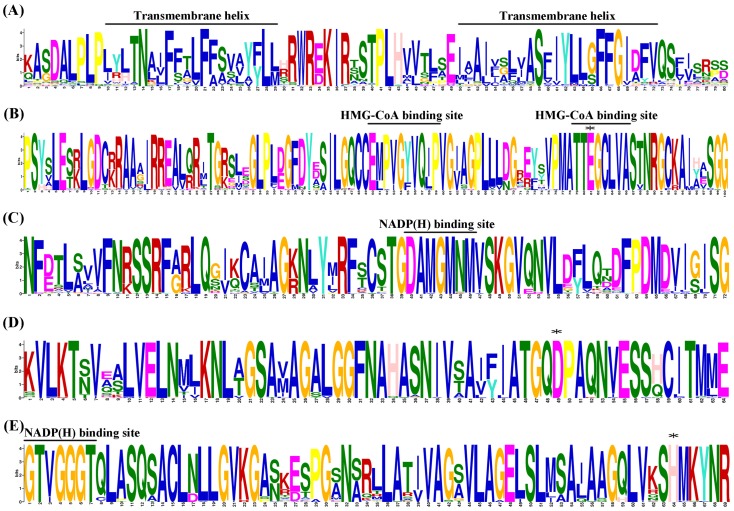
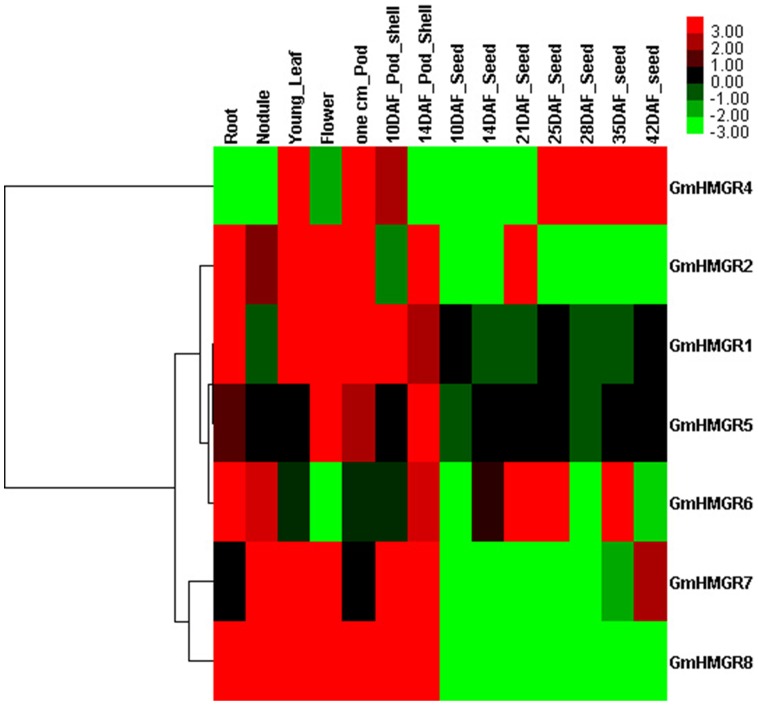
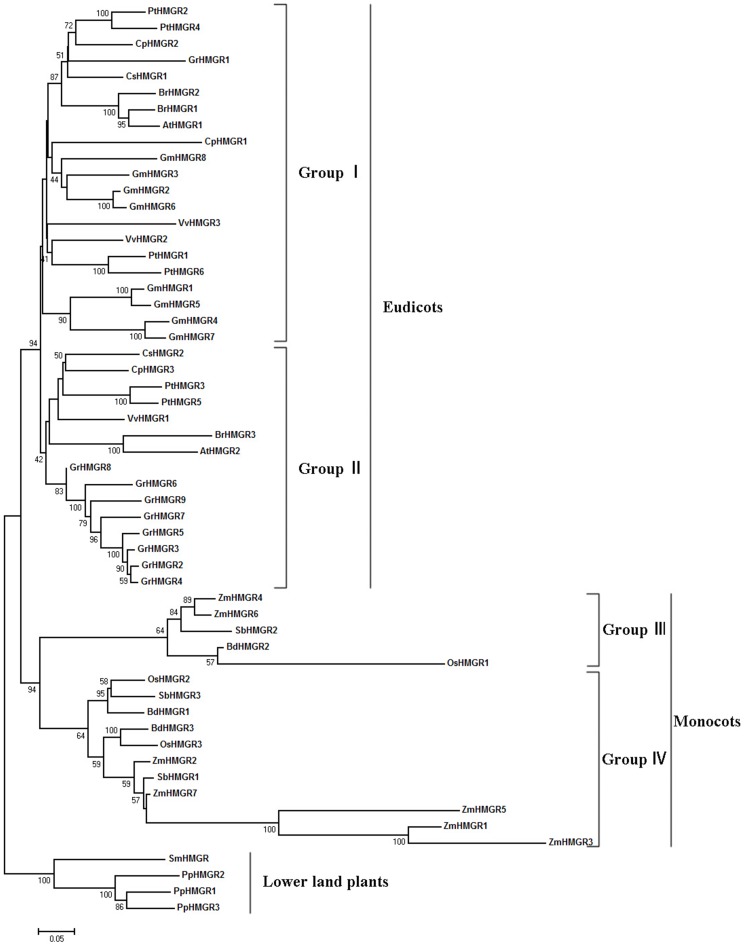
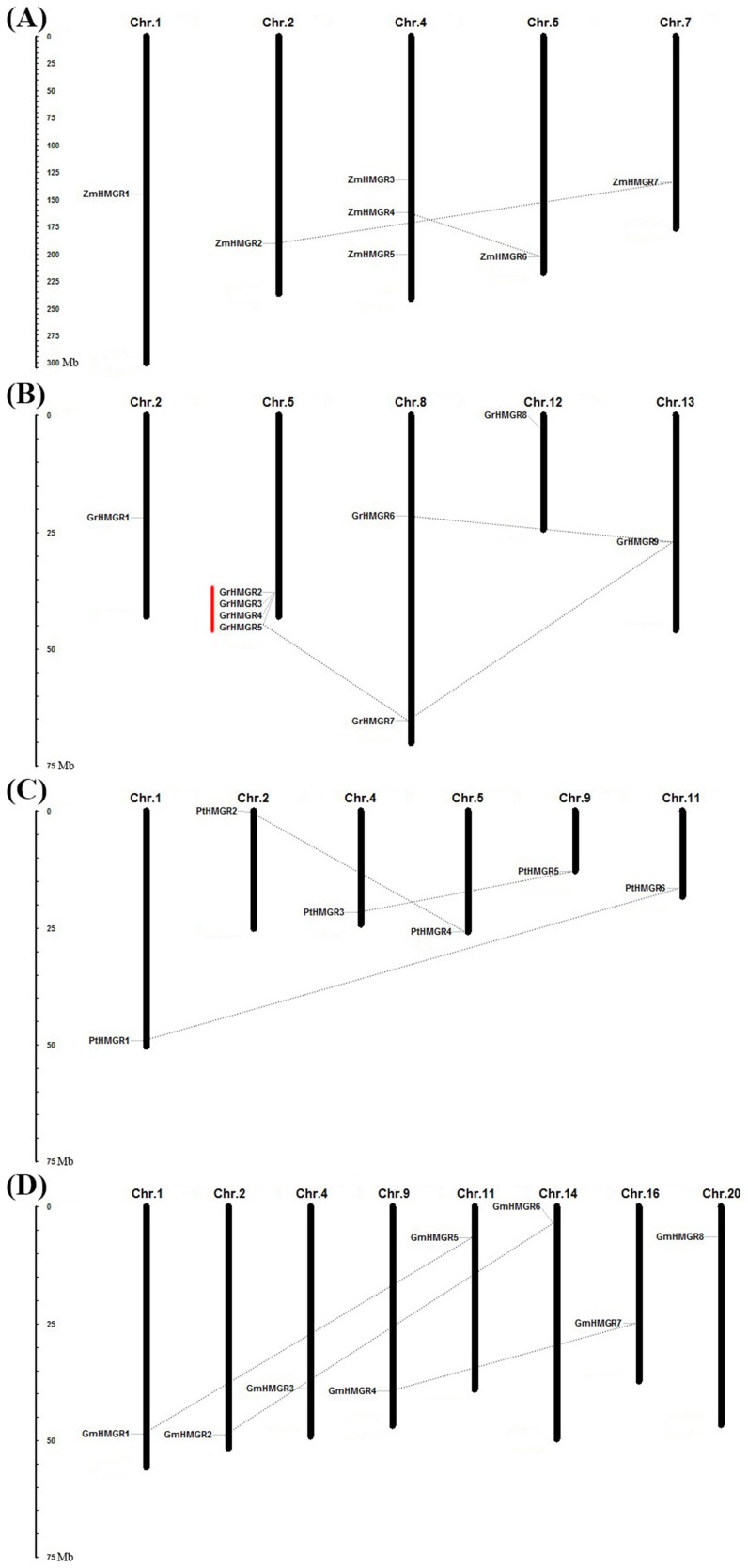
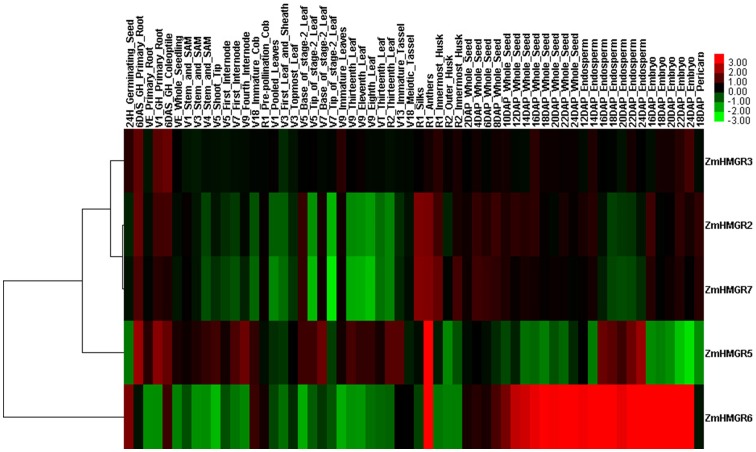
The terpene compounds represent the largest and most diverse class of plant secondary metabolites which are important in plant growth and development. The 3-hydroxy-3-methylglutaryl coenzyme A reductase (HMGR; EC 1.1.1.34) is one of the key enzymes contributed to terpene biosynthesis. To better understand the basic characteristics and evolutionary history of the HMGR gene family in plants, a genome-wide analysis of HMGR genes from 20 representative species was carried out. A total of 56 HMGR genes in the 14 land plant genomes were identified, but no genes were found in all 6 algal genomes. The gene structure and protein architecture of all plant HMGR genes were highly conserved. The phylogenetic analysis revealed that the plant HMGRs were derived from one ancestor gene and finally developed into four distinct groups, two in the monocot plants and two in dicot plants. Species-specific gene duplications, caused mainly by segmental duplication, led to the limited expansion of HMGR genes in Zea mays, Gossypium raimondii, Populus trichocarpa and Glycine max after the species diverged. The analysis of Ka/Ks ratios and expression profiles indicated that functional divergence after the gene duplications was restricted. The results suggested that the function and evolution of HMGR gene family were dramatically conserved throughout the plant kingdom.
萜类化合物是植物次生代谢物中最大且最多样化的一类,在植物生长发育中起着重要作用。3-羟基-3-甲基戊二酰辅酶A还原酶(HMGR;EC 1.1.1.34)是萜类生物合成的关键酶之一。为了更好地了解植物中HMGR基因家族的基本特征和进化历史,对20个代表性物种的HMGR基因进行了全基因组分析。在14种陆地植物基因组中总共鉴定出56个HMGR基因,但在所有6种藻类基因组中均未发现该基因。所有植物HMGR基因的基因结构和蛋白质结构高度保守。系统发育分析表明,植物HMGRs起源于一个祖先基因,最终发展成四个不同的组,单子叶植物中有两组,双子叶植物中有两组。物种特异性基因复制主要由片段重复引起,导致玉米、雷蒙德氏棉、毛果杨和大豆在物种分化后HMGR基因的有限扩张。Ka/Ks比值和表达谱分析表明,基因复制后的功能分化受到限制。结果表明,HMGR基因家族的功能和进化在整个植物界中显著保守。