Nekovarova Tereza, Yamamotova Anna, Vales Karel, Stuchlik Ales, Fricova Jitka, Rokyta Richard
Institute of Physiology, Academy of Sciences of the Czech Republic Prague, Czech Republic ; Department of Zoology, Ecology and Ethology Research Group, Faculty of Natural Science, Charles University in Prague Prague, Czech Republic.
Department of Normal, Pathological and Clinical Physiology, Third Faculty of Medicine, Charles University in Prague Prague, Czech Republic.
Front Behav Neurosci. 2014 Mar 25;8:99. doi: 10.3389/fnbeh.2014.00099. eCollection 2014.
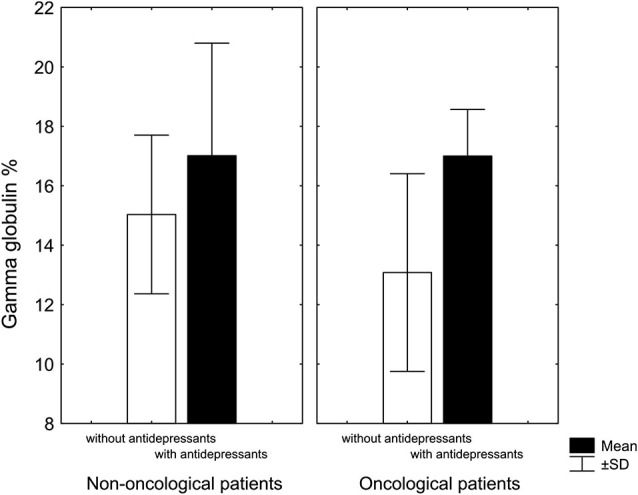
Neither pain, nor depression exist as independent phenomena per se, they are highly subjective inner states, formed by our brain and built on the bases of our experiences, cognition and emotions. Chronic pain is associated with changes in brain physiology and anatomy. It has been suggested that the neuronal activity underlying subjective perception of chronic pain may be divergent from the activity associated with acute pain. We will discuss the possible common pathophysiological mechanism of chronic pain and depression with respect to the default mode network of the brain, neuroplasticity and the effect of antidepressants on these two pathological conditions. The default mode network of the brain has an important role in the representation of introspective mental activities and therefore can be considered as a nodal point, common for both chronic pain and depression. Neuroplasticity which involves molecular, cellular and synaptic processes modifying connectivity between neurons and neuronal circuits can also be affected by pathological states such as chronic pain or depression. We suppose that pathogenesis of depression and chronic pain shares common negative neuroplastic changes in the central nervous system (CNS). The positive impact of antidepressants would result in a reduction of these pathological cellular/molecular processes and in the amelioration of symptoms, but it may also increase survival times and quality of life of patients with chronic cancer pain.
疼痛和抑郁本身都不是独立存在的现象,它们是高度主观的内在状态,由我们的大脑形成,并建立在我们的经历、认知和情感基础之上。慢性疼痛与大脑生理和解剖结构的变化有关。有人提出,慢性疼痛主观感受背后的神经元活动可能与急性疼痛相关的活动不同。我们将从大脑的默认模式网络、神经可塑性以及抗抑郁药对这两种病理状态的影响方面,讨论慢性疼痛和抑郁可能的共同病理生理机制。大脑的默认模式网络在自省性心理活动的表征中起重要作用,因此可被视为慢性疼痛和抑郁的共同节点。涉及分子、细胞和突触过程从而改变神经元与神经回路之间连接性的神经可塑性,也会受到慢性疼痛或抑郁等病理状态的影响。我们推测,抑郁和慢性疼痛的发病机制在中枢神经系统(CNS)中存在共同的负面神经可塑性变化。抗抑郁药的积极作用将导致这些病理性细胞/分子过程减少以及症状改善,但它也可能延长慢性癌痛患者的生存期并提高其生活质量。