Huang Jixia, Wang Jinfeng, Yu Weiwei
State Key Laboratory of Resources and Environmental Information System, Institute of Geographic Science and Natural Resource Research, Chinese Academy of Sciences, Beijing 100101, China.
School of Public Health and Social Work, Institute of Health and Biomedical Innovation, Queensland University of Technology, Brisbane 4059, Australia.
Int J Environ Res Public Health. 2014 Apr 11;11(4):3982-94. doi: 10.3390/ijerph110403982.
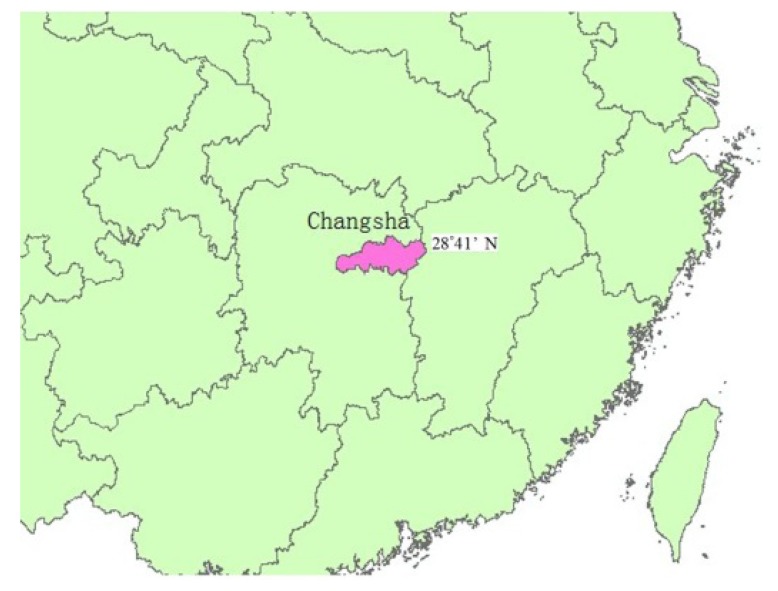
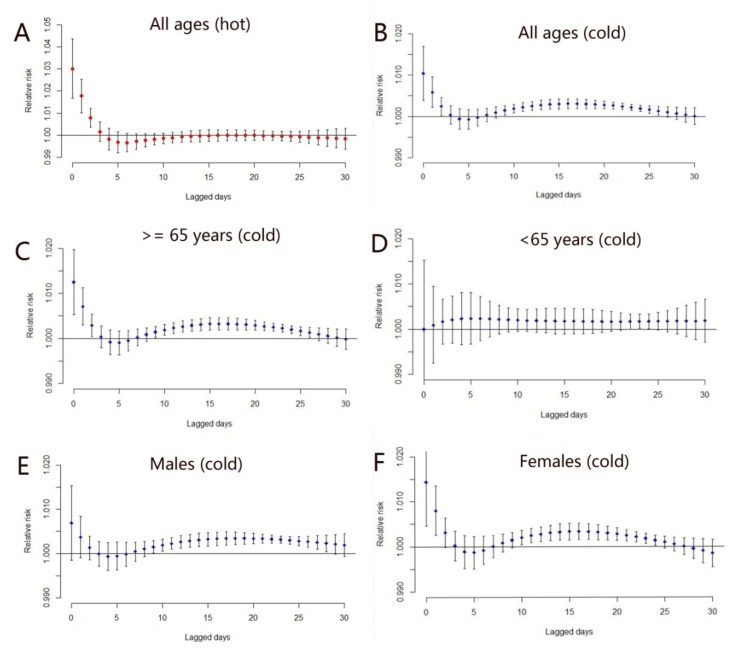
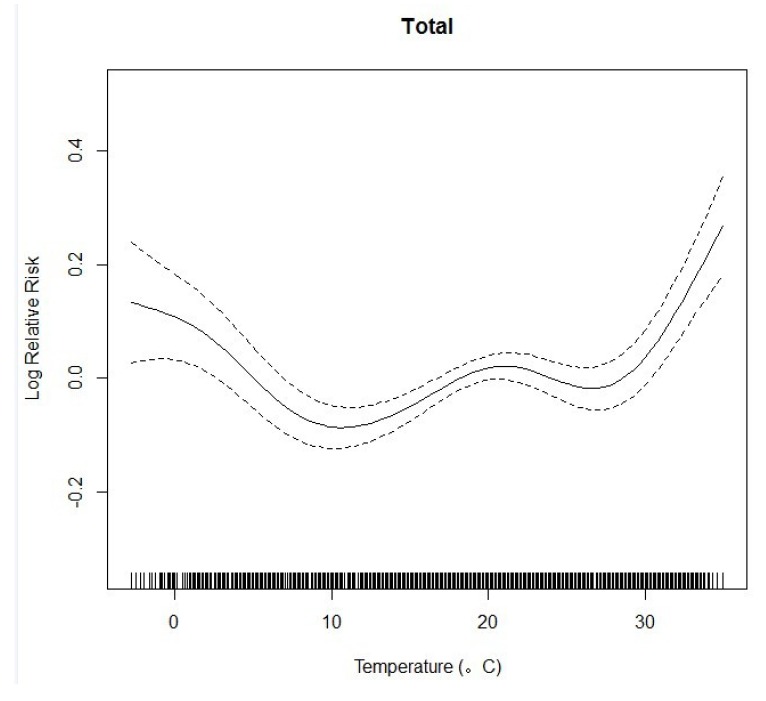
This research quantifies the lag effects and vulnerabilities of temperature effects on cardiovascular disease in Changsha--a subtropical climate zone of China. A Poisson regression model within a distributed lag nonlinear models framework was used to examine the lag effects of cold- and heat-related CVD mortality. The lag effect for heat-related CVD mortality was just 0-3 days. In contrast, we observed a statistically significant association with 10-25 lag days for cold-related CVD mortality. Low temperatures with 0-2 lag days increased the mortality risk for those ≥65 years and females. For all ages, the cumulative effects of cold-related CVD mortality was 6.6% (95% CI: 5.2%-8.2%) for 30 lag days while that of heat-related CVD mortality was 4.9% (95% CI: 2.0%-7.9%) for 3 lag days. We found that in Changsha city, the lag effect of hot temperatures is short while the lag effect of cold temperatures is long. Females and older people were more sensitive to extreme hot and cold temperatures than males and younger people.
本研究量化了中国亚热带气候区长沙市温度对心血管疾病影响的滞后效应和脆弱性。在分布滞后非线性模型框架内使用泊松回归模型来检验与寒冷和炎热相关的心血管疾病死亡率的滞后效应。与炎热相关的心血管疾病死亡率的滞后效应仅为0 - 3天。相比之下,我们观察到与寒冷相关的心血管疾病死亡率存在10 - 25天的滞后天数且具有统计学意义的关联。滞后0 - 2天的低温会增加65岁及以上人群和女性的死亡风险。对于所有年龄段,与寒冷相关的心血管疾病死亡率在30天滞后天数时的累积效应为6.6%(95%置信区间:5.2% - 8.2%),而与炎热相关的心血管疾病死亡率在3天滞后天数时的累积效应为4.9%(95%置信区间:2.0% - 7.9%)。我们发现,在长沙市,高温的滞后效应较短,而低温的滞后效应较长。女性和老年人比男性和年轻人对极端炎热和寒冷温度更敏感。