Global Health, IHCAR, Department of Public Health Sciences, Karolinska Institutet , Stockholm , Sweden.
Ups J Med Sci. 2014 May;119(2):125-33. doi: 10.3109/03009734.2014.905664. Epub 2014 Apr 15.
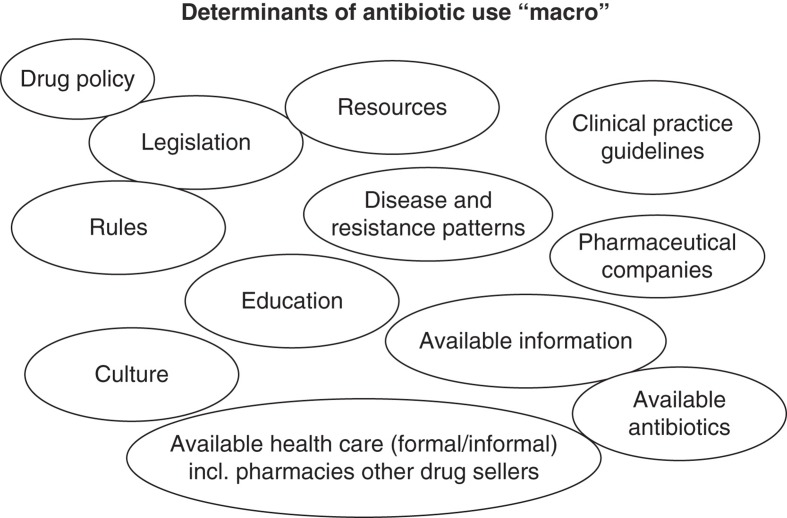
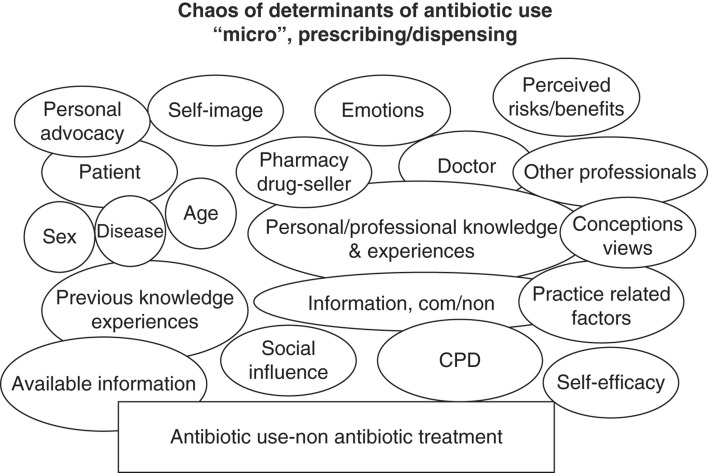
This paper addresses: 1) Situations where human behaviour is involved in relation to antibiotics, focusing on providers and consumers; 2) Theories about human behaviour and factors influencing behaviour in relation to antibiotics; 3) How behaviour in relation to antibiotics can change; and, 4) Antibiotic mainstreaming as an approach to facilitate changes in human behaviour as regards antibiotics. Influencing human behaviour in relation to antibiotics is a complex process which includes factors like knowledge, attitudes, social norms, socio-economic conditions, peer pressure, experiences, and bio-physical and socio-behavioural environment. Further, key concepts are often perceived in different ways by different individuals. While designing and implementing projects or programmes for behavioural change with respect to antibiotics for professionals or consumers it is helpful to consider theories or models of behaviour change, e.g. the 'stages of change model', including pre-contemplation, contemplation, preparation, action, and maintenance. People in different stages of change are susceptible to different behaviour modification strategies. Application of marketing principles to 'global good', so-called 'social marketing', to improve 'welfare of the individual and society' is gaining increased attention in public health. In conclusion, just providing correct knowledge is not sufficient although it is a pre-requisite for behaviour modification in the desired direction. We can never change the behaviour of any other human, but we can facilitate for others to change their own behaviour. One possibility is to implement 'antibiotic mainstreaming' as a potentially effective way for behaviour modification, i.e. to address consequences for maintaining effective antibiotics in all activities and decisions in society.
1)与抗生素相关的人类行为情况,重点关注提供者和消费者;2)与抗生素相关的人类行为和影响行为的因素理论;3)抗生素相关行为如何改变;以及,4)将抗生素纳入主流,以促进抗生素相关人类行为的改变。影响抗生素相关人类行为是一个复杂的过程,其中包括知识、态度、社会规范、社会经济条件、同伴压力、经验以及生物物理和社会行为环境等因素。此外,关键概念通常被不同的个体以不同的方式感知。在针对专业人员或消费者的抗生素行为改变项目或计划的设计和实施过程中,考虑行为改变的理论或模型(例如“改变阶段模型”,包括前沉思、沉思、准备、行动和维持)是有帮助的。处于不同改变阶段的人容易受到不同的行为修正策略的影响。将营销原则应用于“全球公益”,即所谓的“社会营销”,以提高“个人和社会的福利”,在公共卫生领域越来越受到关注。总之,尽管正确的知识是行为改变的前提,但仅仅提供正确的知识是不够的。我们永远无法改变任何其他人的行为,但我们可以为他人改变自己的行为提供便利。一种可能性是实施“抗生素纳入主流”,作为一种有效的行为改变方式,即解决在社会的所有活动和决策中保持有效抗生素的后果。