Sensory-Motor Systems Lab, ETH Zurich, Zurich, Switzerland.
J Neuroeng Rehabil. 2014 Apr 16;11:64. doi: 10.1186/1743-0003-11-64.
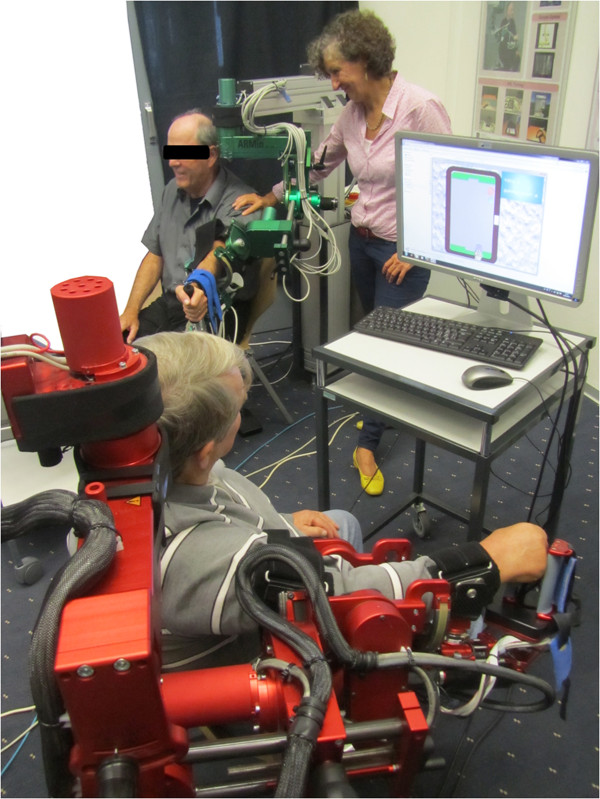
Several strategies have been proposed to improve patient motivation and exercise intensity during robot-aided stroke rehabilitation. One relatively unexplored possibility is two-player gameplay, allowing subjects to compete or cooperate with each other to achieve a common goal. In order to explore the potential of such games, we designed a two-player game played using two ARMin arm rehabilitation robots.
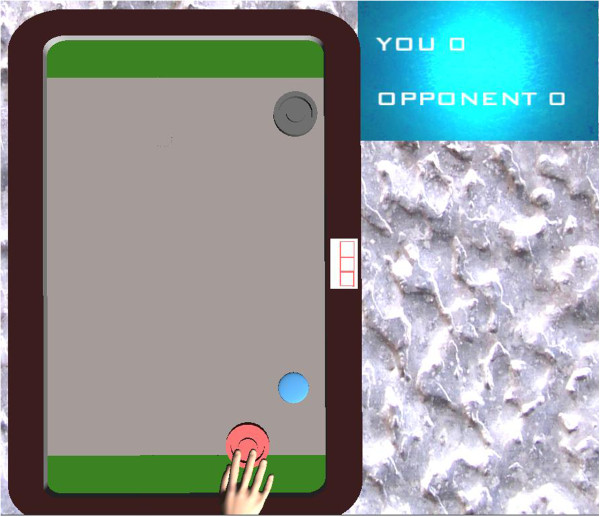
The game was an air-hockey task displayed on a computer monitor and controlled using shoulder movements in the ARMin robot. Three game modes were tested: single-player (competing against computer), competitive (competing against human), and cooperative (cooperating with human against computer). All modes were played by 30 unimpaired subjects and 8 impaired chronic stroke subjects. The subjects filled out the Intrinsic Motivation Inventory questionnaire after each game mode, as well as a final questionnaire about game preferences and their personality.
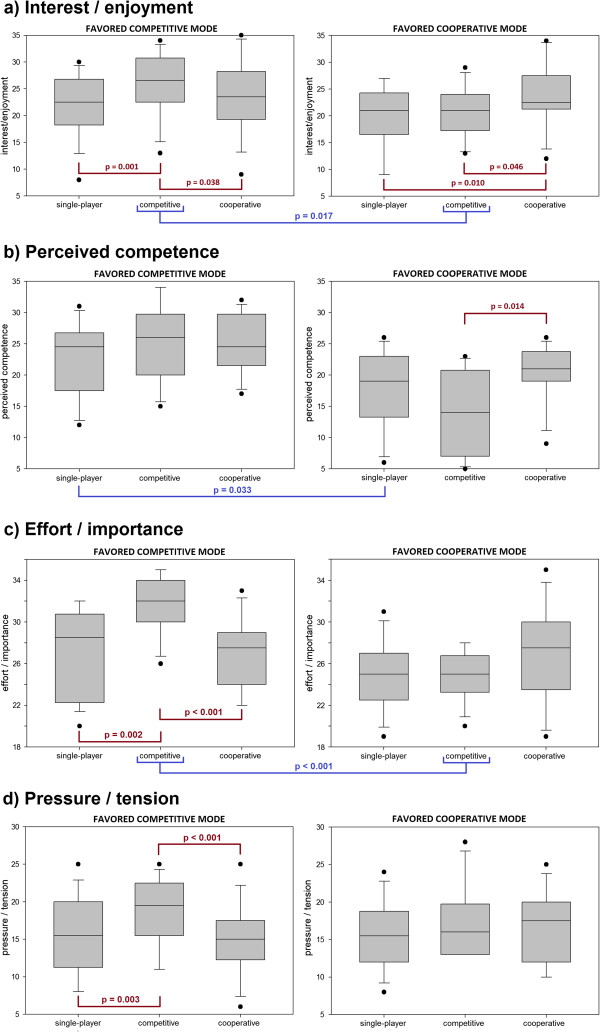
Nearly all unimpaired subjects preferred playing the two-player game modes to the single-player one, as they enjoyed talking and interacting with another person. However, there were two distinct player groups: one liked the competitive mode but not the cooperative mode while the other liked the cooperative but not the competitive mode. Unimpaired subjects who liked the competitive mode also put significantly more effort into it than into the other modes. Results from impaired subjects were similar, with even impaired subjects over 60 years old enjoying competitive gameplay. The subjects' personalities roughly predicted which mode they would prefer, which was especially evident in a poorly-matched impaired pair that preferred the single-player mode.
Results indicate great potential for two-player rehabilitation games, in the form of greater enjoyment as well as potentially more intensive exercise compared to single-player games. However, the right game type needs to be chosen for each subject depending on skill and personality, along with selecting an appropriate co-player. Further studies with patients that are currently enrolled in rehabilitation programs are recommended, and the subjective measures used in our study should be augmented with objective measures such as electromyography.
为了提高机器人辅助脑卒中康复治疗中的患者动机和运动强度,已经提出了多种策略。一种相对未被探索的可能性是双人游戏,允许参与者相互竞争或合作以实现共同目标。为了探索这种游戏的潜力,我们设计了一种使用两个 ARMin 手臂康复机器人进行的双人游戏。
该游戏是一个在计算机显示器上显示的空气曲棍球任务,使用 ARMin 机器人中的肩部运动进行控制。测试了三种游戏模式:单人游戏(与计算机竞争)、竞争游戏(与人类竞争)和合作游戏(与人类合作对抗计算机)。所有模式均由 30 名未受损的受试者和 8 名慢性脑卒中受损受试者进行测试。受试者在每个游戏模式后填写内在动机问卷,以及关于游戏偏好及其个性的最终问卷。
几乎所有未受损的受试者都更喜欢玩双人游戏模式而不是单人游戏模式,因为他们喜欢与另一个人交谈和互动。然而,存在两个截然不同的玩家群体:一个喜欢竞争模式但不喜欢合作模式,而另一个喜欢合作模式但不喜欢竞争模式。喜欢竞争模式的未受损受试者也比其他模式投入更多的努力。受损受试者的结果相似,甚至 60 岁以上的受损受试者也喜欢竞争性游戏。受试者的个性大致预测了他们会更喜欢哪种模式,在一个不匹配的受损配对中尤其明显,他们更喜欢单人游戏模式。
结果表明,双人康复游戏具有很大的潜力,可以比单人游戏更享受游戏,并且潜在地更加强化运动。然而,需要根据技能和个性为每个受试者选择合适的游戏类型,并选择合适的搭档。建议对目前正在参加康复计划的患者进行进一步研究,并应使用肌电图等客观测量方法来扩充我们研究中使用的主观测量方法。