State Key Laboratory of Protein and Plant Gene Research, School of Life Sciences, Peking University, Beijing 100871, China.
State Key Laboratory of Protein and Plant Gene Research, School of Life Sciences, Peking University, Beijing 100871, China; Synthetic and Functional Biomolecules Center, Beijing 100871, China; Peking-Tsinghua Center for Life Sciences, Beijing 100871, China.
Genomics Proteomics Bioinformatics. 2014 Apr;12(2):72-8. doi: 10.1016/j.gpb.2014.03.001. Epub 2014 Apr 18.
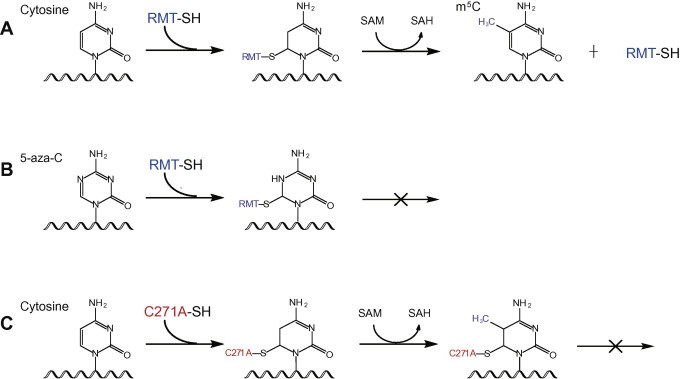
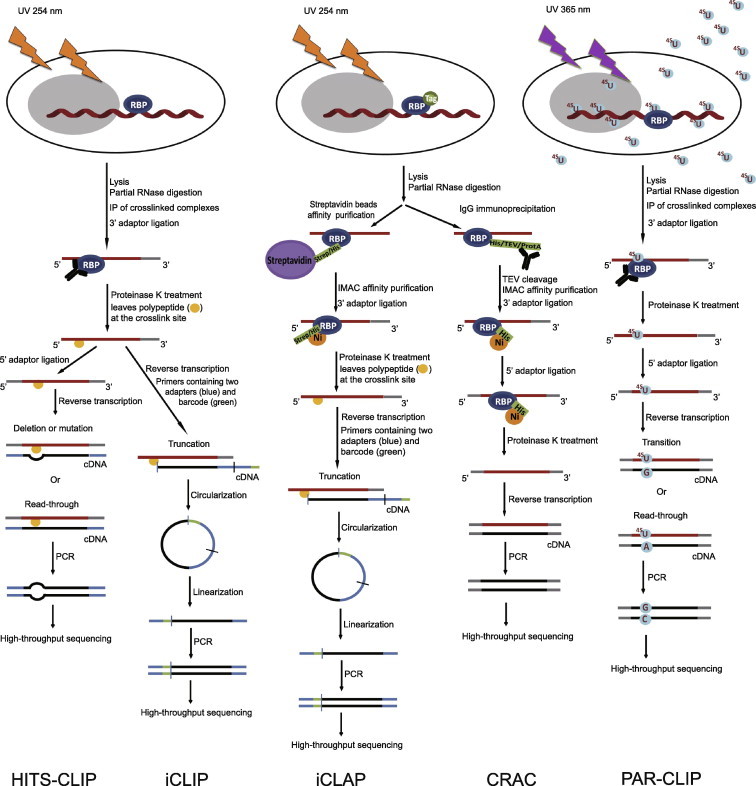
RNA-protein interactions influence many biological processes. Identifying the binding sites of RNA-binding proteins (RBPs) remains one of the most fundamental and important challenges to the studies of such interactions. Capturing RNA and RBPs via chemical crosslinking allows stringent purification procedures that significantly remove the non-specific RNA and protein interactions. Two major types of chemical crosslinking strategies have been developed to date, i.e., UV-enabled crosslinking and enzymatic mechanism-based covalent capture. In this review, we compare such strategies and their current applications, with an emphasis on the technologies themselves rather than the biology that has been revealed. We hope such methods could benefit broader audience and also urge for the development of new methods to study RNA-RBP interactions.
RNA 与蛋白质的相互作用影响着许多生物学过程。鉴定 RNA 结合蛋白 (RBPs) 的结合位点仍然是此类相互作用研究中最基本和最重要的挑战之一。通过化学交联捕获 RNA 和 RBPs,可以进行严格的纯化程序,显著去除非特异性的 RNA 和蛋白质相互作用。迄今为止,已经开发出两种主要类型的化学交联策略,即 UV 启用的交联和基于酶机制的共价捕获。在这篇综述中,我们比较了这些策略及其当前的应用,重点是技术本身,而不是已经揭示的生物学。我们希望这些方法能够使更广泛的受众受益,并敦促开发新的方法来研究 RNA-RBP 相互作用。