Sadowska-Bartosz Izabela, Galiniak Sabina, Bartosz Grzegorz
Department of Biochemistry and Cell Biology, University of Rzeszów, Zelwerowicza St. 4, PL 35-601 Rzeszów, Poland.
Molecules. 2014 Apr 17;19(4):4880-96. doi: 10.3390/molecules19044880.
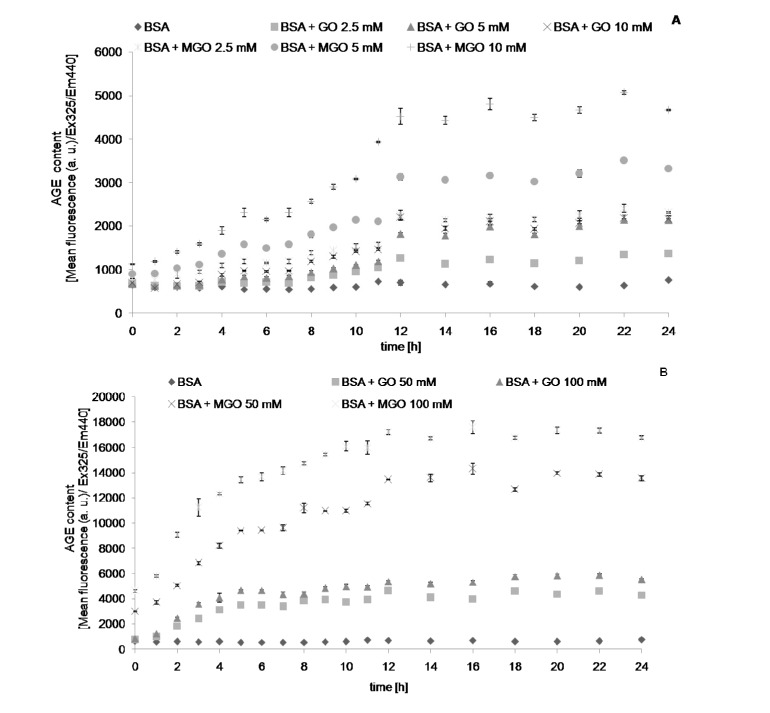
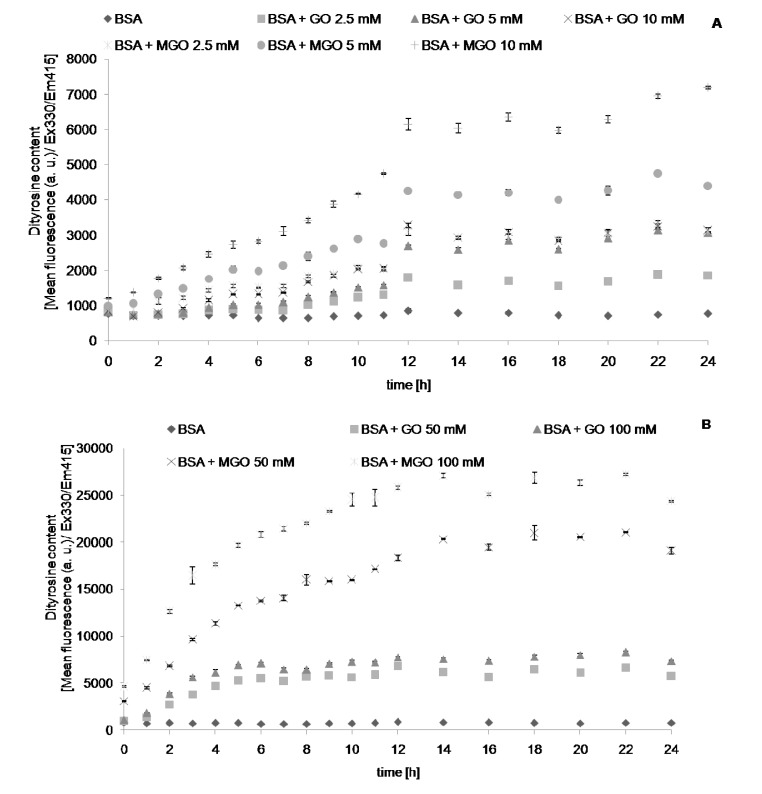
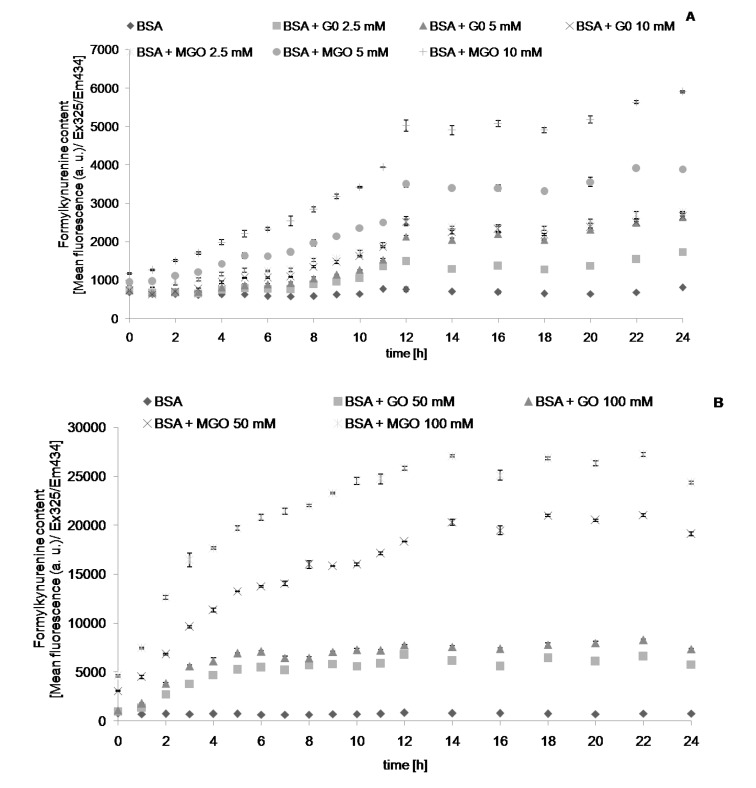
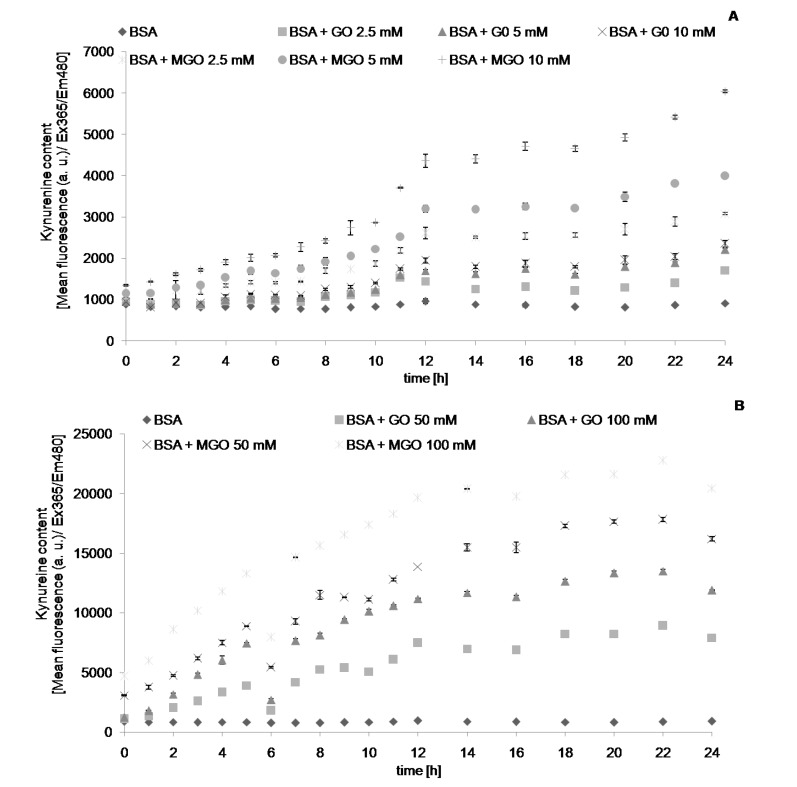
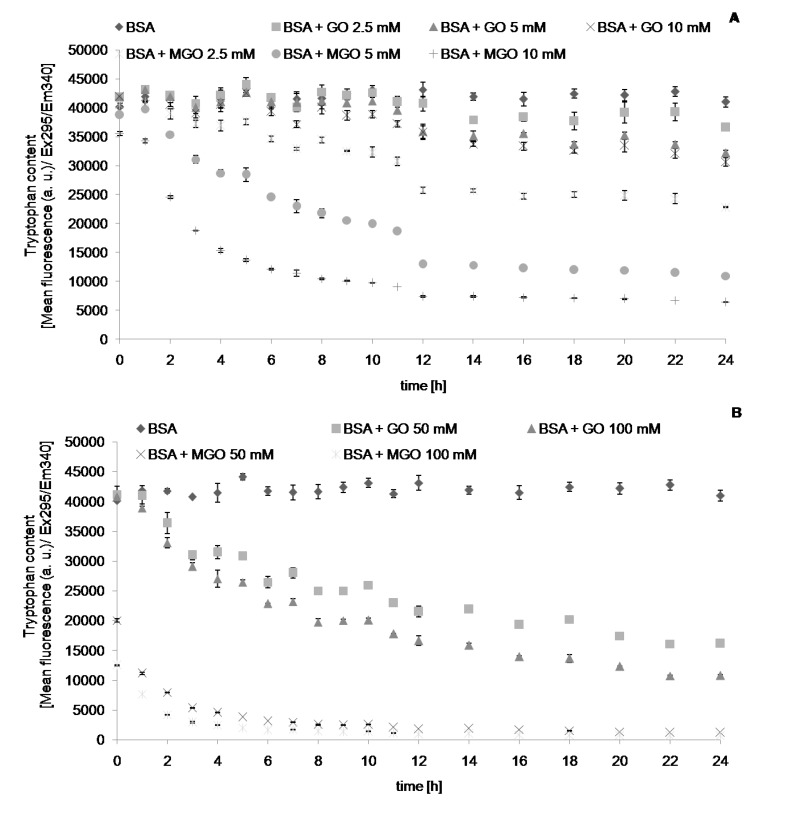
The aim of this study was to compare several methods for measurement of bovine serum albumin (BSA) modification by glycoxidation with reactive dicarbonyl compounds (methylglyoxal--MGO and glyoxal--GO), for studies of the kinetics of this process and to compare the effects of 19 selected compounds on BSA glycation by the aldehydes. The results confirm the higher reactivity of MGO with respect to GO and point to the usefulness of AGE, dityrosine and N'-formylkynurenine fluorescence for monitoring glycation and evaluation of protection against glycation. Different extent of protection against glycation induced by MGO and GO was found for many compounds, probably reflecting effects on various stages of the glycation process. Polyphenols (genistein, naringin and ellagic acid) were found to protect against aldehyde-induced glycation; 1-cyano-4-hydroxycinnamic acid was also an effective protector.
本研究的目的是比较几种通过糖基氧化反应测定牛血清白蛋白(BSA)与活性二羰基化合物(甲基乙二醛——MGO和乙二醛——GO)修饰的方法,以研究该过程的动力学,并比较19种选定化合物对醛诱导的BSA糖基化的影响。结果证实了MGO相对于GO具有更高的反应活性,并指出晚期糖基化终末产物(AGE)、二酪氨酸和N'-甲酰犬尿氨酸荧光在监测糖基化和评估抗糖基化保护作用方面的有用性。发现许多化合物对MGO和GO诱导的糖基化具有不同程度的保护作用,这可能反映了其对糖基化过程各个阶段的影响。发现多酚类物质(染料木黄酮、柚皮苷和鞣花酸)可防止醛诱导的糖基化;1-氰基-4-羟基肉桂酸也是一种有效的保护剂。