Hirose S, Singh V K, Donoso L A, Shinohara T, Kotake S, Tanaka T, Kuwabara T, Yamaki K, Gery I, Nussenblatt R B
Laboratory of Immunology, National Eye Institute, Bethesda, MD 20892.
Clin Exp Immunol. 1989 Jul;77(1):106-11.
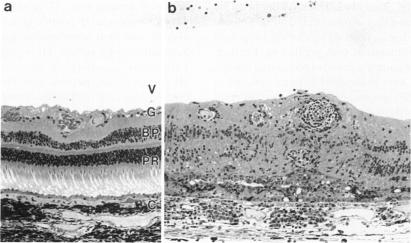
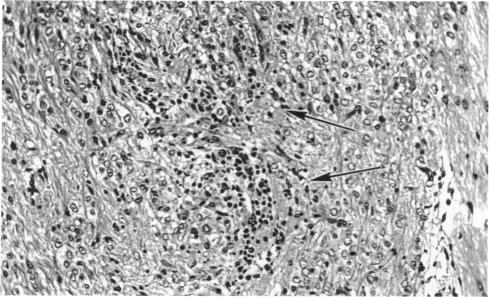
S-antigen, a photoreceptor cell protein, induces a predominantly T-cell mediated autoimmune uveitis in many vertebrate animals, including primates. Because of this activity and the finding of immune responses to S antigen in patients with uveitis, this protein has been implicated in the pathogenesis of uveitis in humans. Peptide M, an 18-amino acid component of S antigen, has previously been shown to be highly uveitopathogenic in rats and guinea pigs. We report here that peptide M is immunopathogenic in some monkeys, producing inflammatory changes in eyes and pineal glands similar to those induced by native S antigen. Monkeys with disease also developed intense immune responses to peptide M, measured by the lymphocyte proliferation assay. In addition, lymphocytes from these monkeys reacted against whole S antigen. Furthermore, lymphocytes from certain monkeys immunized with whole S antigen responded well against peptide M, thus indicating that this peptide is an immunodominant epitope in these animals. Two of the four monkeys immunized with peptide M did not develop disease. Lymphocytes from these two animals did not respond in culture against the peptide. Following immunization with the whole protein, these monkeys were capable, however, of developing cellular immunity against S antigen and one of them developed disease. The possible involvement of peptide M in the pathogenesis of uveitis in humans is discussed.
S抗原是一种光感受器细胞蛋白,在包括灵长类动物在内的许多脊椎动物中可诱发主要由T细胞介导的自身免疫性葡萄膜炎。鉴于这种活性以及葡萄膜炎患者体内存在针对S抗原的免疫反应,该蛋白被认为与人类葡萄膜炎的发病机制有关。肽M是S抗原的一种由18个氨基酸组成的成分,先前已证明其在大鼠和豚鼠中具有高度致葡萄膜炎性。我们在此报告,肽M在一些猴子中具有免疫致病性,可在眼睛和松果体中产生与天然S抗原诱导的类似炎症变化。患有疾病的猴子对肽M也产生了强烈的免疫反应,通过淋巴细胞增殖试验测定。此外,这些猴子的淋巴细胞对完整的S抗原产生反应。此外,用完整S抗原免疫的某些猴子的淋巴细胞对肽M反应良好,这表明该肽在这些动物中是一个免疫显性表位。用肽M免疫的四只猴子中有两只未发病。这两只动物的淋巴细胞在培养中对该肽无反应。然而,在用完整蛋白免疫后,这些猴子能够产生针对S抗原的细胞免疫,其中一只发生了疾病。本文讨论了肽M可能参与人类葡萄膜炎发病机制的情况。