CSIR, Natural Resources and the Environment P.O Box 320, Stellenbosch, 7602, South Africa.
Ecol Evol. 2014 Apr;4(8):1209-21. doi: 10.1002/ece3.985. Epub 2014 Mar 11.
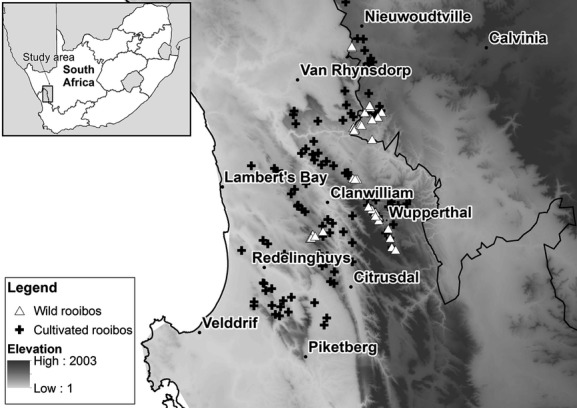
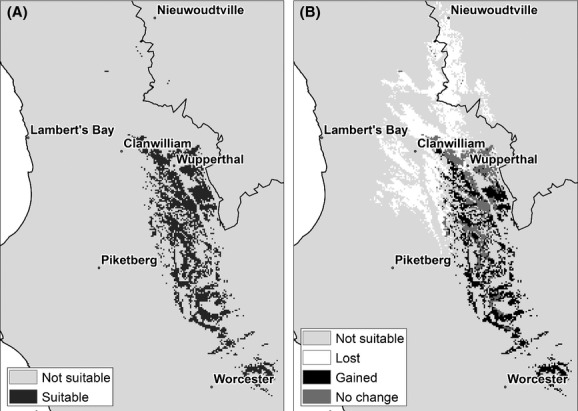
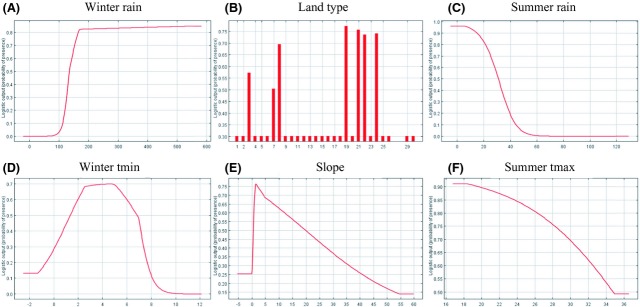
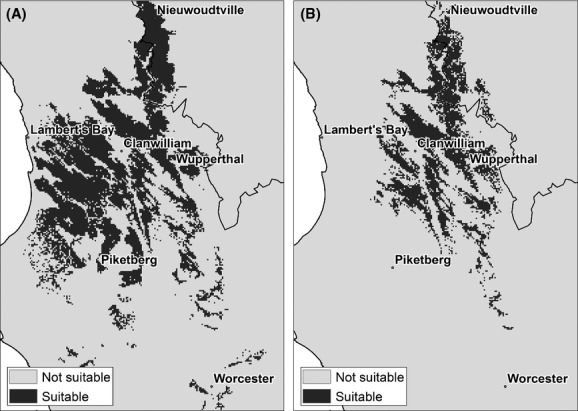
Aspalathus linearis (Burm. f.) R. Dahlgren (rooibos) is endemic to the Fynbos Biome of South Africa, which is an internationally recognized biodiversity hot spot. Rooibos is both an invaluable wild resource and commercially cultivated crop in suitable areas. Climate change predictions for the region indicate a significant warming scenario coupled with a decline in winter rainfall. First estimates of possible consequences for biodiversity point to species extinctions of 23% in the long term in the Fynbos Biome. Bioclimatic modelling using the maximum entropy method was used to develop an estimate of the realized niche of wild rooibos and the current geographic distribution of areas suitable for commercially production. The distribution modelling provided a good match to the known distribution and production area of A. linearis. An ensemble of global climate models that assume the A2 emissions scenario of high energy requirements was applied to develop possible scenarios of range/suitability shift under future climate conditions. When these were extrapolated to a future climate (2041-2070) both wild and cultivated tea exhibited substantial range contraction with some range shifts southeastwards and upslope. Most of the areas where range expansion was indicated are located in existing conservation areas or include conservation worthy vegetation. These findings will be critical in directing conservation efforts as well as developing strategies for farmers to cope with and adapt to climate change.
南非的法尔布姆菲因博斯生物群系是狭叶山蚂蝗(罗布斯塔茶)的特有栖息地,该生物群系是国际公认的生物多样性热点地区。罗布斯塔茶既是一种宝贵的野生资源,也是适宜地区商业化种植的作物。该地区的气候变化预测表明,将出现显著的变暖情景,同时冬季降雨量减少。对生物多样性可能产生的影响的初步估计表明,在法尔布姆菲因博斯生物群系,从长远来看,物种灭绝的可能性为 23%。利用最大熵方法进行生物气候建模,对野生罗布斯塔茶的实际生态位和适合商业生产的现有区域的地理分布进行了估计。分布模型与狭叶山蚂蝗的已知分布和生产区域非常吻合。应用了一组假设高能源需求的 A2 排放情景的全球气候模型,以开发未来气候条件下范围/适宜性变化的可能情景。当将这些情景外推到未来气候(2041-2070 年)时,野生和种植的茶叶都表现出了相当大的范围收缩,有些范围向东南和上坡移动。表明范围扩大的大部分区域都位于现有的保护区内,或者包括值得保护的植被。这些发现对于指导保护工作以及制定农民应对和适应气候变化的策略至关重要。