Li Xinli, Xu Jiuhong
1] School of Public Health, Medical College of Soochow University, Suzhou 215123, Jiangsu, China [2].
1] Department of Radiotherapy, the First Affiliated Hospital of Soochow University, Suzhou 215006, Jiangsu, China [2].
Sci Rep. 2014 May 22;4:5031. doi: 10.1038/srep05031.
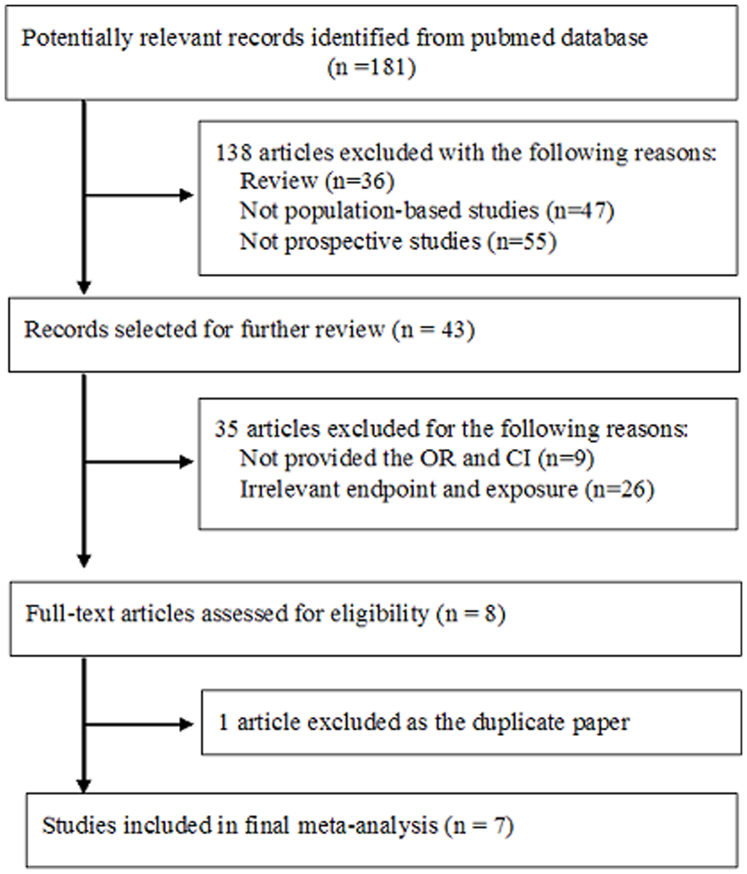
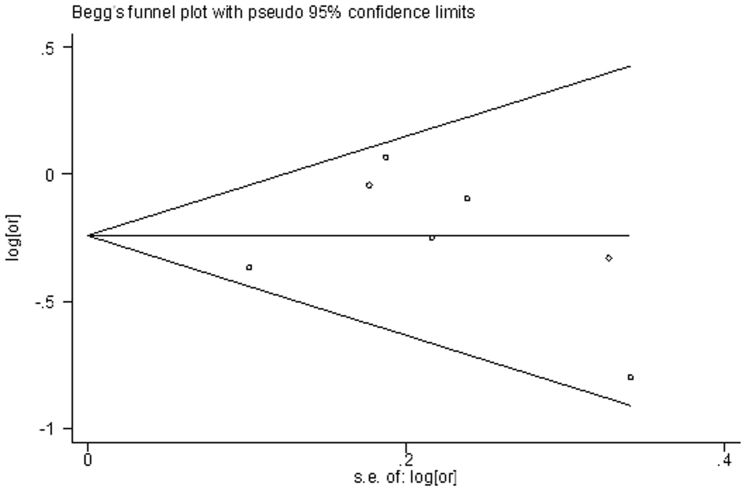
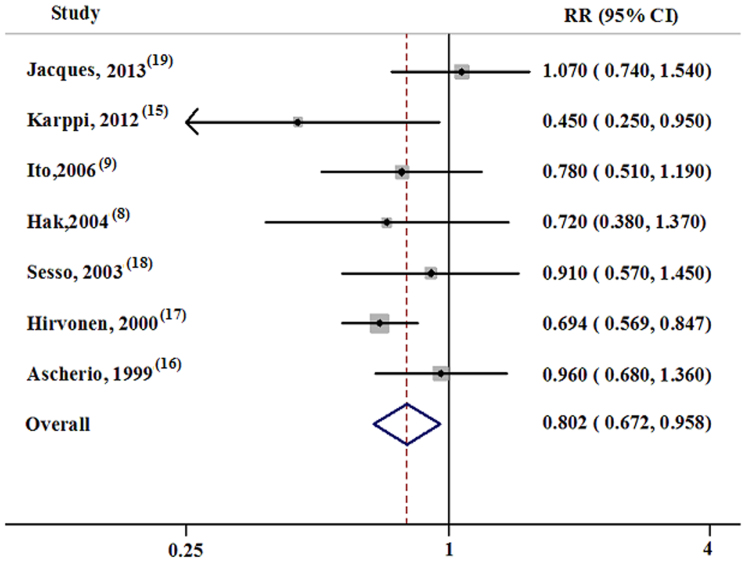
Epidemiological studies support a protective role of lycopene against stroke occurrence or mortality, but the results have been conflicting. We conducted a meta-analysis to assess the relationship between dietary or circulating lycopene and stroke risk (including stroke occurrence or mortality). Relevant papers were collected by screening the PubMed database through October 2013. Only prospective studies providing relative risk estimates with 95% confidence intervals for the association between lycopene and stroke were included. A random-effects model was used to calculate the pooled estimate. Subgroup analysis was conducted to investigate the effects of various factors on the final results. The pooled analysis of seven prospective studies, with 116,127 participants and 1,989 cases, demonstrated that lycopene decreased stroke risk by 19.3% (RR=0.807, 95% CI=0.680-0.957) after adjusting for confounding factors. No heterogeneity was observed (p=0.234, I2=25.5%). Circulating lycopene, not dietary lycopene, was associated with a statistically significant decrease in stroke risk (RR=0.693, 95% CI=0.503-0.954). Lycopene could protect European, or males against stroke risk. Duration of follow-up had no effect on the final results. There was no evidence of publication bias. Lycopene, especially circulating lycopene, is negatively associated with stroke risk.
流行病学研究支持番茄红素对中风发生或死亡率具有保护作用,但结果一直存在争议。我们进行了一项荟萃分析,以评估饮食或循环中的番茄红素与中风风险(包括中风发生或死亡率)之间的关系。通过筛选截至2013年10月的PubMed数据库收集相关论文。仅纳入提供番茄红素与中风关联的相对风险估计值及95%置信区间的前瞻性研究。采用随机效应模型计算合并估计值。进行亚组分析以研究各种因素对最终结果的影响。对七项前瞻性研究的合并分析涉及116,127名参与者和1,989例病例,结果表明,在调整混杂因素后,番茄红素使中风风险降低了19.3%(RR = 0.807,95% CI = 0.680 - 0.957)。未观察到异质性(p = 0.234,I² = 25.5%)。循环中的番茄红素而非饮食中的番茄红素与中风风险的显著降低相关(RR = 0.693,95% CI = 0.503 - 0.954)。番茄红素可保护欧洲人或男性免受中风风险。随访时间对最终结果无影响。没有证据表明存在发表偏倚。番茄红素,尤其是循环中的番茄红素,与中风风险呈负相关。