Ishaka Aminu, Umar Imam Mustapha, Mahamud Rozi, Zuki Abu Bakar Zakaria, Maznah Ismail
Laboratory of Molecular Biomedicine, Institute of Bioscience, University Putra Malaysia, Serdang, Selangor, Malaysia ; Department of Medical Biochemistry, College of Health Sciences, Usmanu Danfodiyo University, Sokoto, Nigeria.
Laboratory of Molecular Biomedicine, Institute of Bioscience, University Putra Malaysia, Serdang, Selangor, Malaysia.
Int J Nanomedicine. 2014 May 9;9:2261-9. doi: 10.2147/IJN.S56999. eCollection 2014.
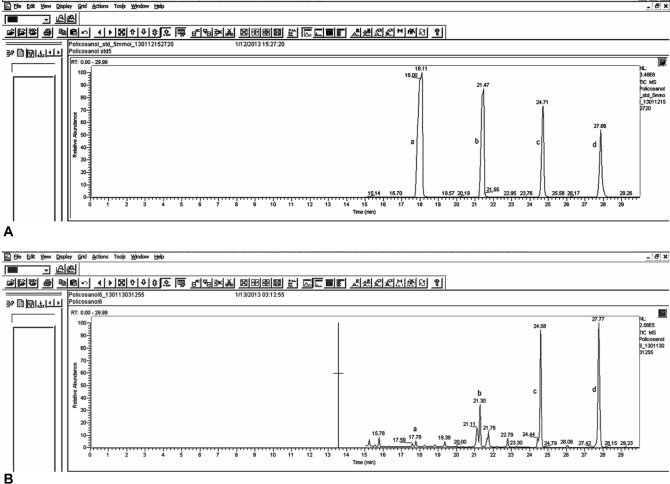
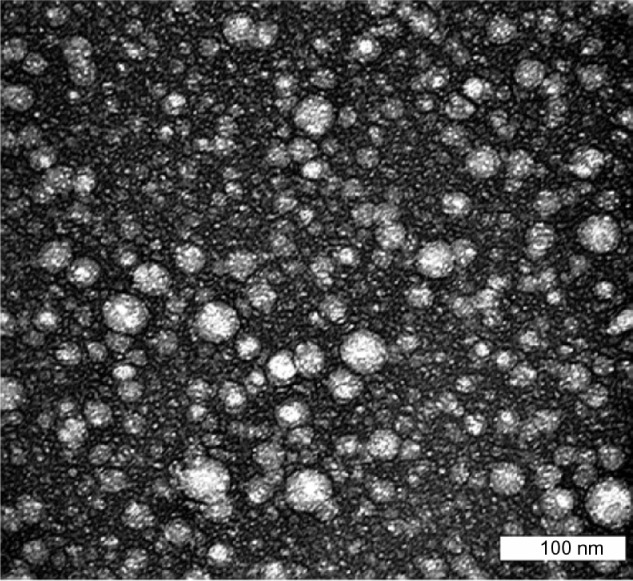
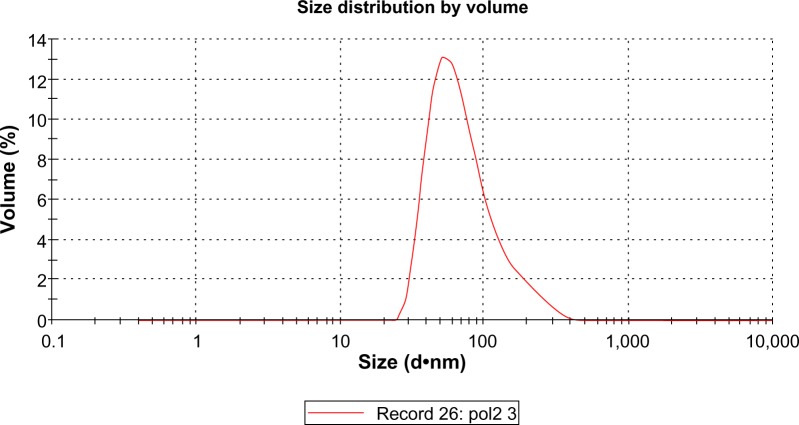
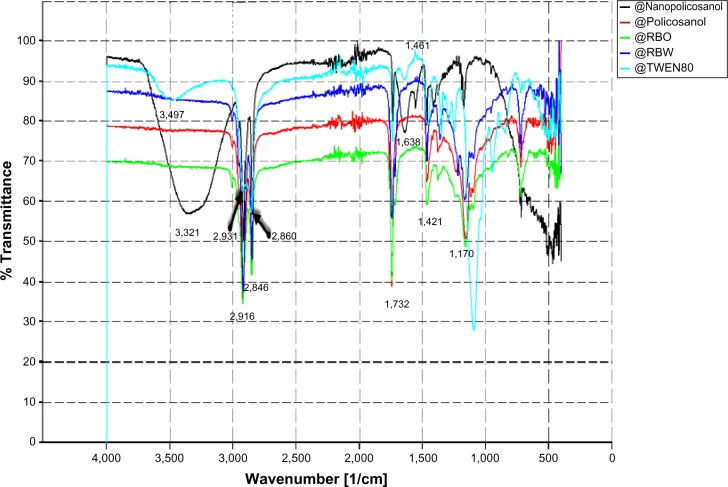
Policosanol, a mixture of long-chain alcohols found in animal and plant waxes, has several biological effects; however, it has a bioavailability of less than 10%. Therefore, there is a need to improve its bioavailability, and one of the ways of doing this is by nanoemulsion formulation. Different droplet size distributions are usually achieved when emulsions are formed, which solely depends on the preparation method used. Mostly, emulsions are intended for better delivery with maintenance of the characteristics and properties of the leading components. In this study, policosanol was extracted from rice bran wax, its composition was determined by gas chromatography mass spectrophotometry, nanoemulsion was made, and the physical stability characteristics were determined. The results showed that policosanol nanoemulsion has a nanosize particle distribution below 100 nm (92.56-94.52 nm), with optimum charge distribution (-55.8 to -45.12 mV), pH (6.79-6.92) and refractive index (1.50); these were monitored and found to be stable for 8 weeks. The stability of policosanol nanoemulsion confers the potential to withstand long storage times.
聚多卡醇是一种存在于动植物蜡中的长链醇混合物,具有多种生物学效应;然而,其生物利用度低于10%。因此,有必要提高其生物利用度,而实现这一目标的方法之一是通过纳米乳剂配方。形成乳液时通常会获得不同的液滴尺寸分布,这完全取决于所使用的制备方法。大多数情况下,乳液旨在实现更好的递送,同时保持主要成分的特性和性质。在本研究中,从米糠蜡中提取了聚多卡醇,通过气相色谱-质谱联用仪测定了其成分,制备了纳米乳剂,并测定了其物理稳定性特征。结果表明,聚多卡醇纳米乳剂具有低于100 nm(92.56 - 94.52 nm)的纳米级颗粒分布,具有最佳的电荷分布(-55.8至-45.12 mV)、pH值(6.79 - 6.92)和折射率(1.50);对这些指标进行监测,发现其在8周内保持稳定。聚多卡醇纳米乳剂的稳定性使其具有耐受长时间储存的潜力。