Wong Wai-Teng, Ismail Maznah, Imam Mustapha Umar, Zhang Yi-Da
Laboratory of Molecular Biomedicine, Institute of Bioscience, Universiti Putra Malaysia, 43400, Serdang, Selangor, Malaysia.
Department of Nutrition and Dietetics, Faculty of Medicine and Health Sciences, Universiti Putra Malaysia, 43400, Serdang, Selangor, Malaysia.
BMC Complement Altern Med. 2016 Jul 28;16:252. doi: 10.1186/s12906-016-1223-9.
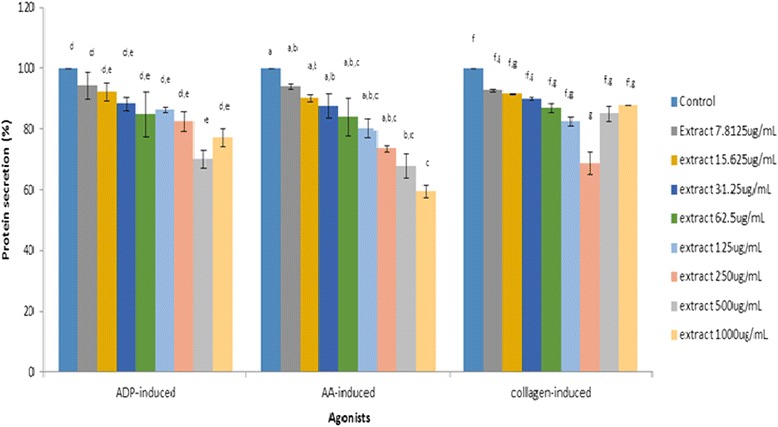
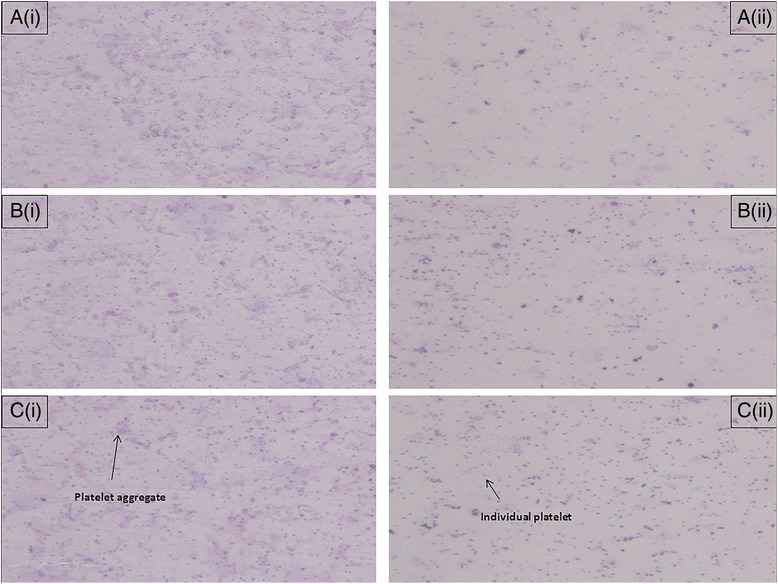
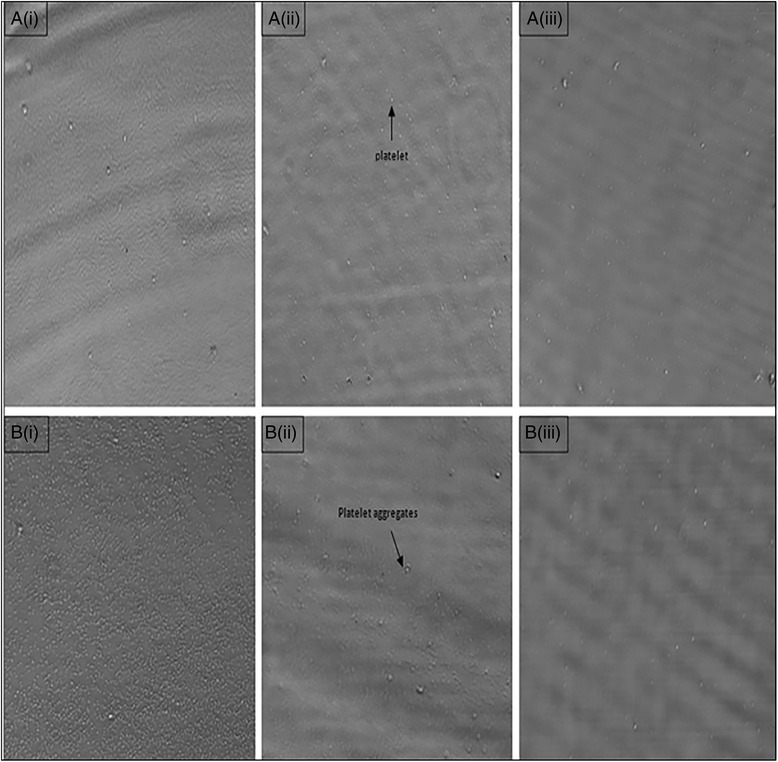
Rice bran is bioactive-rich and has proven health benefits for humans. Moreover, its source, the brown rice has antioxidant, hypolipidemic and other functional properties that are increasingly making it a nutritional staple especially in Asian countries. This study investigated the antiplatelet aggregation mechanisms of crude hexane/methanolic rice bran extract, in which policosanol was the targeted bioactive. Platelets play a vital role in pathogenesis of atherosclerosis and cardiovascular diseases, and their increased activities could potentially cause arterial thrombus formation or severe bleeding disorders. Thus, in this study, platelet aggregation and adhesion of platelets to major components of basal lamina were examined in vitro. In addition, cellular protein secretion was quantified as a measurement of platelet activation.
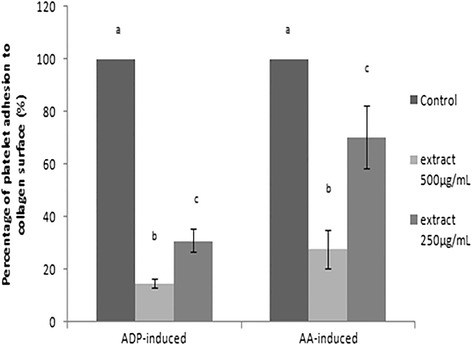
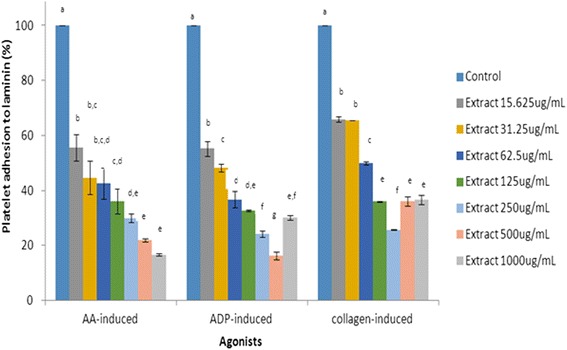
Adenosine diphosphate (ADP), collagen, and arachidonic acid (AA)-induced aggregation were studied using the microtiter technique. Rat platelets were pre-treated with various concentrations of policosanol extract, and the adhesion of platelets onto collagen- and laminin-coated surface (extracellular matrix) was studied using the acid phosphatase assay. The effect of crude policosanol extract on released proteins from activated platelets was measured using modified Lowry determination method.
Rice bran policosanol extract significantly inhibited in vitro platelet aggregation induced by different agonists in a dose dependent manner. The IC50 of ADP-, collagen-, and AA-induced platelet aggregation were 533.37 ± 112.16, 635.94 ± 78.45 and 693.86 ± 70.57 μg/mL, respectively. The present study showed that crude rice bran policosanol extract significantly inhibited platelet adhesion to collagen in a dose dependent manner. Conversely, at a low concentration of 15.625 μg/mL, the extract significantly inhibited platelet adhesion to laminin stimulated by different platelet agonists. In addition to the alteration of cell adhesive properties, cellular protein secretion of the treated platelets towards different stimulants were decreased upon crude extract treatment.
Our results showed that crude rice bran policosanol extract could inhibit in vitro platelet adhesion, aggregation and secretion upon activation using agonists. These findings serve as a scientific platform to further explore alternative therapies in cardiovascular diseases related to platelet malfunction.
米糠富含生物活性成分,已证实对人体健康有益。此外,其来源糙米具有抗氧化、降血脂等功能特性,这使得它在亚洲国家越来越成为一种营养主食。本研究调查了粗己烷/甲醇米糠提取物的抗血小板聚集机制,其中多廿烷醇是目标生物活性成分。血小板在动脉粥样硬化和心血管疾病的发病机制中起着至关重要的作用,其活性增加可能会导致动脉血栓形成或严重出血性疾病。因此,在本研究中,体外检测了血小板聚集以及血小板与基底层主要成分的黏附情况。此外,对细胞蛋白分泌进行定量,作为血小板活化的一项指标。
采用微量滴定技术研究二磷酸腺苷(ADP)、胶原和花生四烯酸(AA)诱导的聚集。用不同浓度的多廿烷醇提取物预处理大鼠血小板,并采用酸性磷酸酶测定法研究血小板在胶原和层粘连蛋白包被表面(细胞外基质)的黏附情况。采用改良的洛氏法测定粗多廿烷醇提取物对活化血小板释放蛋白的影响。
米糠多廿烷醇提取物以剂量依赖方式显著抑制不同激动剂诱导的体外血小板聚集。ADP、胶原和AA诱导的血小板聚集的IC50分别为533.37±112.16、635.94±78.45和693.86±70.57μg/mL。本研究表明,粗米糠多廿烷醇提取物以剂量依赖方式显著抑制血小板与胶原的黏附。相反,在15.625μg/mL的低浓度下,该提取物显著抑制不同血小板激动剂刺激下血小板与层粘连蛋白的黏附。除了细胞黏附特性的改变外,粗提取物处理后,处理过的血小板对不同刺激物的细胞蛋白分泌减少。
我们的结果表明,粗米糠多廿烷醇提取物可抑制激动剂激活后体外血小板的黏附、聚集和分泌。这些发现为进一步探索与血小板功能异常相关的心血管疾病的替代疗法提供了科学平台。