Institute of Acupuncture and Moxibustion, China Academy of Chinese Medical Sciences, 16 Nanxiaojie, Dongzhimennei, Bejing 100700, China.
Evid Based Complement Alternat Med. 2014;2014:673239. doi: 10.1155/2014/673239. Epub 2014 Apr 30.
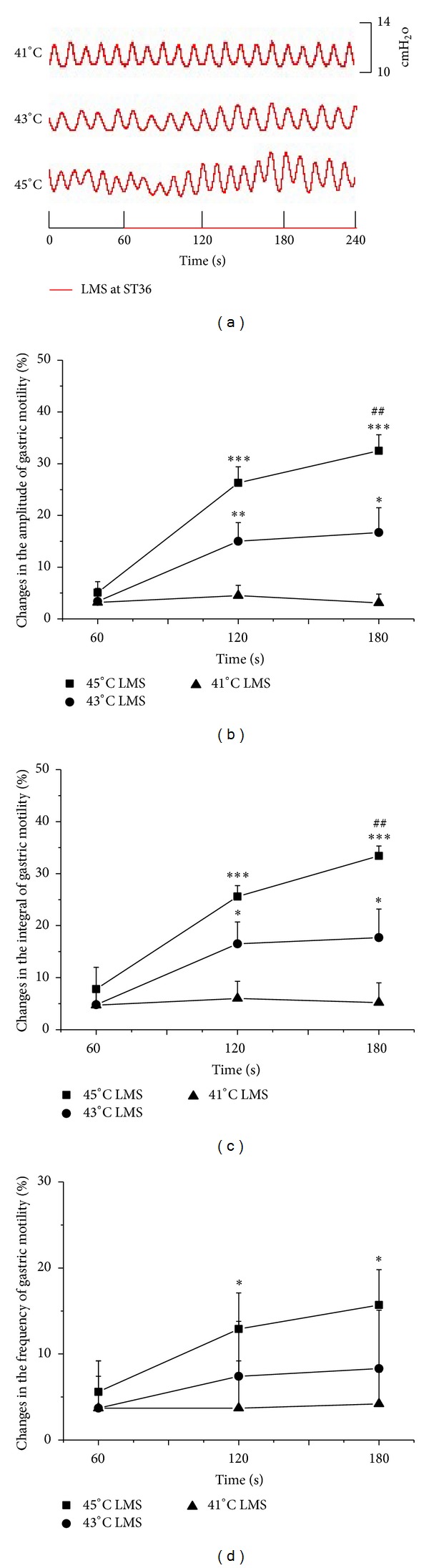
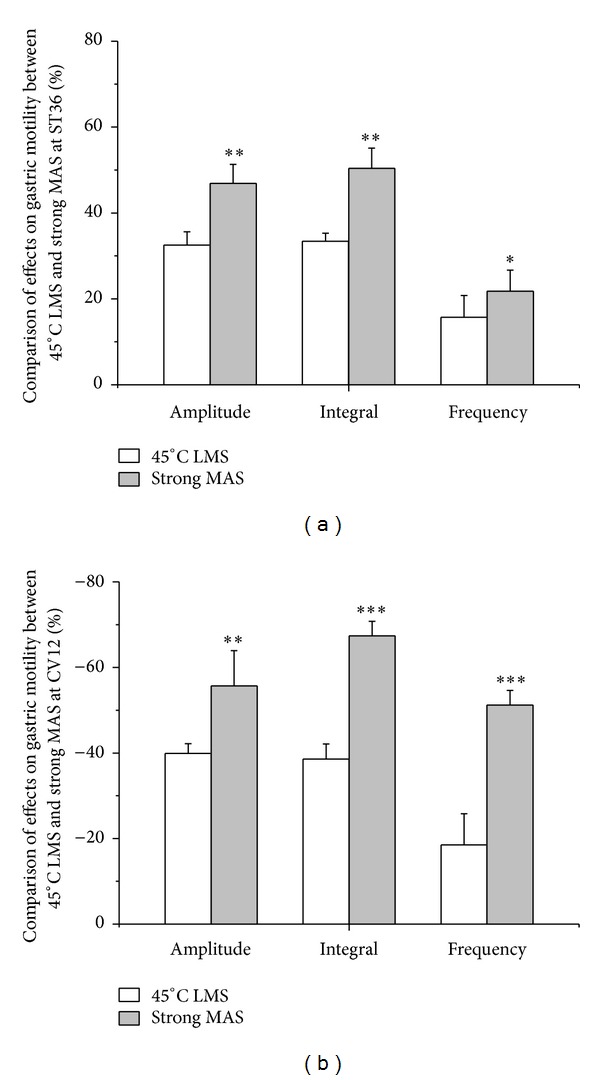
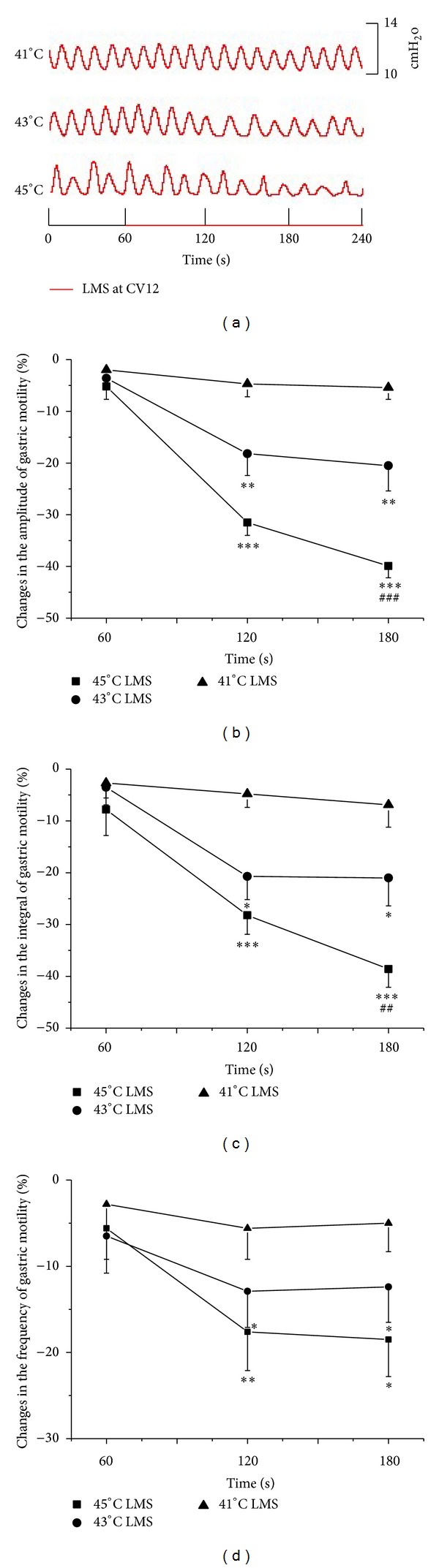
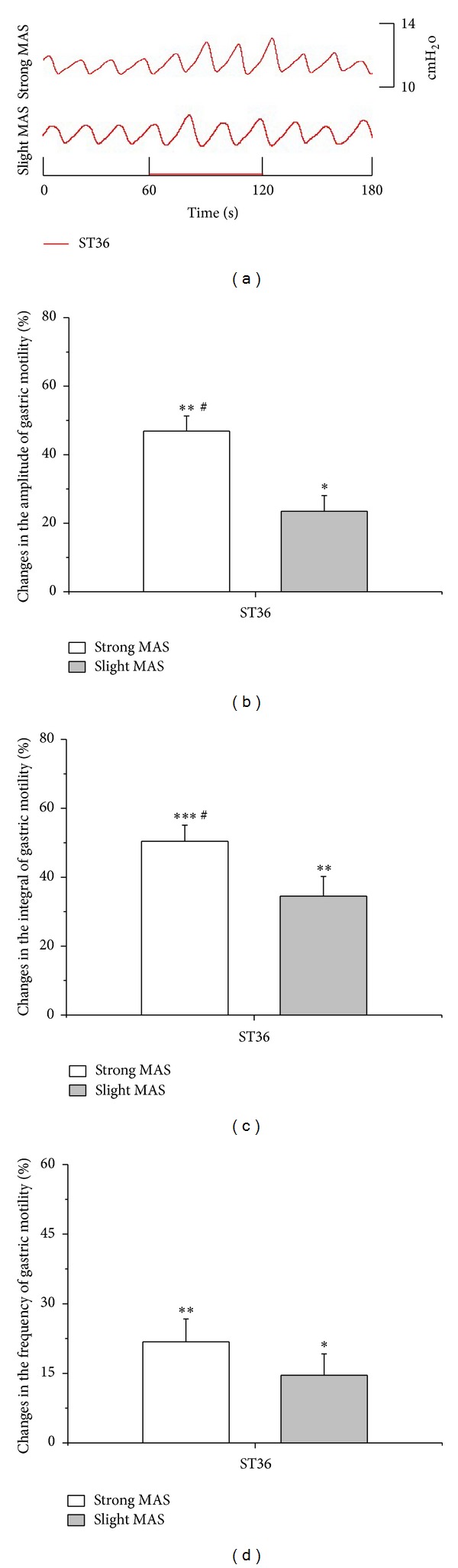
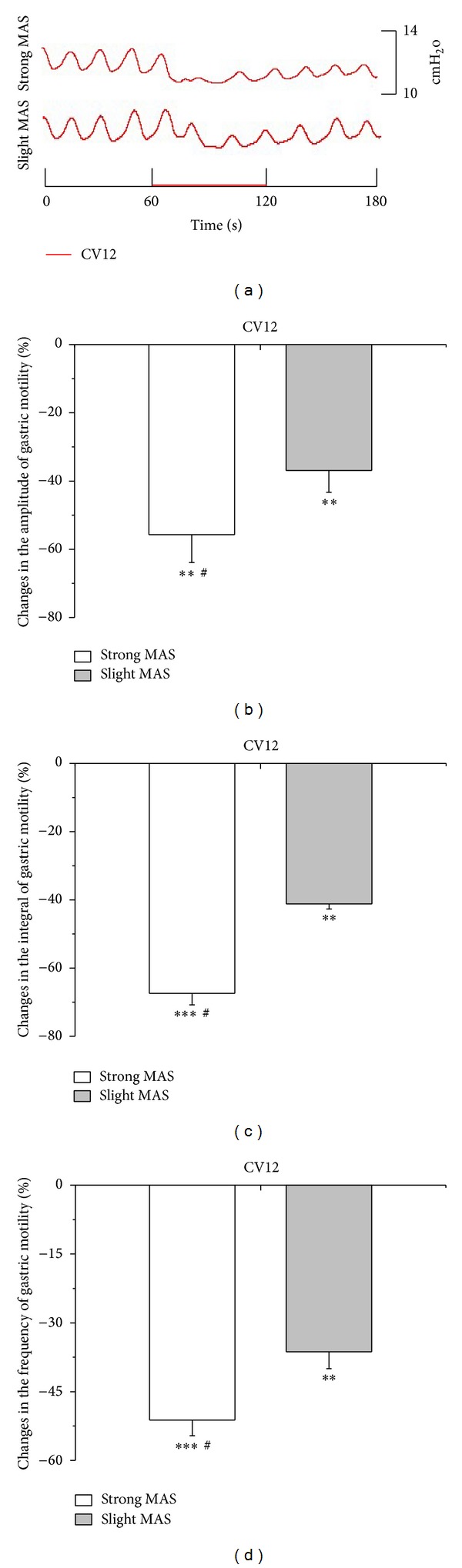
The aim of this study was to reveal the somatosensory nerve fibers mediated generation of De-qi in manual acupuncture stimuli (MAS) and local moxibustion-like stimuli (LMS). The effects of strong and slight MAS, as well as 41°C, 43°C, and 45°C LMS at ST36 and CV12 on gastric motility were observed in rats. Gastric motility was continuously measured by an intrapyloric balloon, and the average amplitude, integral, and frequency of gastric motility during LMS were compared with those of background activity. Gastric motility was facilitated by MAS and LMS at ST36 and inhibited at CV12. The modulatory effects induced by strong MA with potent De-qi (needle grasp feeling) were markedly higher than those by slight MA with mild De-qi sensation (P < 0.05). The nociceptive 43°C and 45°C LMS, rather than nonnociceptive 41°C LMS, produced significant regulatory effects on gastric motility. Based on the afferent fibers activated in the present study, these results support the hypothesis that A δ - and C-afferent fibers were more likely to be involved in the generation of De-qi sensation.
本研究旨在揭示在手动针刺刺激(MAS)和局部艾灸样刺激(LMS)中,躯体感觉神经纤维介导的得气产生。观察了大鼠 ST36 和 CV12 处强 MAS、弱 MAS 以及 41°C、43°C 和 45°C LMS 对胃动力的影响。通过幽门内气囊连续测量胃动力,比较 LMS 期间胃动力的平均幅度、积分和频率与背景活动的差异。MAS 和 LMS 在 ST36 促进胃动力,而在 CV12 抑制胃动力。强 MAS 引起的具有强烈得气(针感)的调制作用明显高于弱 MAS 引起的轻度得气感觉(P < 0.05)。痛觉 43°C 和 45°C LMS,而不是非痛觉 41°C LMS,对胃动力产生显著的调节作用。基于本研究中激活的传入纤维,这些结果支持 Aδ-和 C-传入纤维更可能参与得气感觉产生的假说。