Laboratoire de Génie Génétique, Faculté de Pharmacie, Aix-Marseille Université, 27 boulevard Jean Moulin, 13385 Marseille, France ; Advanced Diagnostics, Toronto General Research Institute, University Health Network, 101 College Street, TMDT, Rm. 3-301, Toronto, ON, Canada M5G 1L7.
Laboratoire de Génie Génétique, Faculté de Pharmacie, Aix-Marseille Université, 27 boulevard Jean Moulin, 13385 Marseille, France.
Mediators Inflamm. 2014;2014:507272. doi: 10.1155/2014/507272. Epub 2014 May 7.
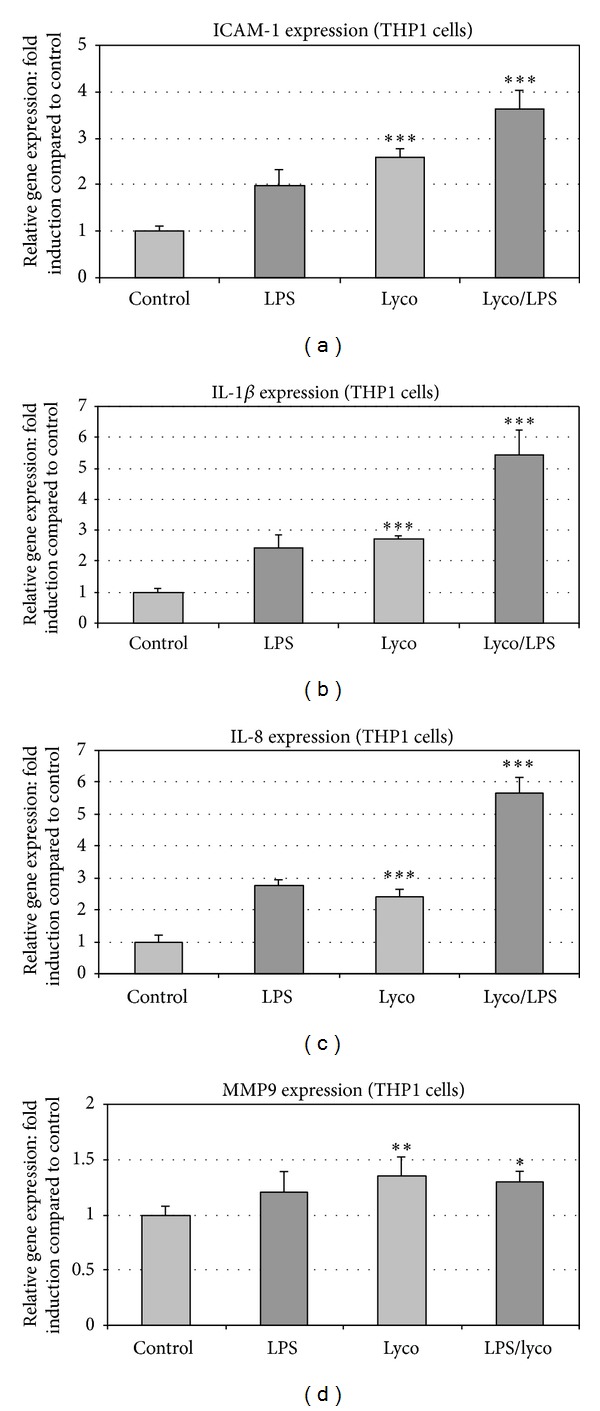
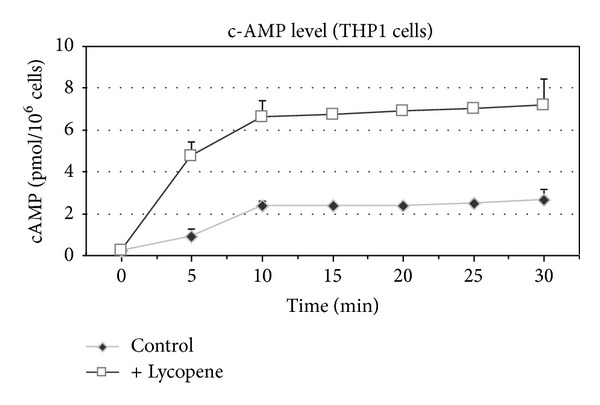
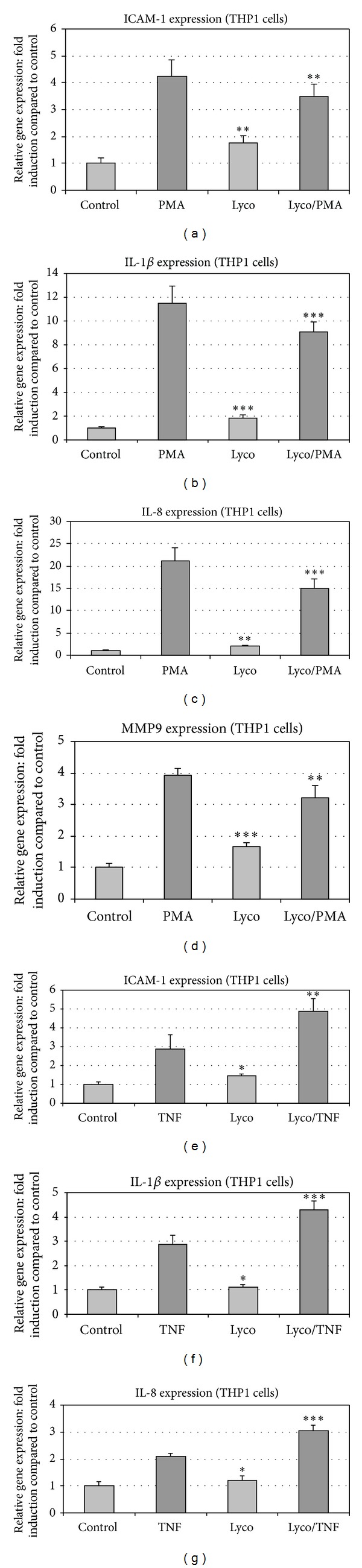
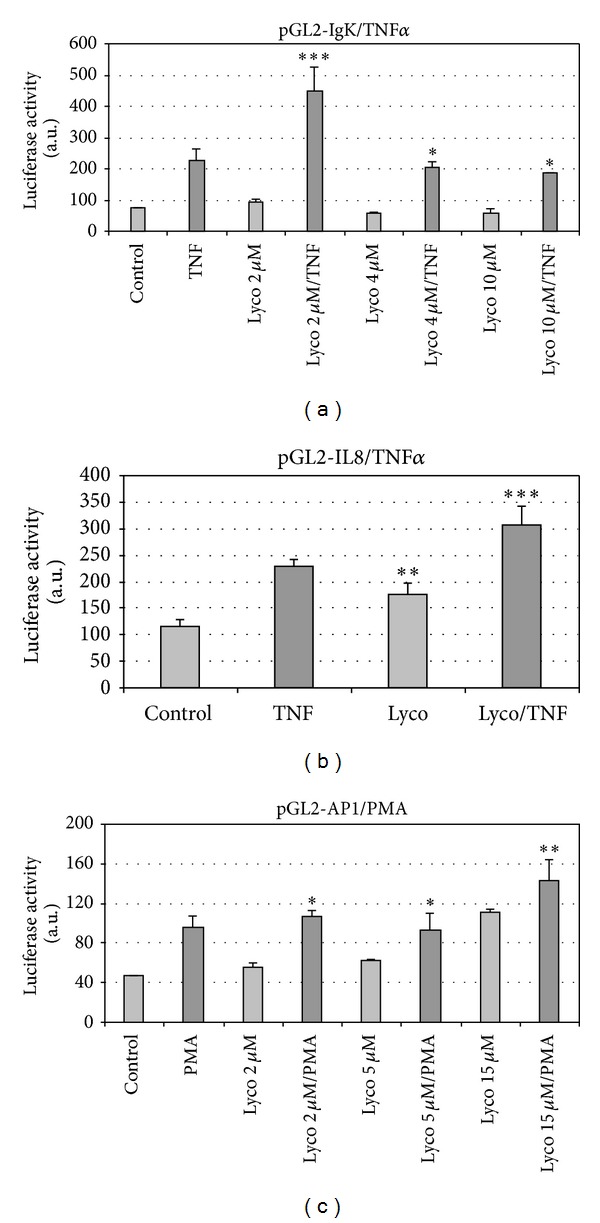
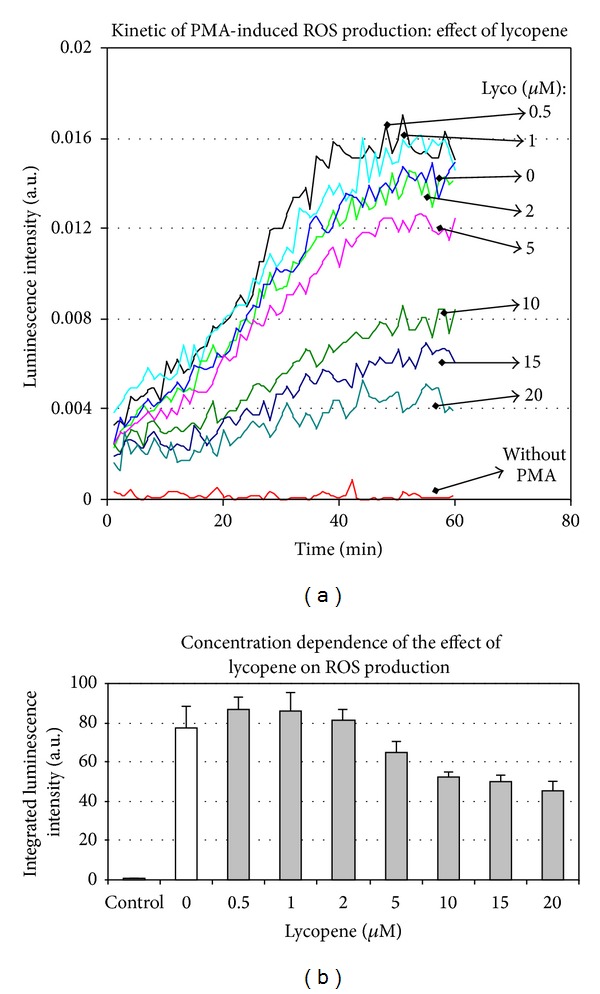
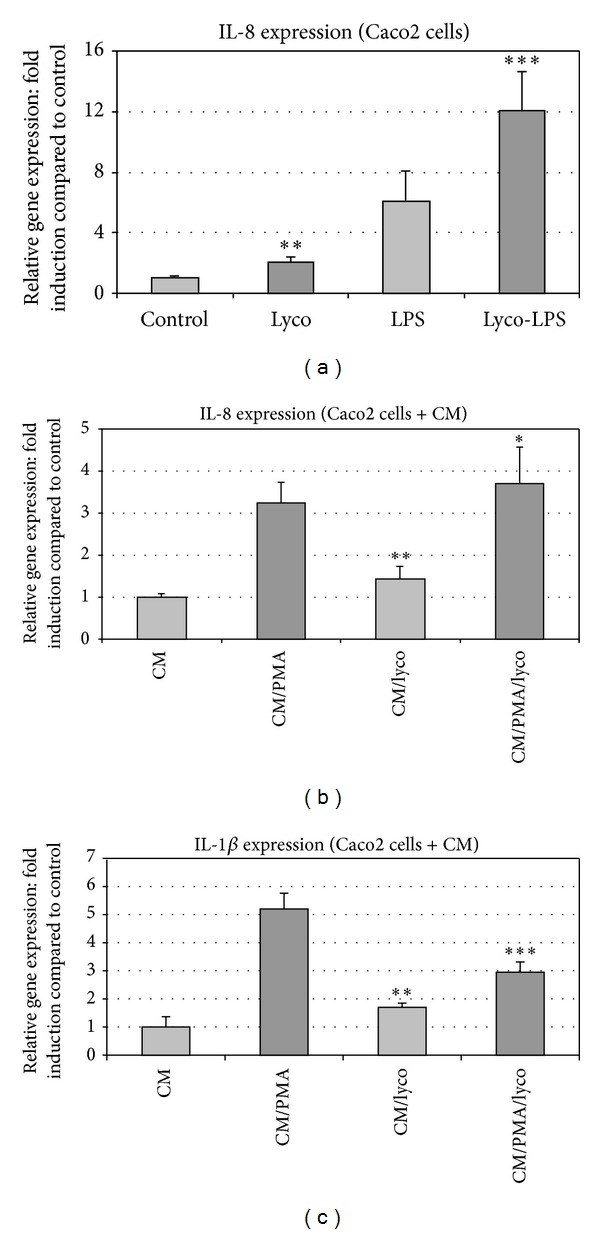
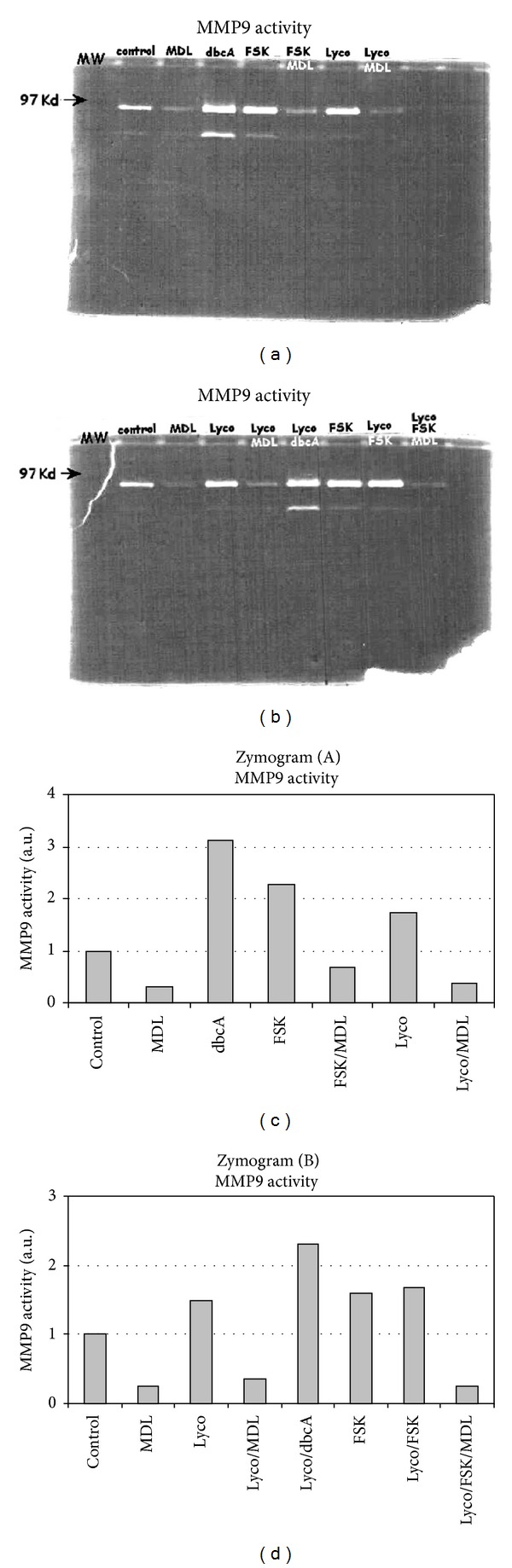
We revisited the action of a carotenoid, the lycopene, on the expression of proinflammatory genes, reactive oxygen species (ROS) production, and metalloprotease (MMP9) activity. THP1 and Caco2 cell lines were used as in vitro models for the two main cell types found in intestine tissue, that is, monocytes and epithelial cells. Proinflammatory condition was induced using either phorbol ester acetate (PMA), lipopolysaccharide (LPS) or tumor necrosis factor (TNF). In THP1 cells, short term pretreatment (2 h) with a low concentration (2 μM) of lycopene reinforce proinflammatory gene expression. The extent of the effect of lycopene is dependent on the proinflammtory stimulus (PMA, LPS or TNF) used. Lycopene enhanced MMP9 secretion via a c-AMP-dependent process, and reduced ROS production at higher concentrations than 2 μM. Cell culture media, conditioned by PMA-treated monocytes and then transferred on CaCo-2 epithelial cells, induced a proinflammatory state in these cells. The extent of this inflammatory effect was reduced when cells has been pretreated (12 h) with lycopene. At low concentration (2 μM or less), lycopene appeared to promote an inflammatory state not correlated with ROS modulation. At higher concentration (5 μM-20 μM), an anti-inflammatory effect takes place as a decrease of ROS production was detected. So, both concentration and time have to be considered in order to define the exact issue of the effect of carotenoids present in meals.
我们重新研究了类胡萝卜素番茄红素对促炎基因表达、活性氧(ROS)产生和金属蛋白酶(MMP9)活性的作用。THP1 和 Caco2 细胞系被用作肠组织中两种主要细胞类型(单核细胞和上皮细胞)的体外模型。使用佛波酯乙酸盐(PMA)、脂多糖(LPS)或肿瘤坏死因子(TNF)诱导促炎状态。在 THP1 细胞中,用低浓度(2 μM)番茄红素进行短期预处理(2 h)可增强促炎基因表达。番茄红素的作用程度取决于所使用的促炎刺激物(PMA、LPS 或 TNF)。番茄红素通过 c-AMP 依赖性过程增强 MMP9 分泌,并在高于 2 μM 的浓度下减少 ROS 产生。用 PMA 处理的单核细胞培养的细胞培养基,然后转移到 CaCo-2 上皮细胞上,可诱导这些细胞产生促炎状态。当细胞用番茄红素预处理(12 h)时,这种炎症效应的程度降低。在低浓度(2 μM 或更低)下,番茄红素似乎促进了与 ROS 调节无关的炎症状态。在较高浓度(5 μM-20 μM)下,检测到 ROS 产生减少,从而发生抗炎作用。因此,为了确定膳食中类胡萝卜素的确切影响问题,必须考虑浓度和时间。