Egger Jan
Faculty of Computer Science and Biomedical Engineering, Institute for Computer Graphics and Vision, Graz University of Technology, Graz, Styria, Austria.
Sci Rep. 2014 Jun 4;4:5164. doi: 10.1038/srep05164.
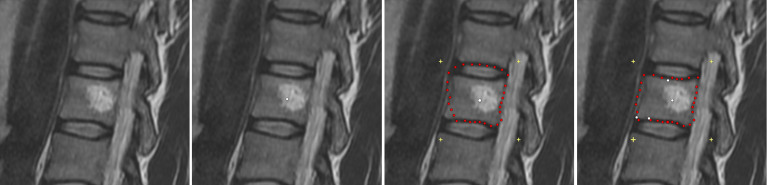
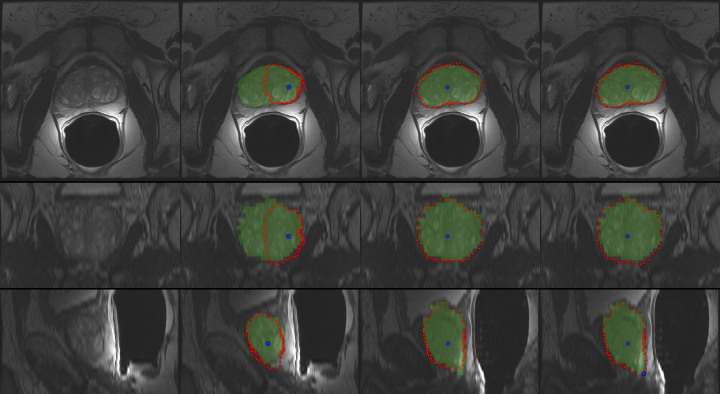
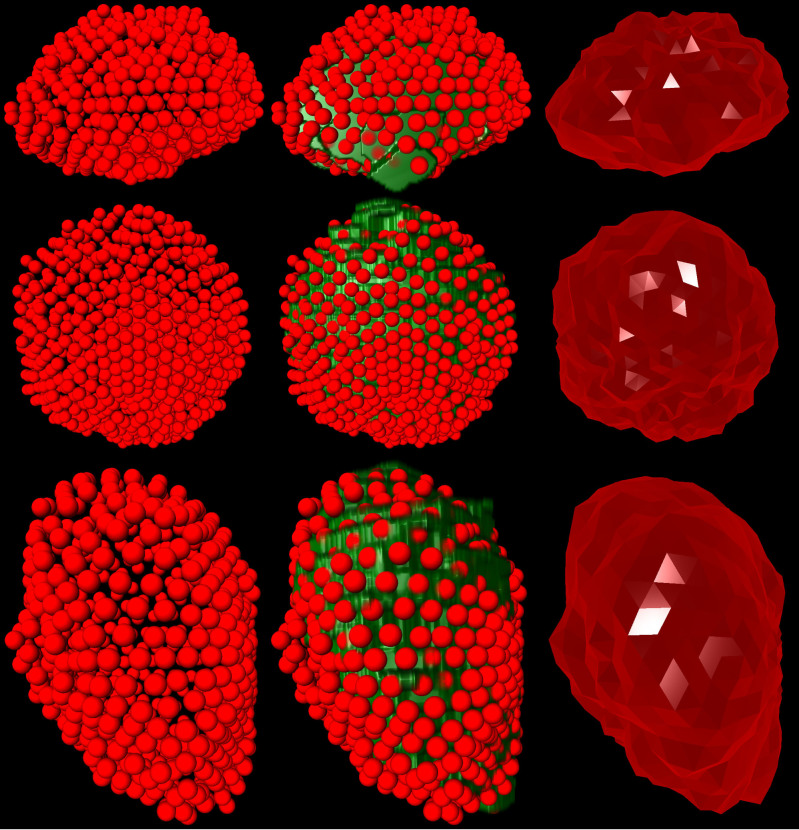
In this contribution, a semi-automatic segmentation algorithm for (medical) image analysis is presented. More precise, the approach belongs to the category of interactive contouring algorithms, which provide real-time feedback of the segmentation result. However, even with interactive real-time contouring approaches there are always cases where the user cannot find a satisfying segmentation, e.g. due to homogeneous appearances between the object and the background, or noise inside the object. For these difficult cases the algorithm still needs additional user support. However, this additional user support should be intuitive and rapid integrated into the segmentation process, without breaking the interactive real-time segmentation feedback. I propose a solution where the user can support the algorithm by an easy and fast placement of one or more seed points to guide the algorithm to a satisfying segmentation result also in difficult cases. These additional seed(s) restrict(s) the calculation of the segmentation for the algorithm, but at the same time, still enable to continue with the interactive real-time feedback segmentation. For a practical and genuine application in translational science, the approach has been tested on medical data from the clinical routine in 2D and 3D.
在本论文中,提出了一种用于(医学)图像分析的半自动分割算法。更确切地说,该方法属于交互式轮廓算法类别,可提供分割结果的实时反馈。然而,即使采用交互式实时轮廓方法,也总会存在用户无法找到满意分割结果的情况,例如由于物体与背景之间外观均匀,或物体内部存在噪声。对于这些困难情况,算法仍需要额外的用户支持。然而,这种额外的用户支持应直观且能快速集成到分割过程中,同时不破坏交互式实时分割反馈。我提出了一种解决方案,用户可以通过轻松快速地放置一个或多个种子点来支持算法,从而在困难情况下也能引导算法得到满意的分割结果。这些额外的种子点限制了算法的分割计算,但同时仍能继续进行交互式实时反馈分割。为了在转化科学中进行实际且真实的应用,该方法已在二维和三维临床常规医学数据上进行了测试。