Department of Oral & Maxillofacial Surgery, Medical University of Graz, Auenbruggerplatz 5/1, Graz, Austria.
Computer Algorithms for Medicine (Cafe) Laboratory, Graz, Austria.
PLoS One. 2018 May 10;13(5):e0196378. doi: 10.1371/journal.pone.0196378. eCollection 2018.
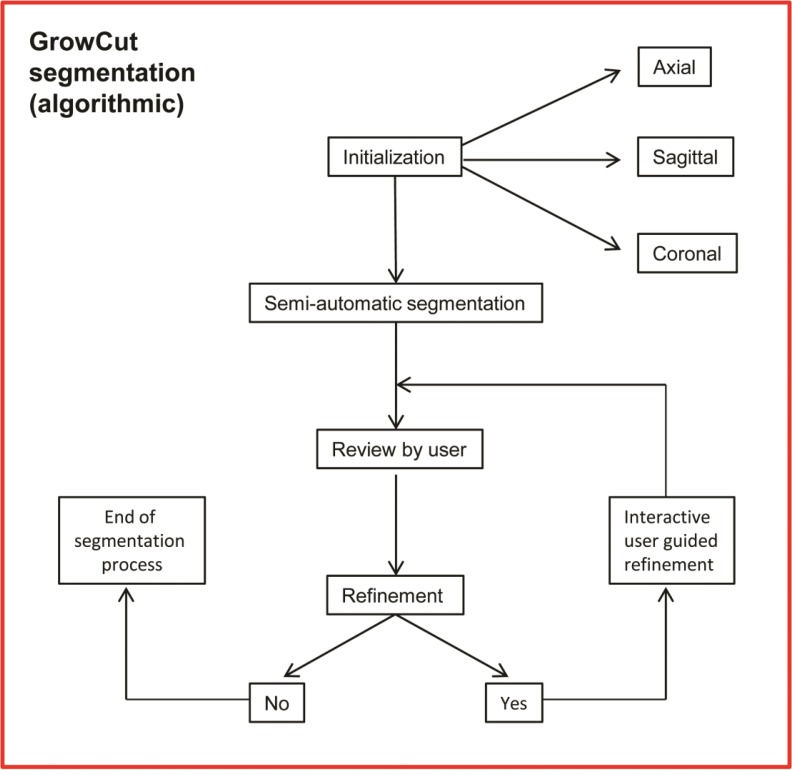
Computer assisted technologies based on algorithmic software segmentation are an increasing topic of interest in complex surgical cases. However-due to functional instability, time consuming software processes, personnel resources or licensed-based financial costs many segmentation processes are often outsourced from clinical centers to third parties and the industry. Therefore, the aim of this trial was to assess the practical feasibility of an easy available, functional stable and licensed-free segmentation approach to be used in the clinical practice.
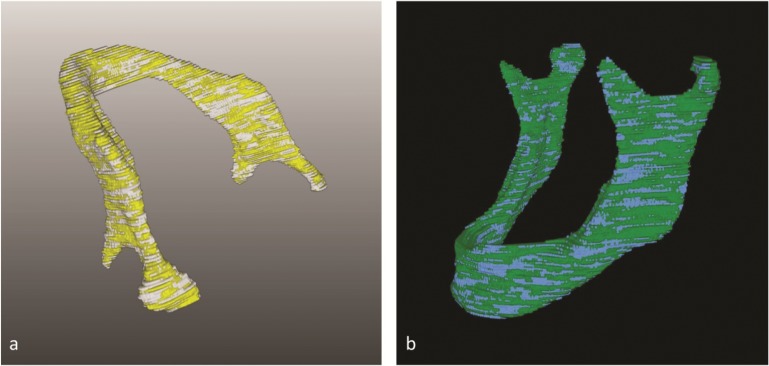
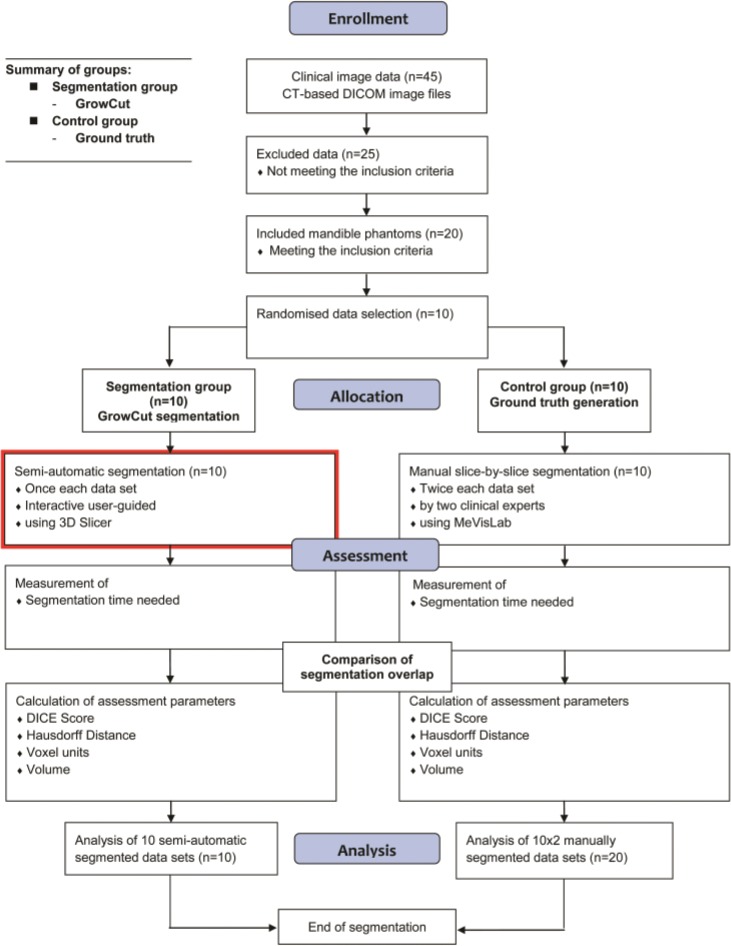
In this retrospective, randomized, controlled trail the accuracy and accordance of the open-source based segmentation algorithm GrowCut was assessed through the comparison to the manually generated ground truth of the same anatomy using 10 CT lower jaw data-sets from the clinical routine. Assessment parameters were the segmentation time, the volume, the voxel number, the Dice Score and the Hausdorff distance.
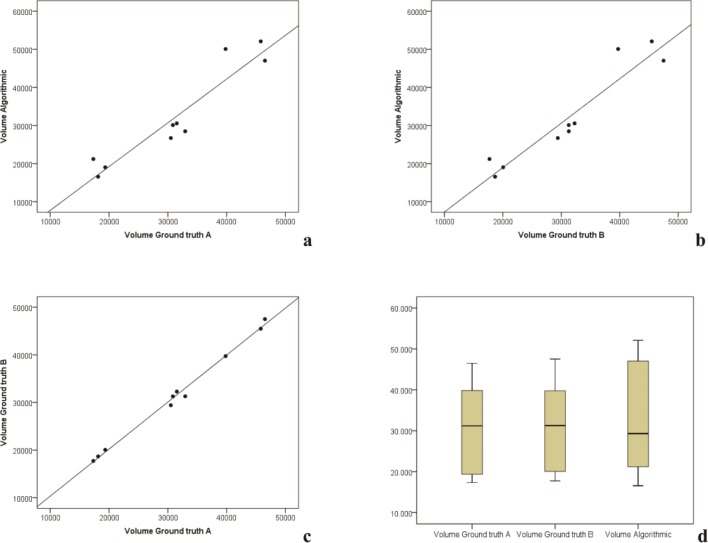
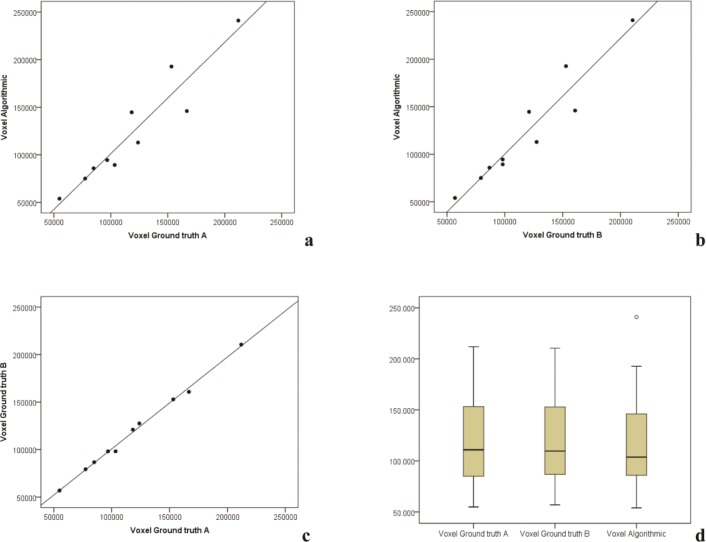
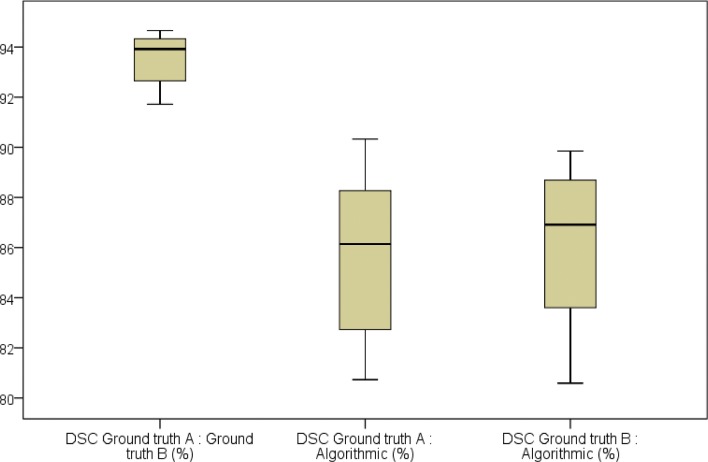
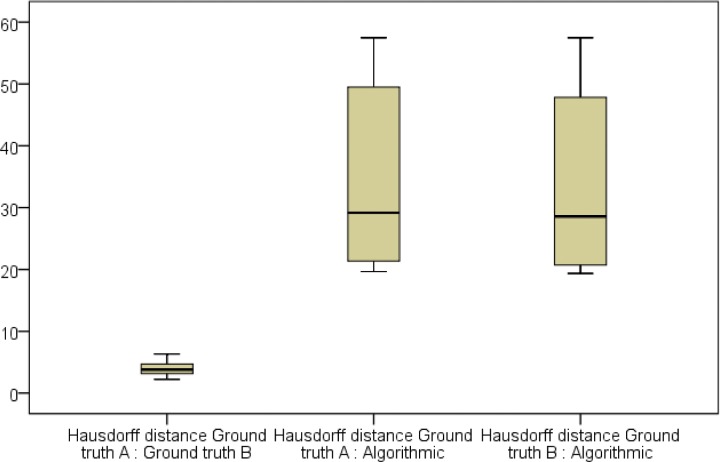
Overall semi-automatic GrowCut segmentation times were about one minute. Mean Dice Score values of over 85% and Hausdorff Distances below 33.5 voxel could be achieved between the algorithmic GrowCut-based segmentations and the manual generated ground truth schemes. Statistical differences between the assessment parameters were not significant (p<0.05) and correlation coefficients were close to the value one (r > 0.94) for any of the comparison made between the two groups.
Complete functional stable and time saving segmentations with high accuracy and high positive correlation could be performed by the presented interactive open-source based approach. In the cranio-maxillofacial complex the used method could represent an algorithmic alternative for image-based segmentation in the clinical practice for e.g. surgical treatment planning or visualization of postoperative results and offers several advantages. Due to an open-source basis the used method could be further developed by other groups or specialists. Systematic comparisons to other segmentation approaches or with a greater data amount are areas of future works.
基于算法软件分割的计算机辅助技术是复杂手术病例中日益关注的话题。然而,由于功能不稳定、耗时的软件处理、人员资源或基于许可证的财务成本,许多分割过程通常由临床中心外包给第三方和行业。因此,本试验旨在评估一种易于获得、功能稳定且无需许可证的分割方法在临床实践中的实际可行性。
在这项回顾性、随机、对照试验中,通过将 10 个来自临床常规的下颌 CT 数据集的同一解剖结构的手动生成的真实数据与开源的基于 GrowCut 的分割算法进行比较,评估了开源分割算法 GrowCut 的准确性和一致性。评估参数包括分割时间、体积、体素数、Dice 评分和 Hausdorff 距离。
总体而言,半自动 GrowCut 分割时间约为 1 分钟。算法 GrowCut 分割与手动生成的真实数据方案之间可以达到超过 85%的平均 Dice 评分值和低于 33.5 体素的 Hausdorff 距离。评估参数之间的统计学差异不显著(p<0.05),并且任何两组之间的比较的相关系数都接近 1(r > 0.94)。
通过所提出的交互式开源方法,可以实现具有高精度和高正相关性的完整功能稳定和节省时间的分割。在颅颌面复合体中,该方法可作为基于图像的分割的算法替代方法,例如用于手术治疗计划或术后结果的可视化,并具有多个优势。由于基于开源,因此该方法可以由其他小组或专家进一步开发。与其他分割方法或更大数据量的系统比较是未来工作的领域。