Munywoki P K, Koech D C, Agoti C N, Kibirige N, Kipkoech J, Cane P A, Medley G F, Nokes D J
KEMRI - Wellcome Trust Research Programme,Centre for Geographic Medicine Research - Coast,Kilifi,Kenya.
Public Health England,Salisbury,UK.
Epidemiol Infect. 2015 Mar;143(4):804-12. doi: 10.1017/S0950268814001393. Epub 2014 Jun 5.
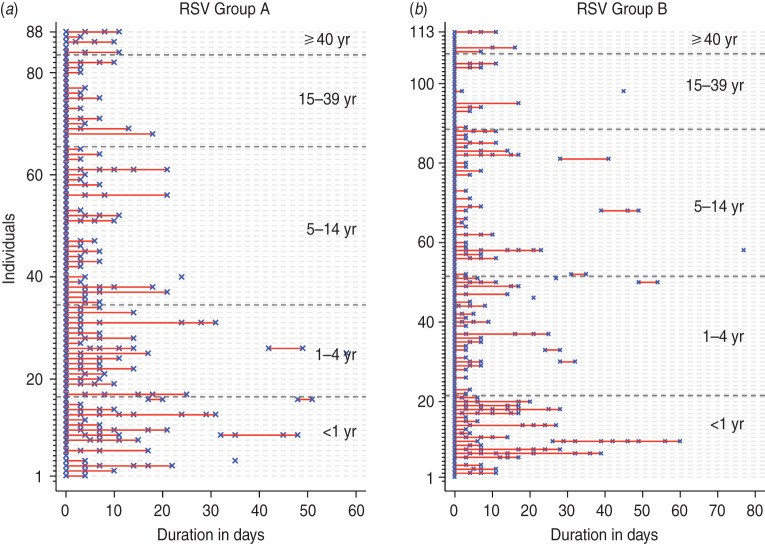
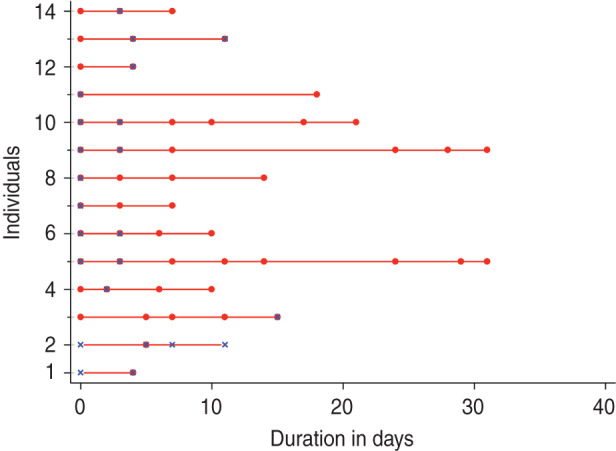
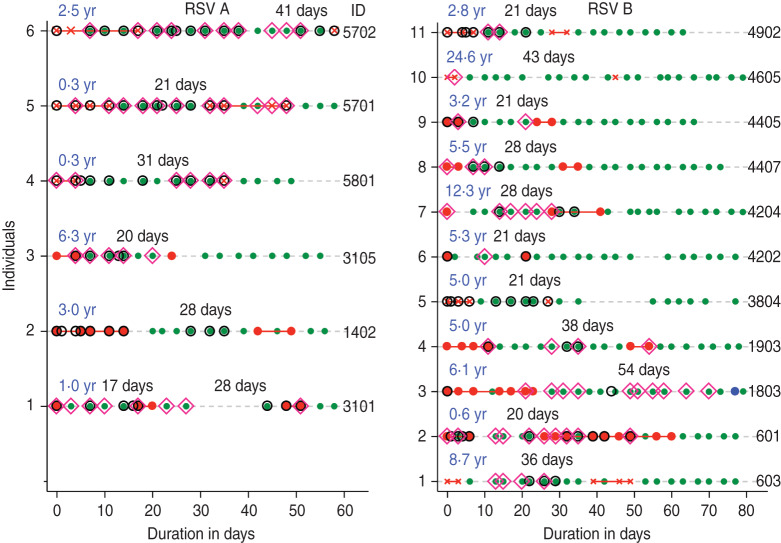
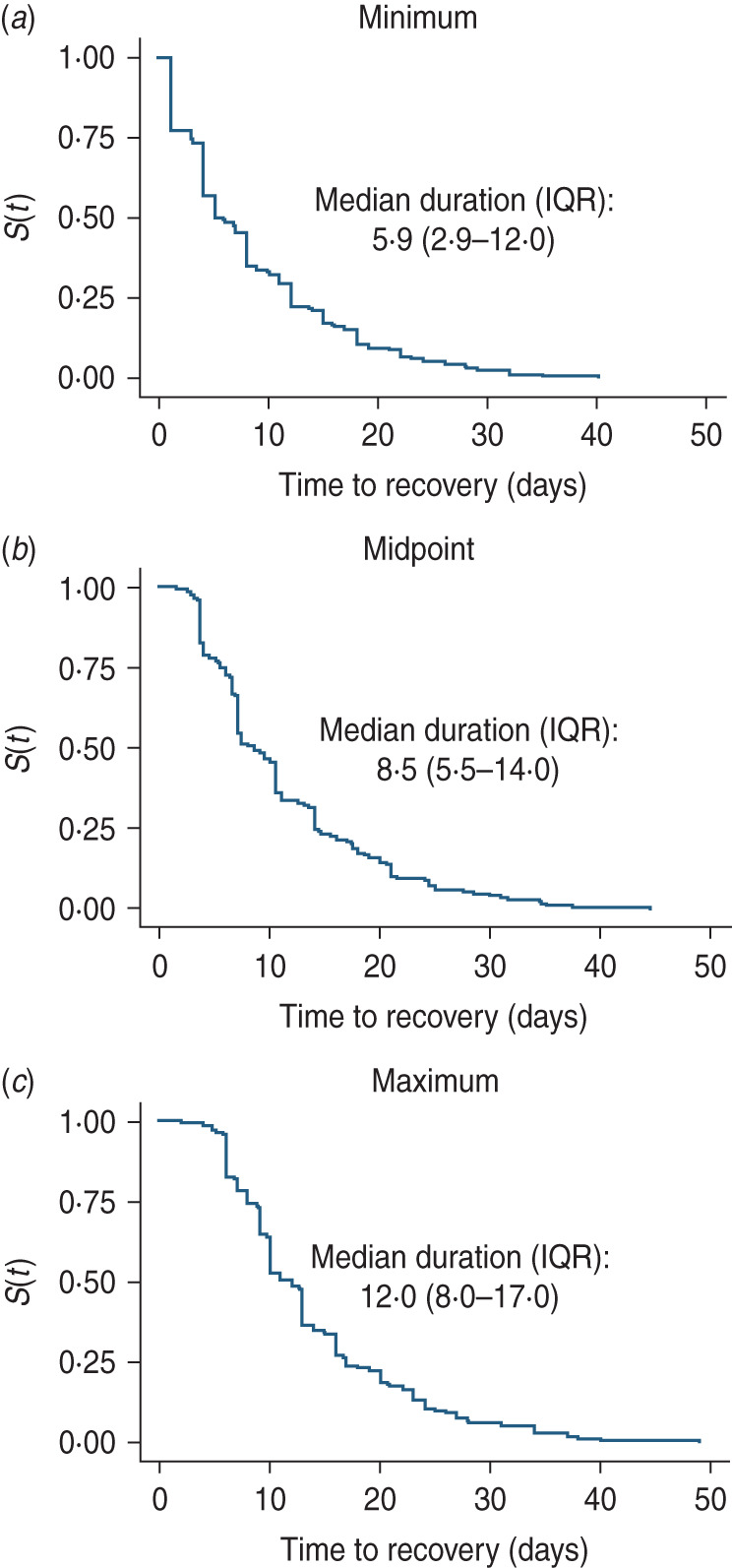
RSV is the most important viral cause of pneumonia and bronchiolitis in children worldwide and has been associated with significant disease burden. With the renewed interest in RSV vaccines, we provide realistic estimates on duration, and influencing factors on RSV shedding which are required to better understand the impact of vaccination on the virus transmission dynamics. The data arise from a prospective study of 47 households (493 individuals) in rural Kenya, followed through a 6-month period of an RSV seasonal outbreak. Deep nasopharyngeal swabs were collected twice each week from all household members, irrespective of symptoms, and tested for RSV by multiplex PCR. The RSV G gene was sequenced. A total of 205 RSV infection episodes were detected in 179 individuals from 40 different households. The infection data were interval censored and assuming a random event time between observations, the average duration of virus shedding was 11·2 (95% confidence interval 10·1-12·3) days. The shedding durations were longer than previous estimates (3·9-7·4 days) based on immunofluorescence antigen detection or viral culture, and were shown to be strongly associated with age, severity of infection, and revealed potential interaction with other respiratory viruses. These findings are key to our understanding of the spread of this important virus and are relevant in the design of control programmes.
呼吸道合胞病毒(RSV)是全球儿童肺炎和细支气管炎最重要的病毒病因,且与重大疾病负担相关。随着对RSV疫苗的重新关注,我们提供了关于RSV排毒持续时间及其影响因素的实际估计,这对于更好地理解疫苗接种对病毒传播动态的影响是必要的。数据来自肯尼亚农村47户家庭(493人)的一项前瞻性研究,在RSV季节性暴发的6个月期间进行随访。每周两次从所有家庭成员中采集深部鼻咽拭子,无论有无症状,并通过多重PCR检测RSV。对RSV G基因进行测序。在来自40个不同家庭的179名个体中检测到总共205次RSV感染事件。感染数据为区间删失数据,假设观察之间的事件时间为随机,病毒排毒的平均持续时间为11.2天(95%置信区间10.1-12.3天)。排毒持续时间比之前基于免疫荧光抗原检测或病毒培养的估计(3.9-7.4天)更长,并且显示与年龄、感染严重程度密切相关,并揭示了与其他呼吸道病毒的潜在相互作用。这些发现是我们理解这种重要病毒传播的关键,并且与控制计划的设计相关。