Heravi Farzin, Abbaszadegan Mohammad Reza, Merati Mohsen, Hasanzadeh Nadia, Dadkhah Ezzat, Ahrari Farzaneh
Dental Research Center, School of Dentistry, Mashhad University of Medical Sciences, Mashhad, Iran.
Division of Human Genetics, Immunology Research Center, Avicenna Research Institute, Mashhad University of Medical Sciences, Mashhad, Iran.
J Dent (Tehran). 2013 Nov;10(6):494-500. Epub 2013 Nov 30.
The release of toxic metal ions from orthodontic alloys has induced concerns regarding the biocompatibility of fixed appliances. This study investigated the genotoxic effect of metal appliances in a sample of patients undergoing fixed orthodontic treatment.
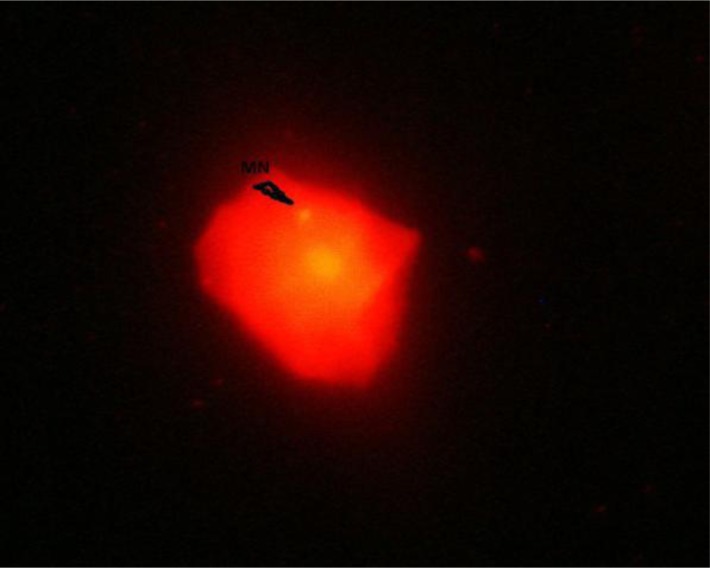
The study included twenty-five healthy individuals requiring orthodontic therapy in both jaws. The patients were treated by stainless steel orthodontic brackets and nickel-titanium or stainless steel arch wires. The oral mucosa cells were gathered just before the appliance placement and 9 months later. The cells were centrifuged, fixed and dropped onto slides. After staining, the micronucleus (MN) assay was used to determine genome alteration. The data were analyzed by paired sample t-test.
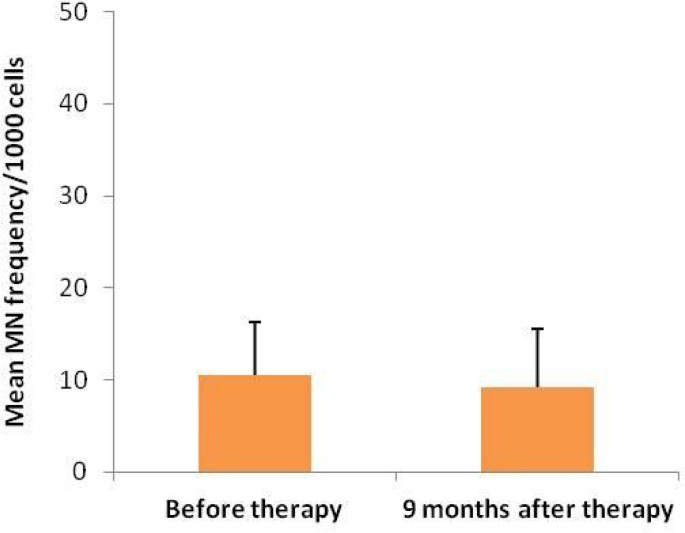
The mean micronuclei frequency in the buccal mucosa was 10.6 ± 5.7 per 1000 cells before the appliance placement and 9.2 ± 6.37 per 1000 cells 9 months later. No significant difference was found in the MN count before and 9 months after therapy (p=0.336).
Under the conditions used in this study, application of fixed orthodontic appliances did not expose healthy individuals to increased risk of DNA damage in oral mucosa cells.
正畸合金中有毒金属离子的释放引发了对固定矫治器生物相容性的担忧。本研究调查了金属矫治器对接受固定正畸治疗患者样本的遗传毒性作用。
该研究纳入了25名需要进行上下颌正畸治疗的健康个体。患者接受不锈钢正畸托槽和镍钛或不锈钢弓丝治疗。在矫治器放置前和9个月后采集口腔黏膜细胞。将细胞离心、固定并滴在载玻片上。染色后,采用微核(MN)试验来确定基因组改变。数据采用配对样本t检验进行分析。
矫治器放置前颊黏膜的平均微核频率为每1000个细胞10.6±5.7个,9个月后为每1000个细胞9.2±6.37个。治疗前和治疗9个月后的微核计数无显著差异(p=0.336)。
在本研究使用的条件下,应用固定正畸矫治器并未使健康个体面临口腔黏膜细胞DNA损伤风险增加的情况。