Kowalska E, Bartnicki F, Pels K, Strzalka W
Department of Plant Biotechnology, Faculty of Biochemistry, Biophysics and Biotechnology, Jagiellonian University, Gronostajowa 7, 30387, Krakow, Poland.
Anal Bioanal Chem. 2014 Sep;406(22):5495-9. doi: 10.1007/s00216-014-7937-y. Epub 2014 Jun 13.
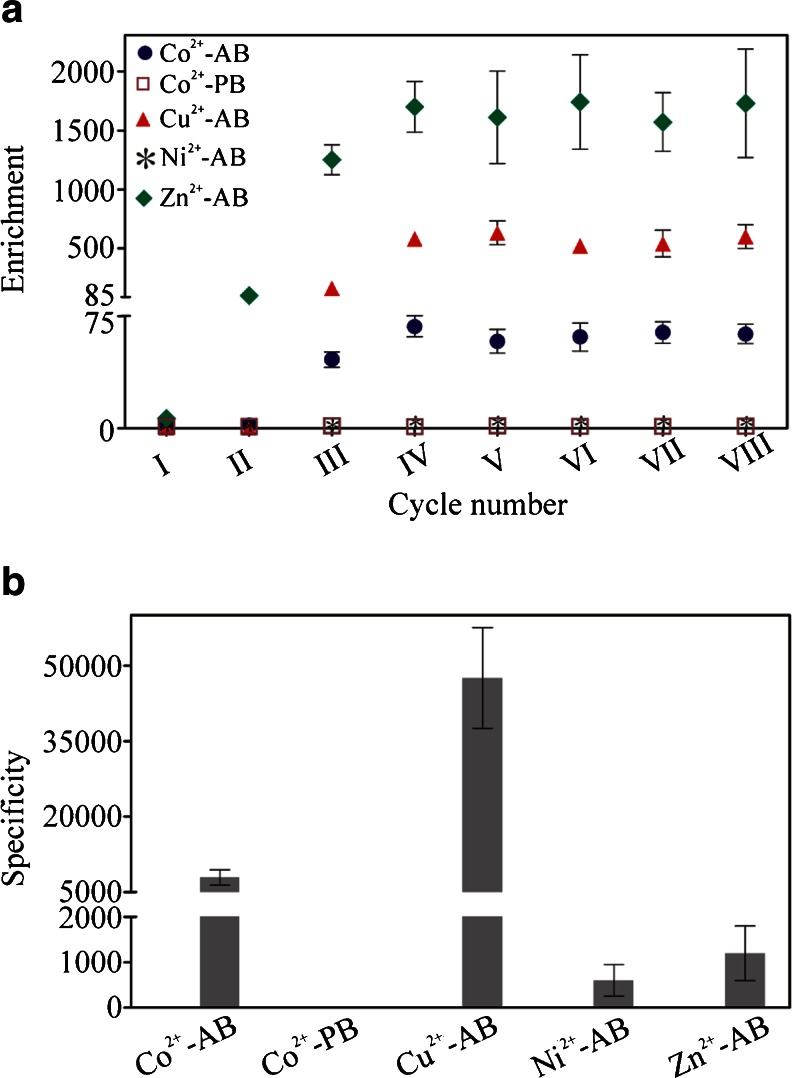
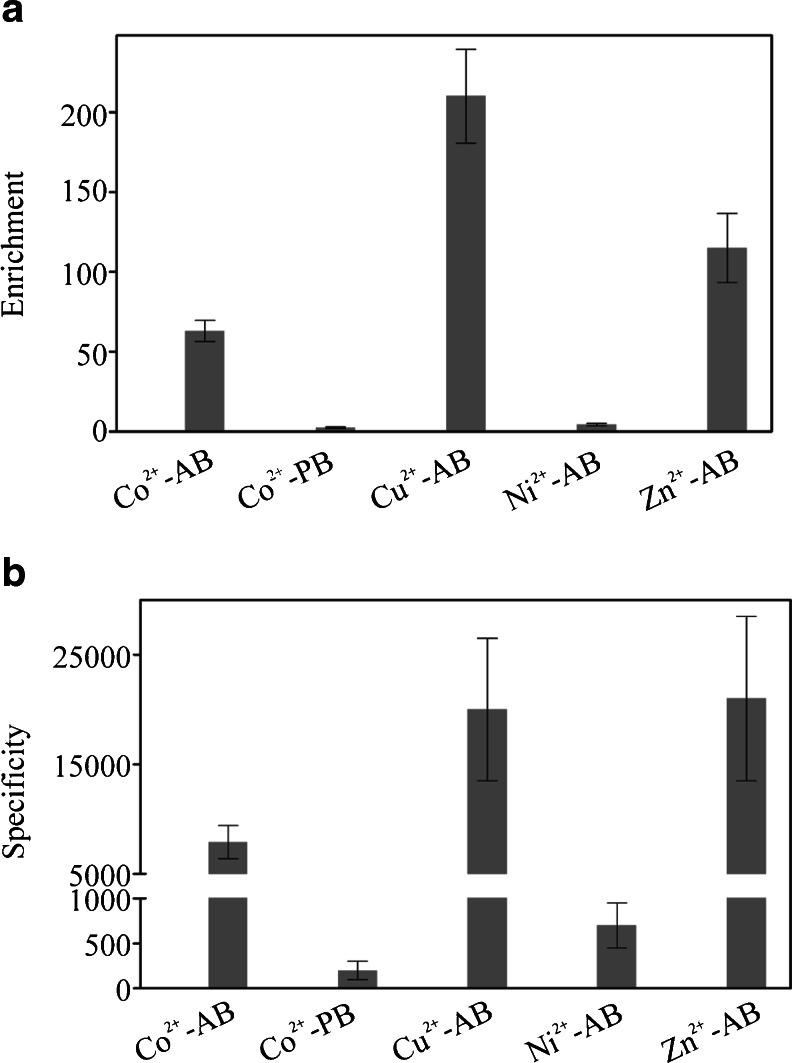
DNA aptamers are single-stranded oligonucleotides which can form various secondary and tertiary structures. They can recognize a broad range of targets ranging from small molecules, such as ions, vitamins, antibiotics, to high molecular weight structures, including enzymes and antibodies. DNA aptamers are extensively studied as a potential source of new pharmaceutical drugs due to their inexpensive synthesis, low immunogenicity, and high specificity. The commonly used aptamer selection procedure is systematic evolution of ligands by exponential enrichment (SELEX) where the target molecule is immobilized on an appropriate chromatography resin. For peptide/protein targets, immobilized metal affinity chromatography (IMAC) resins are frequently used. There is a broad range of commercially available resins which can be used for IMAC. They are characterized by different metal ions, linker types, and bead materials. In this study, we tested the impact of different IMAC resins on the DNA aptamer selection process during eight SELEX cycles. A histidine-tagged 29 amino acid peptide corresponding to the interdomain connecting loop of human proliferating cell nuclear antigen was used as a selection target. Different resin materials containing the same metal ion (Co(2+)) were tested. Simultaneously, agarose resins containing identical linkers, but different metal ions (Co(2+), Cu(2+), Ni(2+), and Zn(2+)) were analyzed. The results of this study clearly demonstrated the impact of the metal ion and resin material on the DNA aptamer selection progress. The presented data indicate that for successful IMAC resin-based SELEX, the determination of the optimal resin might be crucial.
DNA适配体是单链寡核苷酸,能够形成各种二级和三级结构。它们可以识别范围广泛的靶标,从小分子,如离子、维生素、抗生素,到高分子量结构,包括酶和抗体。由于DNA适配体合成成本低、免疫原性低且特异性高,因此作为新型药物的潜在来源受到广泛研究。常用的适配体筛选方法是指数富集配体系统进化技术(SELEX),即将靶分子固定在合适的色谱树脂上。对于肽/蛋白质靶标,常用固定化金属亲和色谱(IMAC)树脂。有多种可商购的树脂可用于IMAC。它们的特点是具有不同的金属离子、连接子类型和珠粒材料。在本研究中,我们在八个SELEX循环中测试了不同IMAC树脂对DNA适配体筛选过程的影响。将一种与人类增殖细胞核抗原结构域间连接环对应的带组氨酸标签的29个氨基酸肽用作筛选靶标。测试了含有相同金属离子(Co(2+))的不同树脂材料。同时,分析了含有相同连接子但不同金属离子(Co(2+)、Cu(2+)、Ni(2+)和Zn(2+))的琼脂糖树脂。本研究结果清楚地证明了金属离子和树脂材料对DNA适配体筛选进程的影响。所呈现的数据表明,对于基于IMAC树脂的成功SELEX,确定最佳树脂可能至关重要。