Rosà Roberto, Marini Giovanni, Bolzoni Luca, Neteler Markus, Metz Markus, Delucchi Luca, Chadwick Elizabeth A, Balbo Luca, Mosca Andrea, Giacobini Mario, Bertolotti Luigi, Rizzoli Annapaola
Dipartimento di Biodiversità ed Ecologia Molecolare, Centro Ricerca e Innovazione, Fondazione Edmund Mach, San Michele all'Adige, TN, Italia.
Parasit Vectors. 2014 Jun 12;7:269. doi: 10.1186/1756-3305-7-269.
West Nile Virus (WNV) is an emerging global health threat. Transmission risk is strongly related to the abundance of mosquito vectors, typically Culex pipiens in Europe. Early-warning predictors of mosquito population dynamics would therefore help guide entomological surveillance and thereby facilitate early warnings of transmission risk.
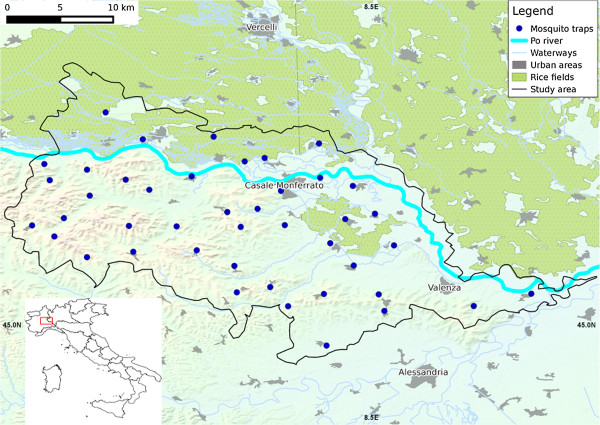
We analysed an 11-year time series (2001 to 2011) of Cx. pipiens mosquito captures from the Piedmont region of north-western Italy to determine the principal drivers of mosquito population dynamics. Linear mixed models were implemented to examine the relationship between Cx. pipiens population dynamics and environmental predictors including temperature, precipitation, Normalized Difference Water Index (NDWI) and the proximity of mosquito traps to urban areas and rice fields.
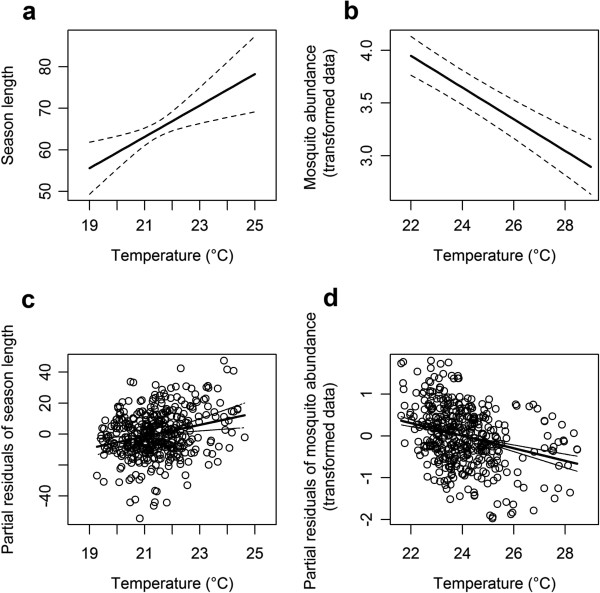
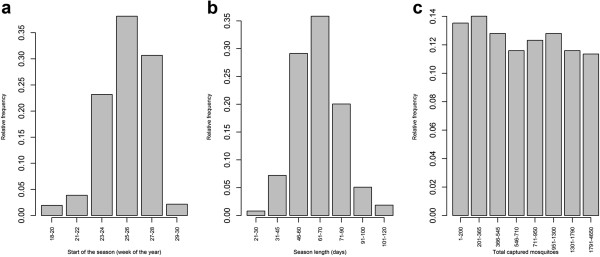
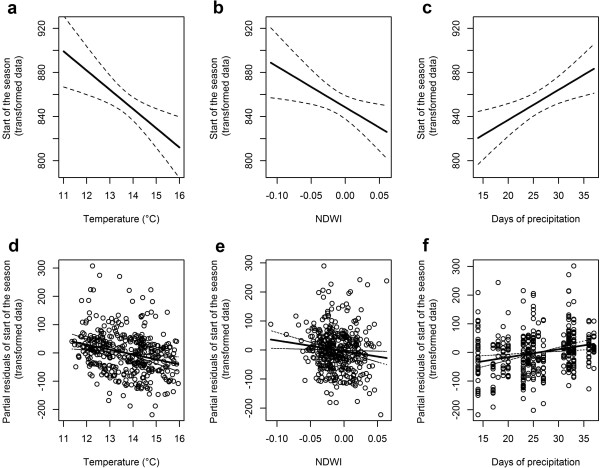
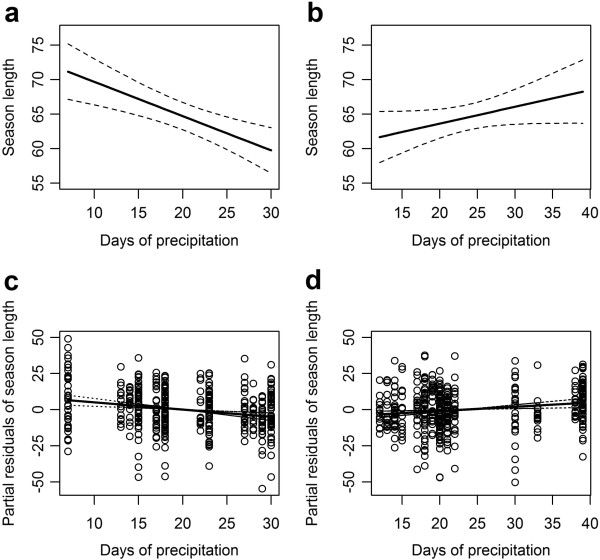
Warm temperatures early in the year were associated with an earlier start to the mosquito season and increased season length, and later in the year, with decreased abundance. Early precipitation delayed the start and shortened the length of the mosquito season, but increased total abundance. Conversely, precipitation later in the year was associated with a longer season. Finally, higher NDWI early in the year was associated with an earlier start to the season and increased season length, but was not associated with abundance. Proximity to rice fields predicted higher total abundance when included in some models, but was not a significant predictor of phenology. Proximity to urban areas was not a significant predictor in any of our models. Predicted variations in start of the season and season length ranged from one to three weeks, across the measured range of variables. Predicted mosquito abundance was highly variable, with numbers in excess of 1000 per trap per year when late season temperatures were low (average 21°C) to only 150 when late season temperatures were high (average 30°C).
Climate data collected early in the year, in conjunction with local land use, can be used to provide early warning of both the timing and magnitude of mosquito outbreaks. This potentially allows targeted mosquito control measures to be implemented, with implications for prevention and control of West Nile Virus and other mosquito borne diseases.
西尼罗河病毒(WNV)是一种新出现的全球健康威胁。传播风险与蚊虫媒介的数量密切相关,在欧洲通常是尖音库蚊。因此,蚊虫种群动态的早期预警预测指标将有助于指导昆虫学监测,从而促进对传播风险的早期预警。
我们分析了意大利西北部皮埃蒙特地区11年(2001年至2011年)的尖音库蚊捕获时间序列,以确定蚊虫种群动态的主要驱动因素。采用线性混合模型来检验尖音库蚊种群动态与环境预测指标之间的关系,这些指标包括温度、降水量、归一化差异水指数(NDWI)以及蚊虫诱捕器与城市地区和稻田的距离。
年初温暖的气温与蚊虫季节开始时间提前和季节长度增加有关,而在当年晚些时候,则与数量减少有关。早期降水延迟了蚊虫季节的开始并缩短了季节长度,但增加了总数量。相反,当年后期的降水与更长的季节有关。最后,年初较高的NDWI与季节开始时间提前和季节长度增加有关,但与数量无关。在一些模型中,靠近稻田预测总数量较高,但不是物候的显著预测指标。靠近城市地区在我们的任何模型中都不是显著的预测指标。在测量的变量范围内,季节开始时间和季节长度的预测变化范围为1至3周。预测的蚊虫数量变化很大,当季末温度较低(平均21°C)时,每个诱捕器每年的数量超过1000只,而当季末温度较高(平均30°C)时,仅为150只。
年初收集的气候数据,结合当地土地利用情况,可用于提供蚊虫暴发时间和规模的早期预警。这可能使有针对性的蚊虫控制措施得以实施,对西尼罗河病毒和其他蚊媒疾病的预防和控制具有重要意义。