Arai Mamiko, Brandt Vicky, Dabaghian Yuri
The Jan and Dan Duncan Neurological Research Institute, Baylor College of Medicine, Houston, Texas, United States of America.
The Jan and Dan Duncan Neurological Research Institute, Baylor College of Medicine, Houston, Texas, United States of America; Department of Computational and Applied Mathematics, Rice University, Houston, Texas, United States of America.
PLoS Comput Biol. 2014 Jun 19;10(6):e1003651. doi: 10.1371/journal.pcbi.1003651. eCollection 2014 Jun.
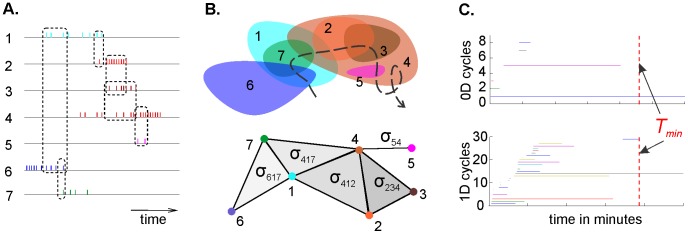
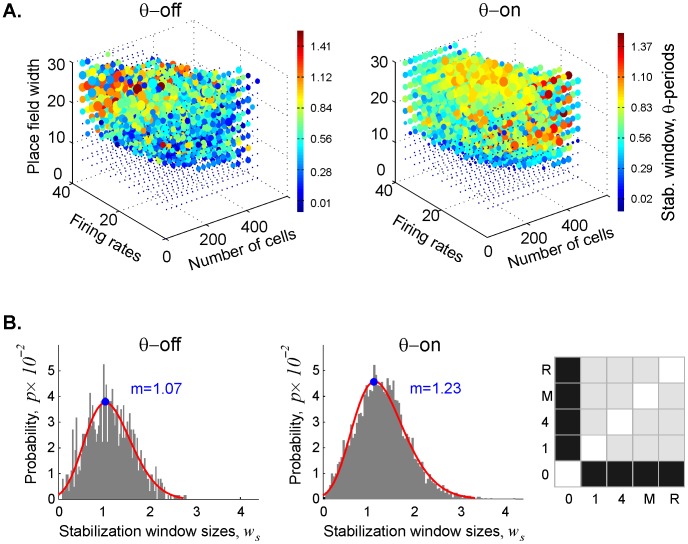
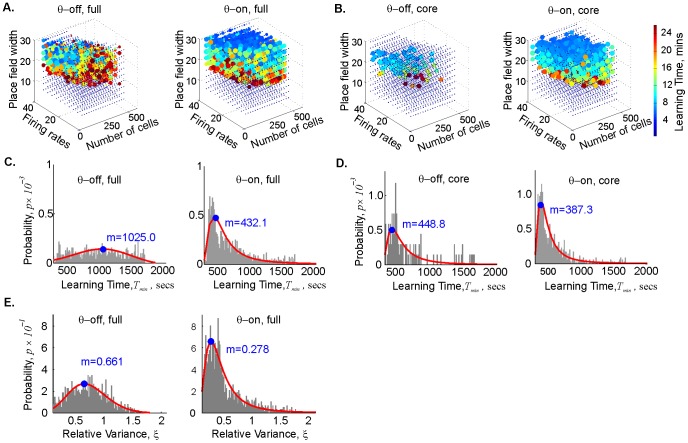
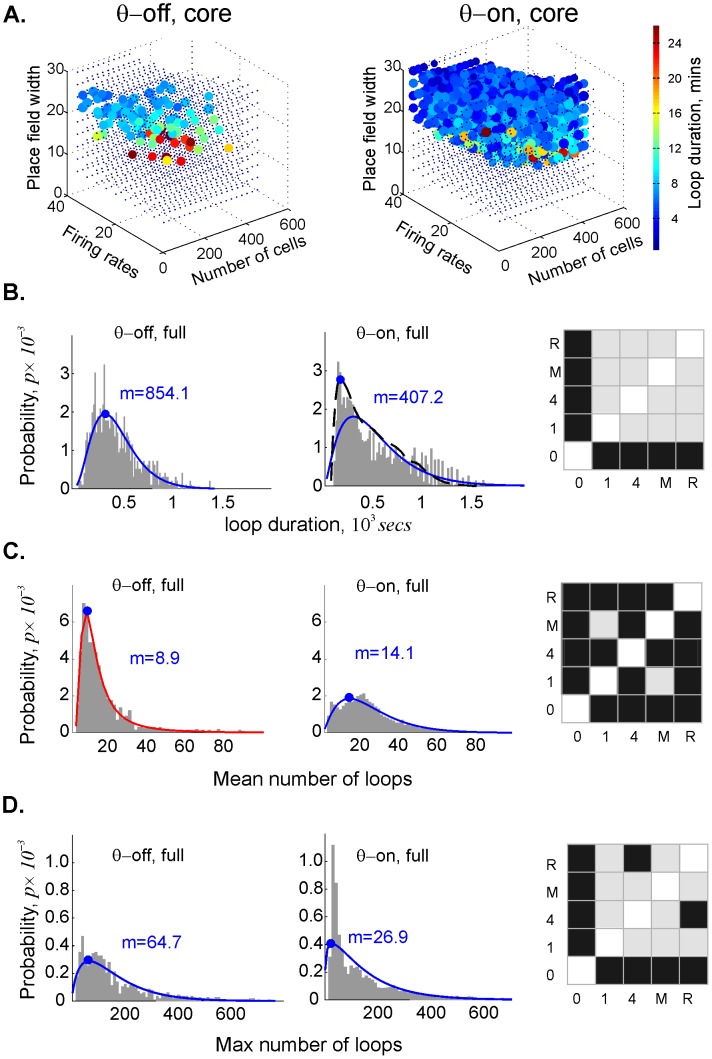
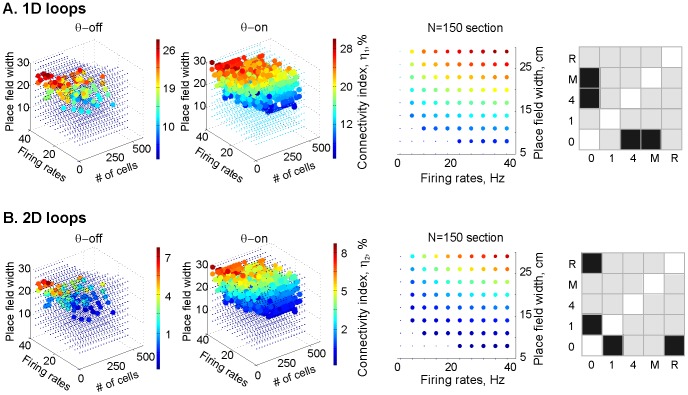
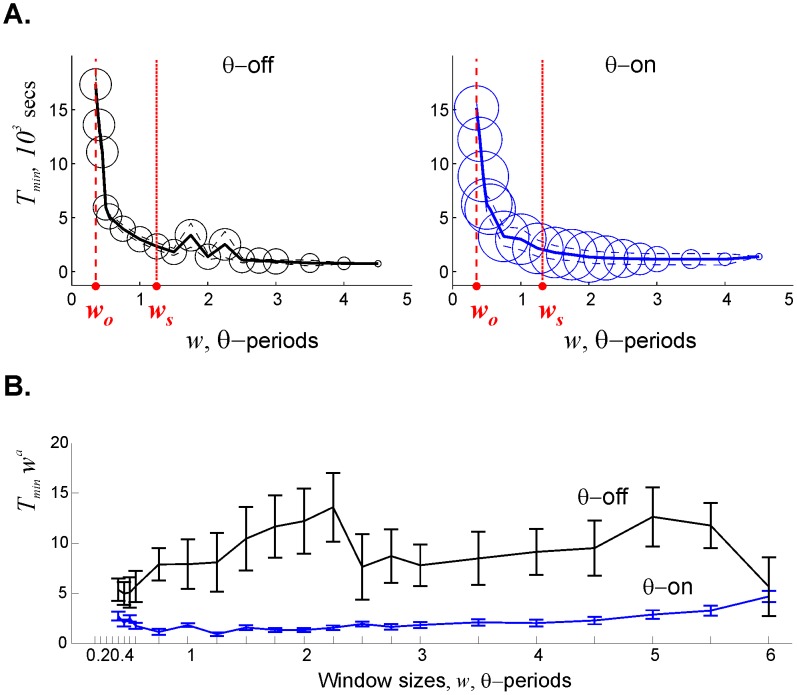
Learning arises through the activity of large ensembles of cells, yet most of the data neuroscientists accumulate is at the level of individual neurons; we need models that can bridge this gap. We have taken spatial learning as our starting point, computationally modeling the activity of place cells using methods derived from algebraic topology, especially persistent homology. We previously showed that ensembles of hundreds of place cells could accurately encode topological information about different environments ("learn" the space) within certain values of place cell firing rate, place field size, and cell population; we called this parameter space the learning region. Here we advance the model both technically and conceptually. To make the model more physiological, we explored the effects of theta precession on spatial learning in our virtual ensembles. Theta precession, which is believed to influence learning and memory, did in fact enhance learning in our model, increasing both speed and the size of the learning region. Interestingly, theta precession also increased the number of spurious loops during simplicial complex formation. We next explored how downstream readout neurons might define co-firing by grouping together cells within different windows of time and thereby capturing different degrees of temporal overlap between spike trains. Our model's optimum coactivity window correlates well with experimental data, ranging from ∼150-200 msec. We further studied the relationship between learning time, window width, and theta precession. Our results validate our topological model for spatial learning and open new avenues for connecting data at the level of individual neurons to behavioral outcomes at the neuronal ensemble level. Finally, we analyzed the dynamics of simplicial complex formation and loop transience to propose that the simplicial complex provides a useful working description of the spatial learning process.
学习是通过大量细胞群的活动产生的,但神经科学家积累的大部分数据都处于单个神经元层面;我们需要能够弥合这一差距的模型。我们以空间学习为出发点,使用源自代数拓扑学,特别是持久同调的方法,对位置细胞的活动进行计算建模。我们之前表明,数百个位置细胞的集合能够在位置细胞放电率、位置野大小和细胞群体的特定值范围内,准确编码关于不同环境的拓扑信息(“学习”空间);我们将这个参数空间称为学习区域。在这里,我们在技术和概念上都推进了该模型。为了使模型更具生理学意义,我们在虚拟集合中探索了θ节律进动对空间学习的影响。θ节律进动被认为会影响学习和记忆,实际上它在我们的模型中确实增强了学习效果,提高了学习速度和学习区域的大小。有趣的是,θ节律进动在单纯复形形成过程中还增加了虚假环的数量。接下来,我们探索了下游读出神经元如何通过将不同时间窗口内的细胞聚集在一起,从而捕捉尖峰序列之间不同程度的时间重叠来定义共同放电。我们模型的最佳共同活动窗口与实验数据相关性良好,范围在约150 - 200毫秒之间。我们进一步研究了学习时间、窗口宽度和θ节律进动之间的关系。我们的结果验证了我们用于空间学习的拓扑模型,并为将单个神经元层面的数据与神经元集合层面的行为结果联系起来开辟了新途径。最后,我们分析了单纯复形形成和环瞬变的动力学,提出单纯复形为空间学习过程提供了一个有用的工作描述。