Gasanov Sardar E, Dagda Ruben K, Rael Eppie D
Applied Mathematics and Informatics Department, Moscow State University Branch, 22 A. Timur Avenue, Tashkent 100060, Uzbekistan ; Science Department, Tashkent Ulugbek International School, 5-A J. Shoshiy Street, Tashkent 100100, Uzbekistan.
Pharmacology Department, University of Nevada School of Medicine, 1664 North Virginia St., Reno, NV 89557, USA.
J Clin Toxicol. 2014 Jan 25;4(1):1000181. doi: 10.4172/2161-0495.1000181.
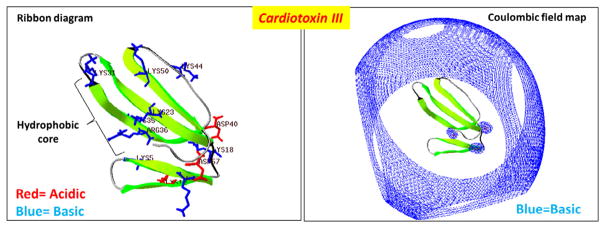
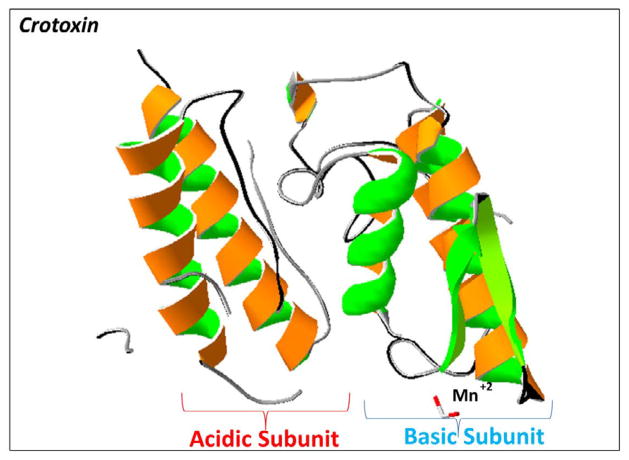
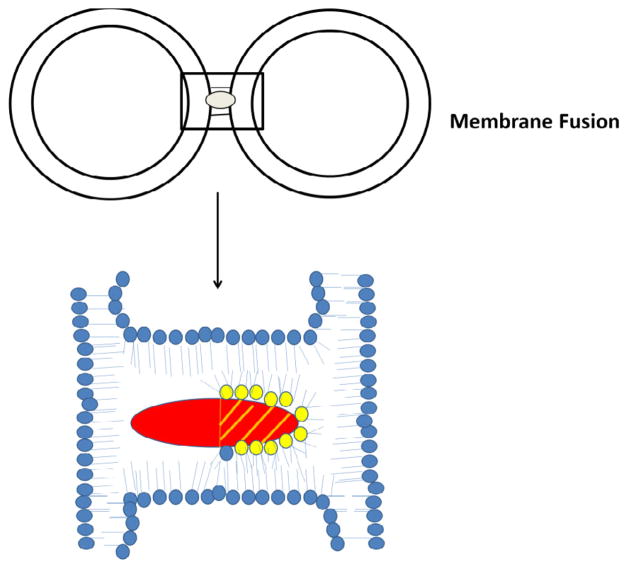
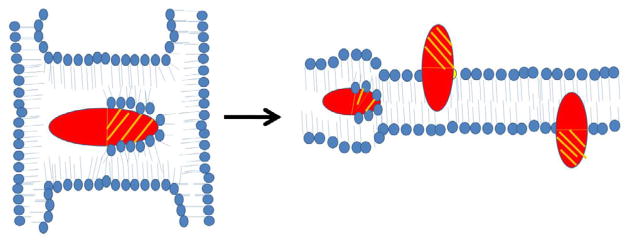
Snake venom toxins are responsible for causing severe pathology and toxicity following envenomation including necrosis, apoptosis, neurotoxicity, myotoxicity, cardiotoxicity, profuse hemorrhage, and disruption of blood homeostasis. Clinically, snake venom toxins therefore represent a significant hazard to snakebite victims which underscores the need to produce more efficient anti-venom. Some snake venom toxins, however, have great potential as drugs for treating human diseases. In this review, we discuss the biochemistry, structure/function, and pathology induced by snake venom toxins on human tissue. We provide a broad overview of cobra venom cytotoxins, catalytically active and inactive phospholipase As (PLAs), and Zn-dependent metalloproteinases. We also propose biomedical applications whereby snake venom toxins can be employed for treating human diseases. Cobra venom cytotoxins, for example, may be utilized as anti-cancer agents since they are efficient at destroying certain types of cancer cells including leukemia. Additionally, increasing our understanding of the molecular mechanism(s) by which snake venom PLAs promote hydrolysis of cell membrane phospholipids can give insight into the underlying biomedical implications for treating autoimmune disorders that are caused by dysregulated endogenous PLA activity. Lastly, we provide an exhaustive overview of snake venom Zn-dependent metalloproteinases and suggest ways by which these enzymes can be engineered for treating deep vein thrombosis and neurodegenerative disorders.
蛇毒毒素在蛇咬伤后会导致严重的病理变化和毒性,包括坏死、凋亡、神经毒性、肌毒性、心脏毒性、大量出血以及血液稳态的破坏。因此,在临床上,蛇毒毒素对蛇咬伤受害者构成了重大危害,这突出了生产更有效抗蛇毒血清的必要性。然而,一些蛇毒毒素具有作为治疗人类疾病药物的巨大潜力。在这篇综述中,我们讨论了蛇毒毒素的生物化学、结构/功能以及其对人体组织诱导的病理变化。我们广泛概述了眼镜蛇毒细胞毒素、具有催化活性和无催化活性的磷脂酶A(PLA)以及锌依赖性金属蛋白酶。我们还提出了生物医学应用,据此蛇毒毒素可用于治疗人类疾病。例如,眼镜蛇毒细胞毒素可作为抗癌剂,因为它们能有效破坏某些类型的癌细胞,包括白血病细胞。此外,加深我们对蛇毒PLA促进细胞膜磷脂水解的分子机制的理解,能够洞察治疗由内源性PLA活性失调引起的自身免疫性疾病的潜在生物医学意义。最后,我们详尽概述了蛇毒锌依赖性金属蛋白酶,并提出了改造这些酶以治疗深静脉血栓形成和神经退行性疾病的方法。