Hasegawa Tomoyuki, Daikoku Rie, Saito Shin, Saito Yayoi
Graduate School of Health Care Sciences, Tokyo Medical and Dental University, 1-5-45 Yushima Bunkyo-ku, Tokyo 113-8510, Japan.
J Physiol Anthropol. 2014 Jun 24;33(1):16. doi: 10.1186/1880-6805-33-16.
According to the guidelines for cardiopulmonary resuscitation (CPR), the rotation time for chest compression should be about 2 min. The quality of chest compressions is related to the physical fitness of the rescuer, but this was not considered when determining rotation time. The present study aimed to clarify associations between body weight and the quality of chest compression and physical fatigue during CPR performed by 18 registered nurses (10 male and 8 female) assigned to light and heavy groups according to the average weight for each sex in Japan.
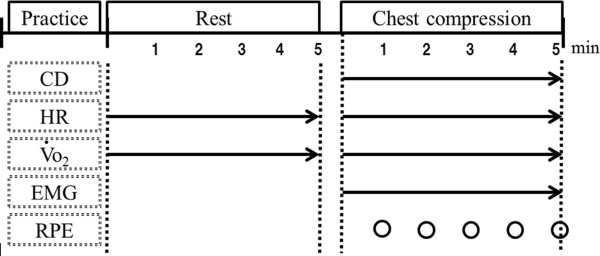
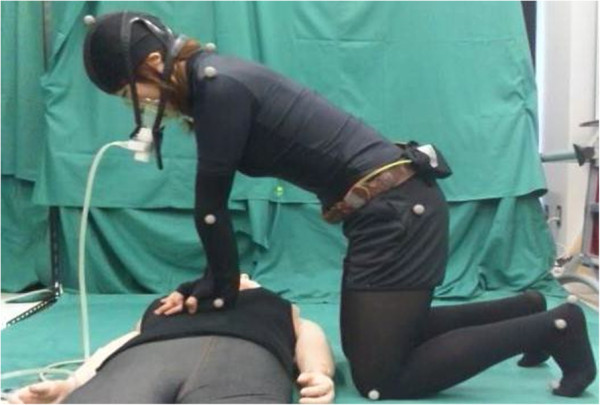
Five-minute chest compressions were then performed on a manikin that was placed on the floor. Measurement parameters were compression depth, heart rate, oxygen uptake, integrated electromyography signals, and rating of perceived exertion. Compression depth was evaluated according to the ratio (%) of adequate compressions (at least 5 cm deep).
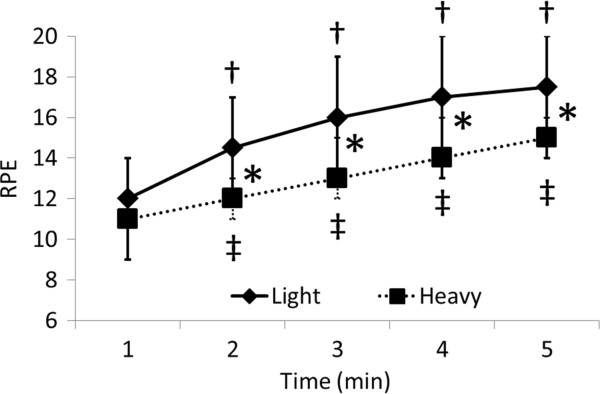
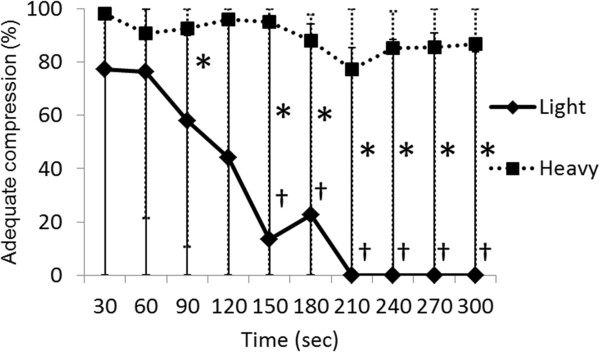
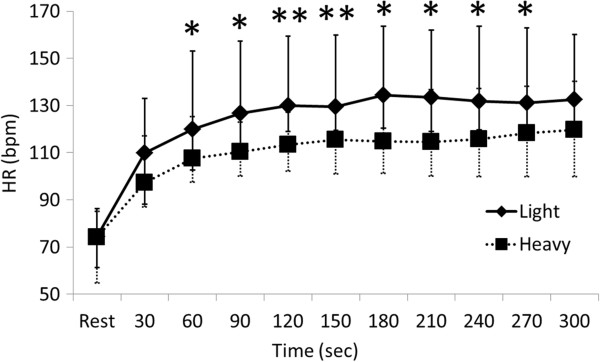
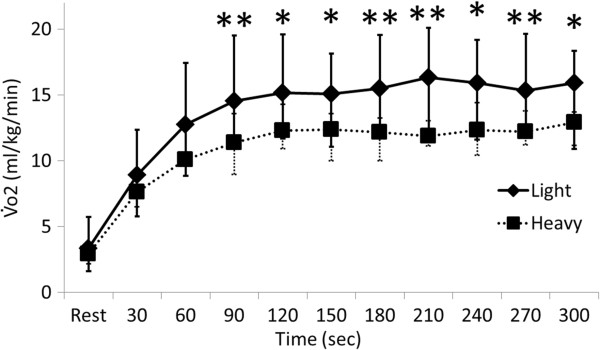
The ratio of adequate compressions decreased significantly over time in the light group. Values for heart rate, oxygen uptake, muscle activity defined as integrated electromyography signals, and rating of perceived exertion were significantly higher for the light group than for the heavy group.
Chest compression caused increased fatigue among the light group, which consequently resulted in a gradual fall in the quality of chest compression. These results suggested that individuals with a lower body weight should rotate at 1-min intervals to maintain high quality CPR and thus improve the survival rates and neurological outcomes of victims of cardiac arrest.
根据心肺复苏(CPR)指南,胸部按压的轮换时间应为2分钟左右。胸部按压的质量与施救者的体能有关,但在确定轮换时间时并未考虑这一点。本研究旨在阐明日本按男女平均体重分为轻、重两组的18名注册护士(10名男性和8名女性)在进行心肺复苏时体重与胸部按压质量及身体疲劳之间的关联。
然后在放置于地板上的人体模型上进行5分钟的胸部按压。测量参数包括按压深度、心率、摄氧量、肌电图信号积分以及主观用力程度分级。按压深度根据有效按压(至少5厘米深)的比例(%)进行评估。
轻组中有效按压的比例随时间显著下降。轻组的心率、摄氧量、以肌电图信号积分定义的肌肉活动以及主观用力程度分级的值均显著高于重组。
胸部按压使轻组的疲劳加剧,从而导致胸部按压质量逐渐下降。这些结果表明,体重较轻的个体应每隔1分钟轮换,以维持高质量的心肺复苏,从而提高心脏骤停患者的生存率和神经功能转归。