Stanberry Larissa, Mias George I, Haynes Winston, Higdon Roger, Snyder Michael, Kolker Eugene
Bioinformatics and High-throughput Analysis Laboratory, and High-throughput Analysis Core, Seattle Children's Research Institute, Seattle, 98101, USA.
Department of Genetics, Stanford University School of Medicine, Palo Alto, CA, 94305, USA.
Metabolites. 2013 Sep 3;3(3):741-60. doi: 10.3390/metabo3030741.
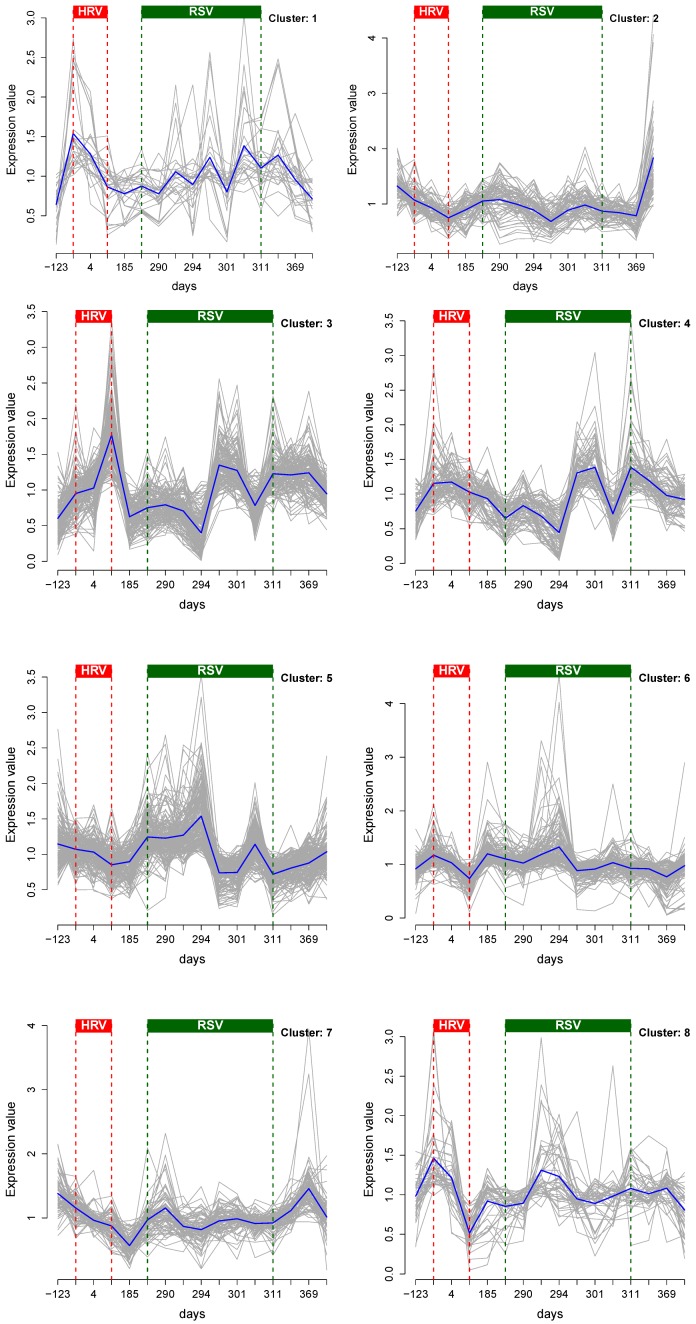
The integrative personal omics profile (iPOP) is a pioneering study that combines genomics, transcriptomics, proteomics, metabolomics and autoantibody profiles from a single individual over a 14-month period. The observation period includes two episodes of viral infection: a human rhinovirus and a respiratory syncytial virus. The profile studies give an informative snapshot into the biological functioning of an organism. We hypothesize that pathway expression levels are associated with disease status. To test this hypothesis, we use biological pathways to integrate metabolomics and proteomics iPOP data. The approach computes the pathways' differential expression levels at each time point, while taking into account the pathway structure and the longitudinal design. The resulting pathway levels show strong association with the disease status. Further, we identify temporal patterns in metabolite expression levels. The changes in metabolite expression levels also appear to be consistent with the disease status. The results of the integrative analysis suggest that changes in biological pathways may be used to predict and monitor the disease. The iPOP experimental design, data acquisition and analysis issues are discussed within the broader context of personal profiling.
整合个人组学图谱(iPOP)是一项开创性研究,它在14个月的时间里整合了来自同一个体的基因组学、转录组学、蛋白质组学、代谢组学和自身抗体图谱。观察期包括两次病毒感染:一次是人鼻病毒感染,另一次是呼吸道合胞病毒感染。这些图谱研究为生物体的生物学功能提供了丰富信息的快照。我们假设通路表达水平与疾病状态相关。为了验证这一假设,我们使用生物通路来整合代谢组学和蛋白质组学的iPOP数据。该方法在考虑通路结构和纵向设计的同时,计算每个时间点通路的差异表达水平。所得的通路水平与疾病状态显示出强烈关联。此外,我们识别出代谢物表达水平的时间模式。代谢物表达水平的变化似乎也与疾病状态一致。综合分析结果表明,生物通路的变化可用于预测和监测疾病。iPOP的实验设计、数据采集和分析问题将在个人图谱这一更广泛的背景下进行讨论。