Max Planck Research Group: Modeling the Evolution of Aging, Max Planck Institute for Demographic Research Konrad Zuse Strasse 1, Rostock, 18057, Germany ; Leyden Academy on Vitality and Ageing, Poortgebouw LUMC Rijnsburgerweg 10, AA Leiden, 2333, The Netherlands.
Leyden Academy on Vitality and Ageing, Poortgebouw LUMC Rijnsburgerweg 10, AA Leiden, 2333, The Netherlands ; Department of Gerontology and Geriatrics, Leiden University Medical Center C2-R, PO Box 9600, RC Leiden, 2300, The Netherlands.
Ecol Evol. 2014 May;4(10):1924-30. doi: 10.1002/ece3.1074. Epub 2014 Apr 19.
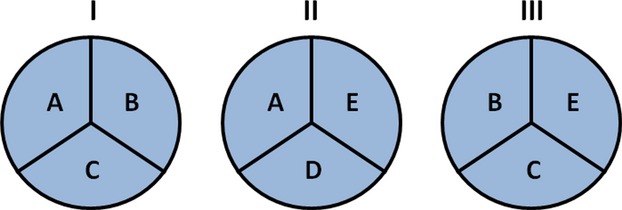
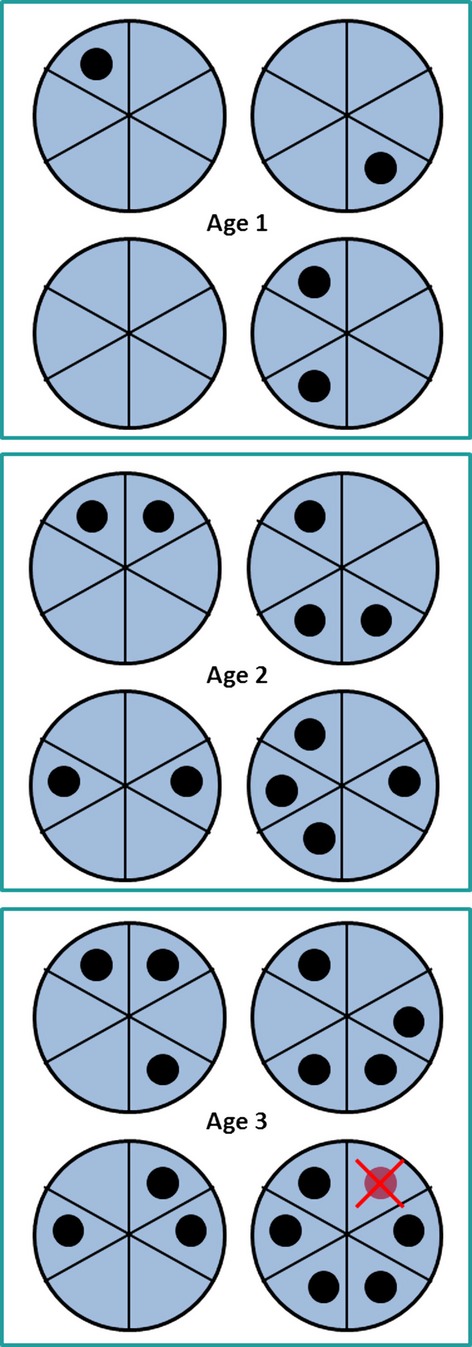
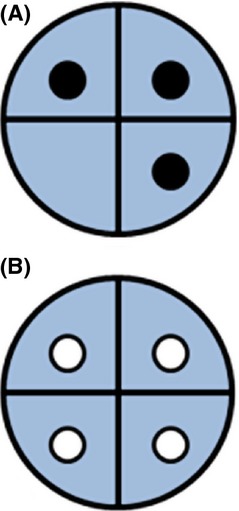
A general concept for thinking about causality facilitates swift comprehension of results, and the vocabulary that belongs to the concept is instrumental in cross-disciplinary communication. The causal pie model has fulfilled this role in epidemiology and could be of similar value in evolutionary biology and ecology. In the causal pie model, outcomes result from sufficient causes. Each sufficient cause is made up of a "causal pie" of "component causes". Several different causal pies may exist for the same outcome. If and only if all component causes of a sufficient cause are present, that is, a causal pie is complete, does the outcome occur. The effect of a component cause hence depends on the presence of the other component causes that constitute some causal pie. Because all component causes are equally and fully causative for the outcome, the sum of causes for some outcome exceeds 100%. The causal pie model provides a way of thinking that maps into a number of recurrent themes in evolutionary biology and ecology: It charts when component causes have an effect and are subject to natural selection, and how component causes affect selection on other component causes; which partitions of outcomes with respect to causes are feasible and useful; and how to view the composition of a(n apparently homogeneous) population. The diversity of specific results that is directly understood from the causal pie model is a test for both the validity and the applicability of the model. The causal pie model provides a common language in which results across disciplines can be communicated and serves as a template along which future causal analyses can be made.
一种关于因果关系的通用概念有助于快速理解结果,而属于该概念的词汇对于跨学科交流非常重要。因果饼模型在流行病学中发挥了这一作用,在进化生物学和生态学中也可能具有类似的价值。在因果饼模型中,结果是由充分原因产生的。每个充分原因都由一个“因果饼”组成,“因果饼”由“组成原因”组成。同一个结果可能存在几种不同的因果饼。只有当一个充分原因的所有组成原因都存在时,即因果饼完整,结果才会发生。因此,组成原因的效果取决于构成某些因果饼的其他组成原因的存在。由于所有组成原因对结果都具有同等且完全的因果关系,因此某些结果的原因总和超过 100%。因果饼模型提供了一种思维方式,可以映射到进化生物学和生态学中的许多反复出现的主题:它说明了组成原因何时起作用并受到自然选择的影响,以及组成原因如何影响对其他组成原因的选择;哪些关于原因的结果划分是可行和有用的;以及如何看待(显然是同质的)种群的组成。从因果饼模型直接理解的具体结果的多样性是对该模型的有效性和适用性的检验。因果饼模型提供了一种通用语言,可以在不同学科之间交流结果,并作为未来因果分析的模板。