Koustas Erica, Lam Juleen, Sutton Patrice, Johnson Paula I, Atchley Dylan S, Sen Saunak, Robinson Karen A, Axelrad Daniel A, Woodruff Tracey J
Oak Ridge Institute for Science and Education (ORISE) Postdoctoral Fellow, National Center for Environmental Economics, Office of Policy, U.S. Environmental Protection Agency, Washington, DC, USA.
Environ Health Perspect. 2014 Oct;122(10):1015-27. doi: 10.1289/ehp.1307177. Epub 2014 Jun 25.
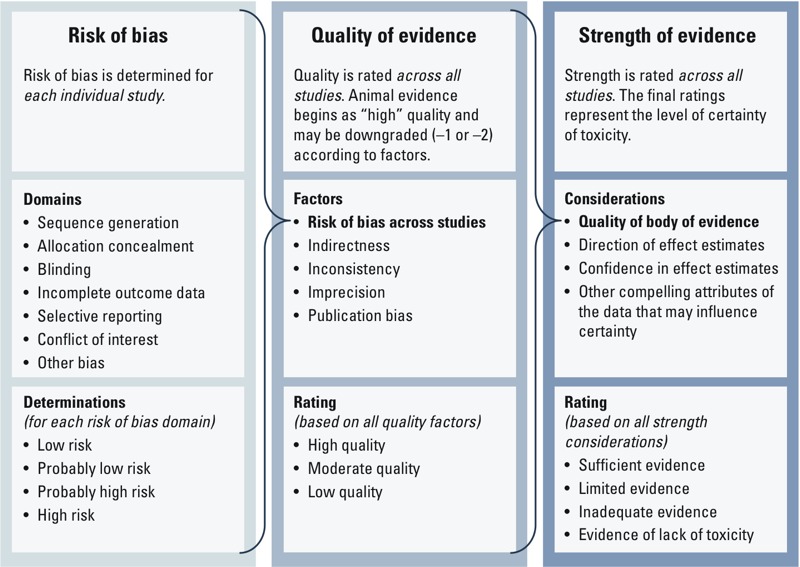
In contrast to current methods of expert-based narrative review, the Navigation Guide is a systematic and transparent method for synthesizing environmental health research from multiple evidence streams. The Navigation Guide was developed to effectively and efficiently translate the available scientific evidence into timely prevention-oriented action.
We applied the Navigation Guide systematic review method to answer the question "Does fetal developmental exposure to perfluorooctanoic acid (PFOA) or its salts affect fetal growth in animals ?" and to rate the strength of the experimental animal evidence.
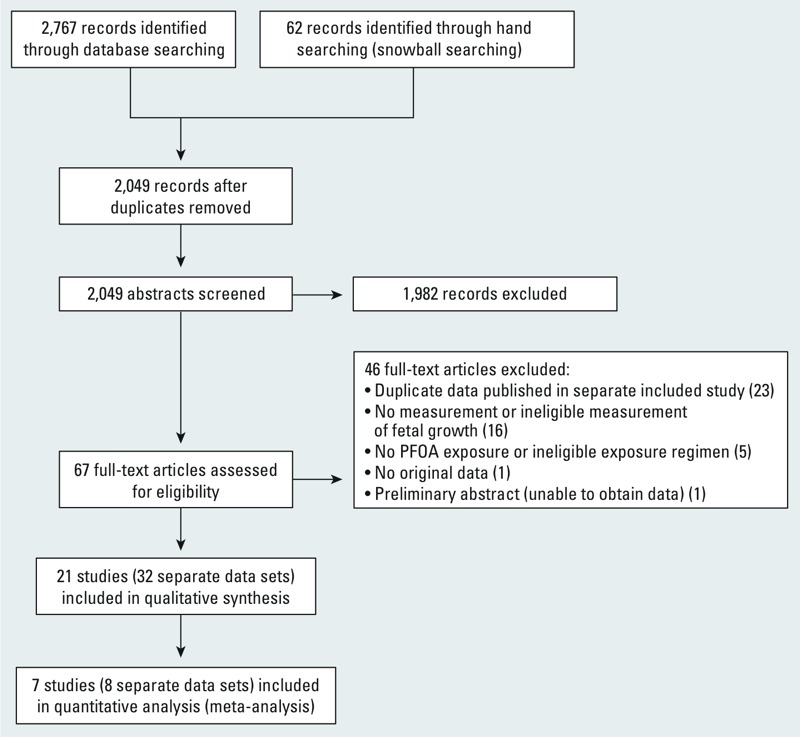
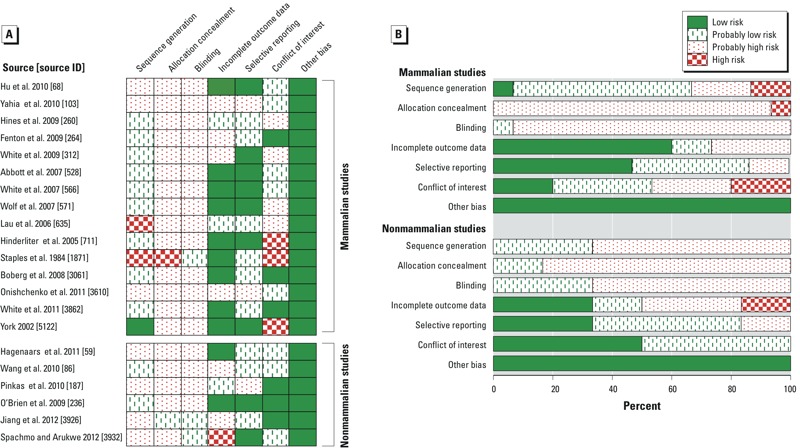
We conducted a comprehensive search of the literature, applied prespecified criteria to the search results to identify relevant studies, extracted data from studies, obtained additional information from study authors, conducted meta-analyses, and rated the overall quality and strength of the evidence.
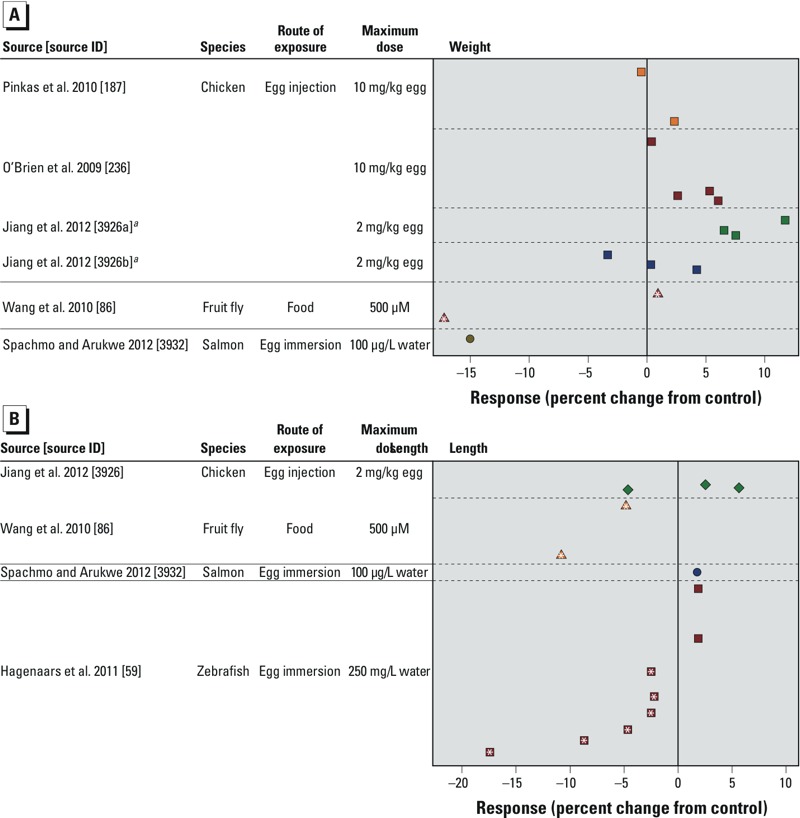
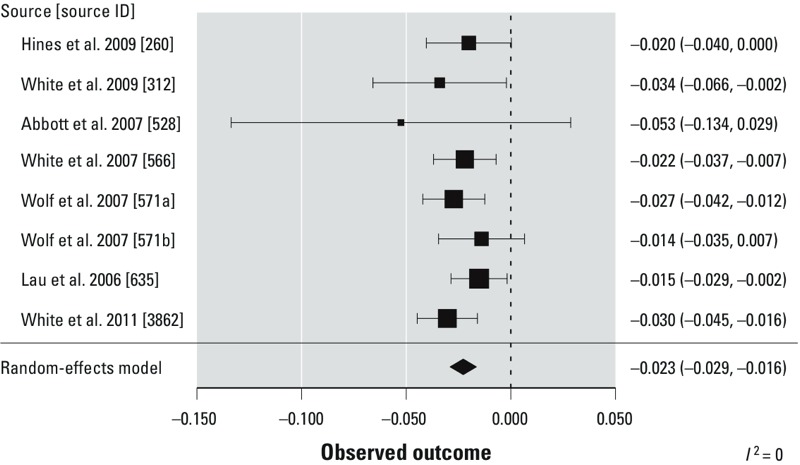
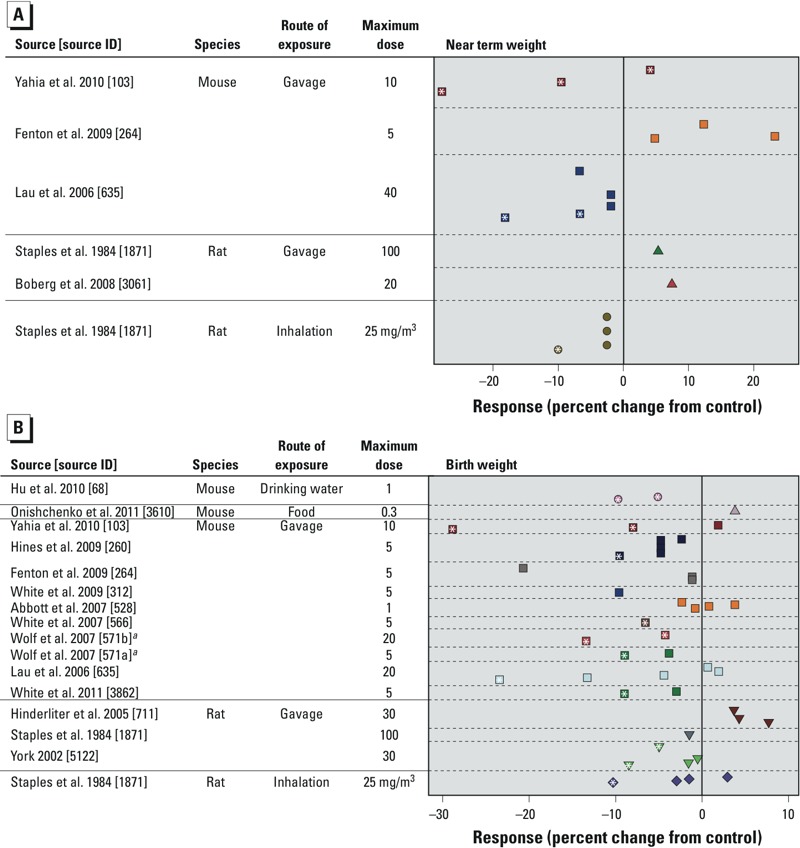
Twenty-one studies met the inclusion criteria. From the meta-analysis of eight mouse gavage data sets, we estimated that exposure of pregnant mice to increasing concentrations of PFOA was associated with a change in mean pup birth weight of -0.023 g (95% CI: -0.029, -0.016) per 1-unit increase in dose (milligrams per kilogram body weight per day). The evidence, consisting of 15 mammalian and 6 nonmammalian studies, was rated as "moderate" and "low" quality, respectively.
Based on this first application of the Navigation Guide methodology, we found sufficient evidence that fetal developmental exposure to PFOA reduces fetal growth in animals.
与当前基于专家的叙述性综述方法不同,《导航指南》是一种系统且透明的方法,用于综合来自多个证据流的环境卫生研究。开发《导航指南》的目的是有效且高效地将现有的科学证据转化为及时的以预防为导向的行动。
我们应用《导航指南》系统综述方法来回答“胎儿发育过程中暴露于全氟辛酸(PFOA)或其盐类是否会影响动物胎儿生长?”这一问题,并对实验动物证据的强度进行评级。
我们对文献进行了全面检索,对检索结果应用预先设定的标准以识别相关研究,从研究中提取数据,从研究作者处获取额外信息,进行荟萃分析,并对证据的整体质量和强度进行评级。
21项研究符合纳入标准。通过对8个小鼠灌胃数据集的荟萃分析,我们估计,每单位剂量(每天每千克体重毫克数)增加时,怀孕小鼠暴露于浓度不断升高的PFOA与幼崽平均出生体重变化-0.023克(95%置信区间:-0.029,-0.016)相关。由15项哺乳动物研究和6项非哺乳动物研究组成的证据分别被评为“中等”和“低”质量。
基于《导航指南》方法的首次应用,我们发现有充分证据表明胎儿发育过程中暴露于PFOA会降低动物胎儿的生长。