Chen Ting-Wen, Li Hsin-Pai, Lee Chi-Ching, Gan Ruei-Chi, Huang Po-Jung, Wu Timothy H, Lee Cheng-Yang, Chang Yi-Feng, Tang Petrus
Molecular Medicine Research Center, Chang Gung University, Taoyuan, Taiwan.
BMC Genomics. 2014 Jun 30;15(1):539. doi: 10.1186/1471-2164-15-539.
Chromatin is a dynamic but highly regulated structure. DNA-binding proteins such as transcription factors, epigenetic and chromatin modifiers are responsible for regulating specific gene expression pattern and may result in different phenotypes. To reveal the identity of the proteins associated with the specific region on DNA, chromatin immunoprecipitation (ChIP) is the most widely used technique. ChIP assay followed by next generation sequencing (ChIP-seq) or microarray (ChIP-chip) is often used to study patterns of protein-binding profiles in different cell types and in cancer samples on a genome-wide scale. However, only a limited number of bioinformatics tools are available for ChIP datasets analysis.
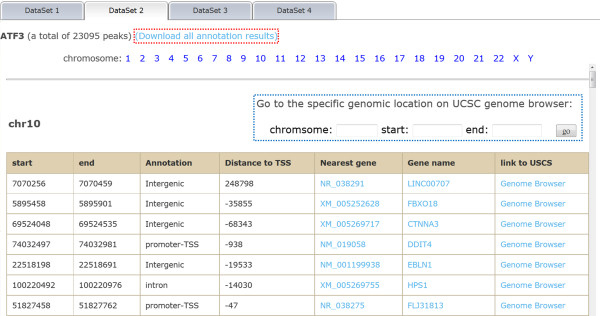
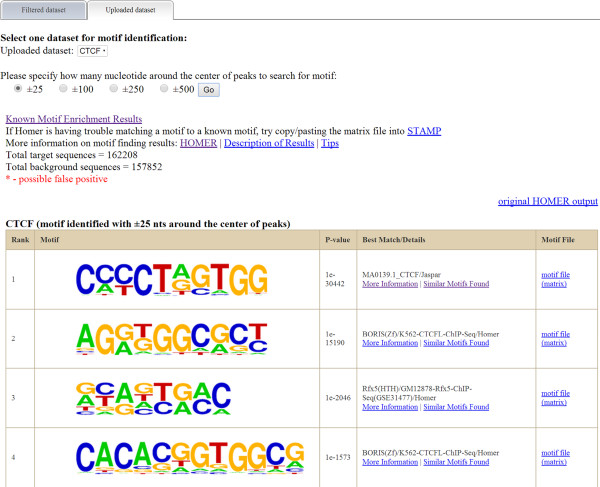
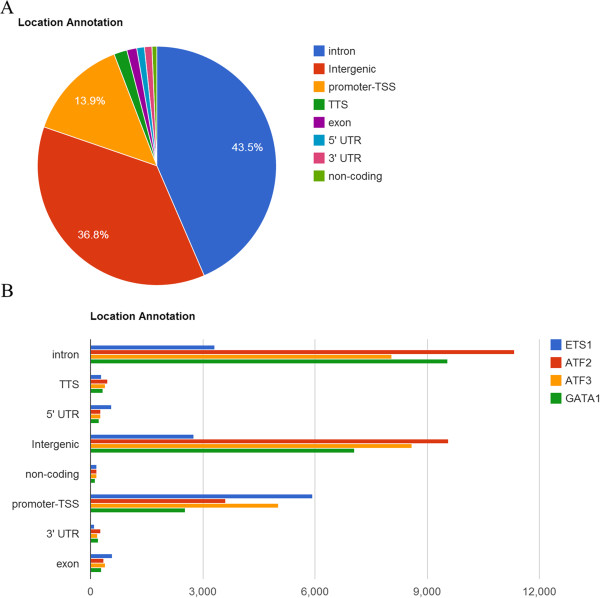
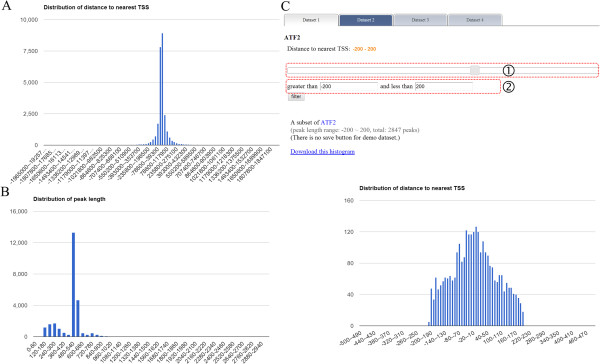
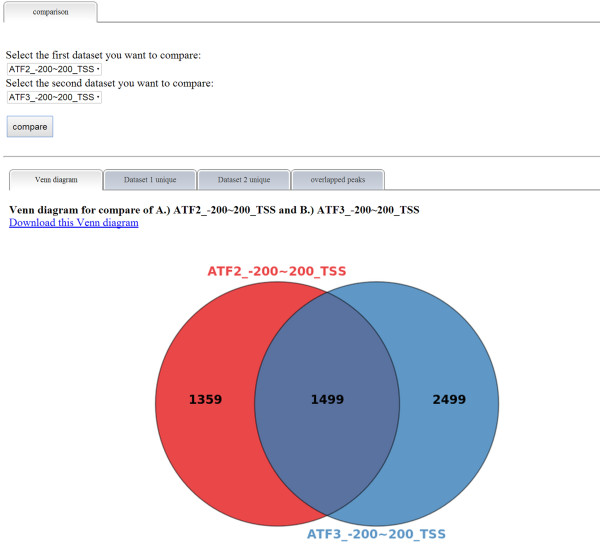
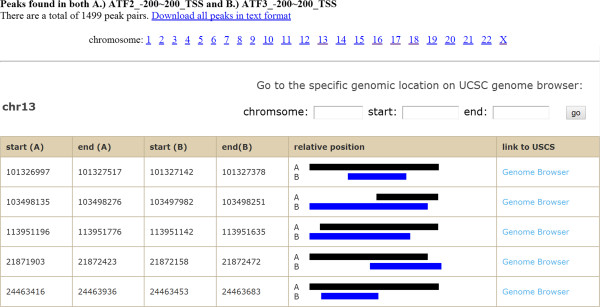
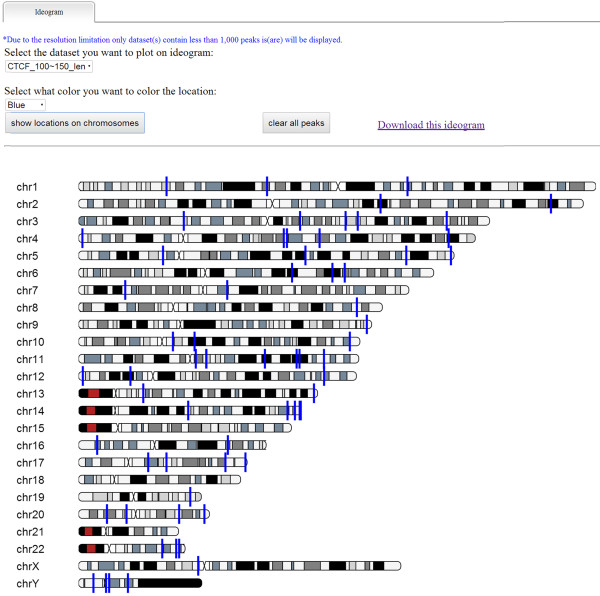
We present ChIPseek, a web-based tool for ChIP data analysis providing summary statistics in graphs and offering several commonly demanded analyses. ChIPseek can provide statistical summary of the dataset including histogram of peak length distribution, histogram of distances to the nearest transcription start site (TSS), and pie chart (or bar chart) of genomic locations for users to have a comprehensive view on the dataset for further analysis. For examining the potential functions of peaks, ChIPseek provides peak annotation, visualization of peak genomic location, motif identification, sequence extraction, and comparison between datasets. Beyond that, ChIPseek also offers users the flexibility to filter peaks and re-analyze the filtered subset of peaks. ChIPseek supports 20 different genome assemblies for 12 model organisms including human, mouse, rat, worm, fly, frog, zebrafish, chicken, yeast, fission yeast, Arabidopsis, and rice. We use demo datasets to demonstrate the usage and intuitive user interface of ChIPseek.
ChIPseek provides a user-friendly interface for biologists to analyze large-scale ChIP data without requiring any programing skills. All the results and figures produced by ChIPseek can be downloaded for further analysis. The analysis tools built into ChIPseek, especially the ones for selecting and examine a subset of peaks from ChIP data, provides invaluable helps for exploring the high through-put data from either ChIP-seq or ChIP-chip. ChIPseek is freely available at http://chipseek.cgu.edu.tw.
染色质是一种动态但受到高度调控的结构。诸如转录因子、表观遗传和染色质修饰因子等DNA结合蛋白负责调控特定的基因表达模式,并可能导致不同的表型。为了揭示与DNA上特定区域相关的蛋白质的身份,染色质免疫沉淀(ChIP)是使用最广泛的技术。随后进行下一代测序(ChIP-seq)或微阵列(ChIP-chip)的ChIP分析通常用于在全基因组范围内研究不同细胞类型和癌症样本中的蛋白质结合图谱模式。然而,仅有有限数量的生物信息学工具可用于ChIP数据集分析。
我们展示了ChIPseek,这是一个基于网络的ChIP数据分析工具,以图表形式提供汇总统计信息,并提供几种常用的分析。ChIPseek可以为数据集提供统计摘要,包括峰长度分布直方图、到最近转录起始位点(TSS)的距离直方图,以及基因组位置的饼图(或柱状图),以便用户全面了解数据集以进行进一步分析。为了检查峰的潜在功能,ChIPseek提供峰注释、峰基因组位置的可视化、基序识别、序列提取以及数据集之间的比较。除此之外,ChIPseek还为用户提供了筛选峰并重新分析筛选后的峰子集的灵活性。ChIPseek支持12种模式生物的20种不同基因组组装,包括人类、小鼠、大鼠、线虫、果蝇、青蛙、斑马鱼、鸡、酵母、裂殖酵母、拟南芥和水稻。我们使用演示数据集来展示ChIPseek的用法和直观的用户界面。
ChIPseek为生物学家提供了一个用户友好的界面,用于分析大规模ChIP数据,而无需任何编程技能。ChIPseek生成的所有结果和图表均可下载以供进一步分析。ChIPseek内置的分析工具,特别是用于从ChIP数据中选择和检查峰子集的工具,为探索来自ChIP-seq或ChIP-chip的高通量数据提供了宝贵的帮助。ChIPseek可在http://chipseek.cgu.edu.tw免费获取。