Meng Jia, Lu Zhiliang, Liu Hui, Zhang Lin, Zhang Shaowu, Chen Yidong, Rao Manjeet K, Huang Yufei
Department of Biological Sciences, Xi'an Jiaotong-Liverpool University, Suzhou 215123, China.
Department of Biological Sciences, Xi'an Jiaotong-Liverpool University, Suzhou 215123, China.
Methods. 2014 Oct 1;69(3):274-81. doi: 10.1016/j.ymeth.2014.06.008. Epub 2014 Jun 27.
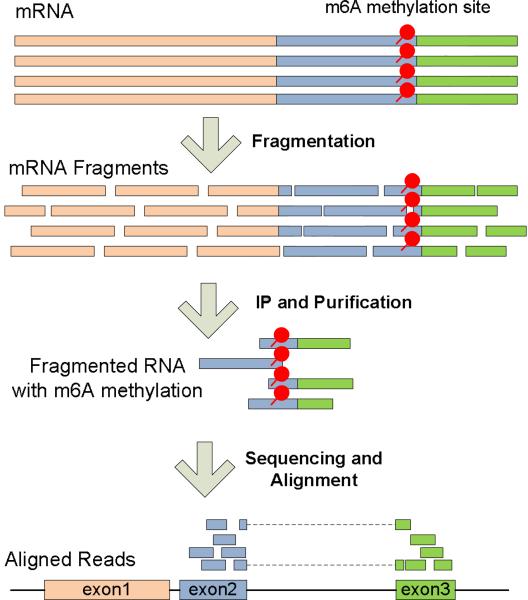
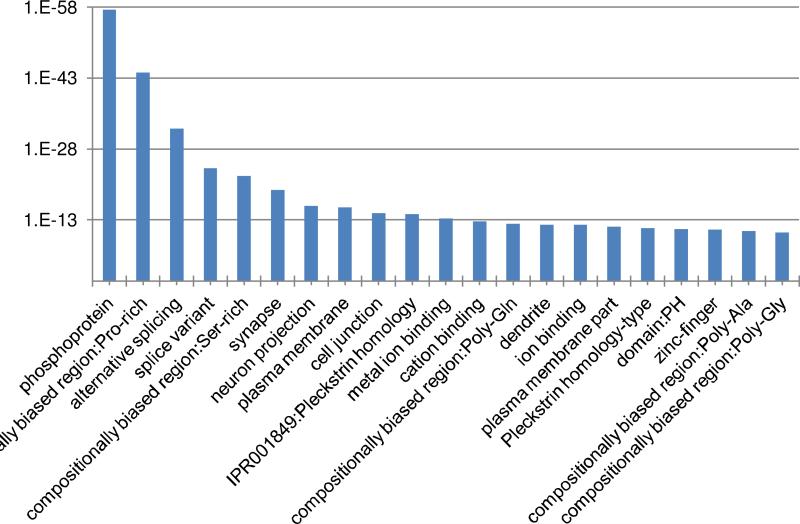
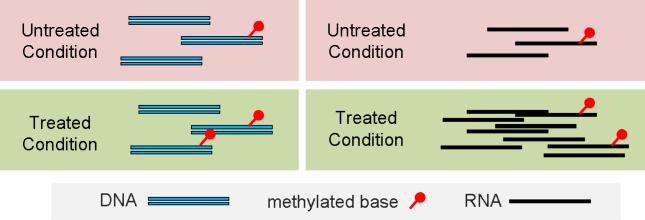
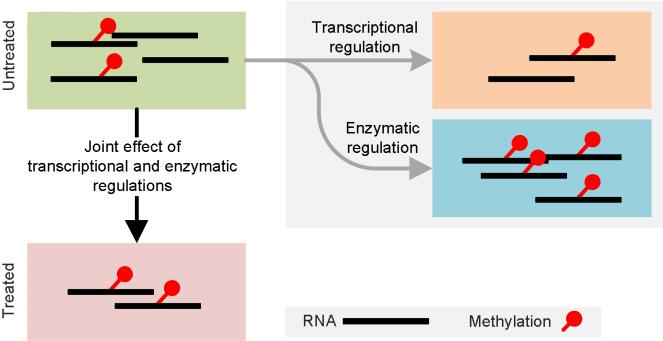
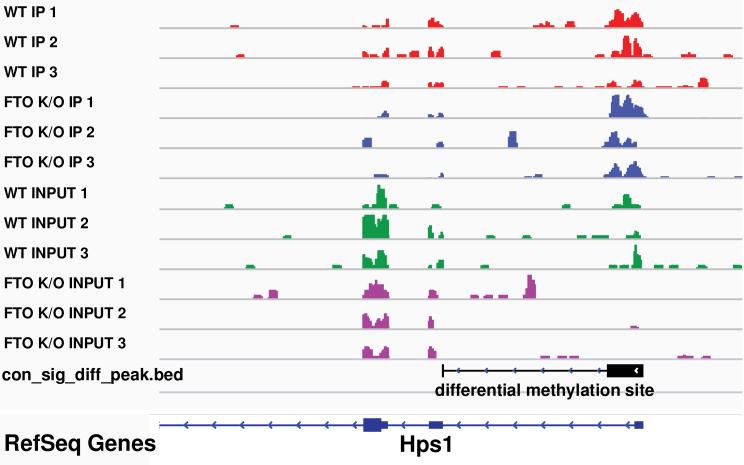
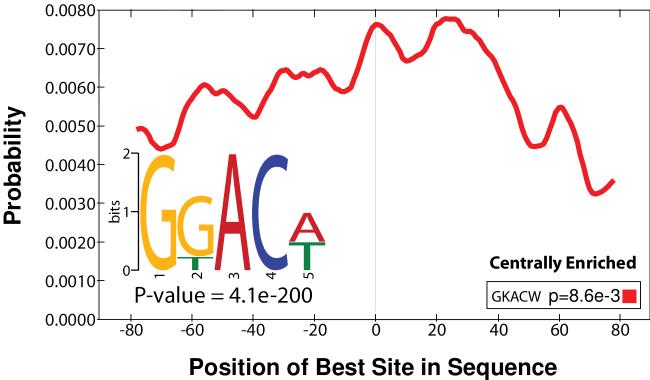
Despite the prevalent studies of DNA/Chromatin related epigenetics, such as, histone modifications and DNA methylation, RNA epigenetics has not drawn deserved attention until a new affinity-based sequencing approach MeRIP-Seq was developed and applied to survey the global mRNA N6-methyladenosine (m(6)A) in mammalian cells. As a marriage of ChIP-Seq and RNA-Seq, MeRIP-Seq has the potential to study the transcriptome-wide distribution of various post-transcriptional RNA modifications. We have previously developed an R/Bioconductor package 'exomePeak' for detecting RNA methylation sites under a specific experimental condition or the identifying the differential RNA methylation sites in a case control study from MeRIP-Seq data. Compared with other relatively well studied data types such as ChIP-Seq and RNA-Seq, the study of MeRIP-Seq data is still at very early stage, and existing protocols are not optimized for dealing with the intrinsic characteristic of MeRIP-Seq data. We therein provide here a detailed and easy-to-use protocol of using exomePeak R/Bioconductor package along with other software programs for analysis of MeRIP-Seq data, which covers raw reads alignment, RNA methylation site detection, motif discovery, differential RNA methylation analysis, and functional analysis. Particularly, the rationales behind each processing step as well as the specific method used, the best practice, and possible alternative strategies are briefly discussed. The exomePeak R/Bioconductor package is freely available from Bioconductor: http://www.bioconductor.org/packages/release/bioc/html/exomePeak.html.
尽管DNA/染色质相关表观遗传学(如组蛋白修饰和DNA甲基化)的研究很普遍,但直到一种基于亲和性的新测序方法——甲基化RNA免疫沉淀测序(MeRIP-Seq)被开发并应用于检测哺乳动物细胞中的全局mRNA N6-甲基腺苷(m6A),RNA表观遗传学才受到应有的关注。作为染色质免疫沉淀测序(ChIP-Seq)和RNA测序(RNA-Seq)的结合,MeRIP-Seq有潜力研究各种转录后RNA修饰在全转录组范围内的分布。我们之前开发了一个R/Bioconductor软件包“exomePeak”,用于在特定实验条件下检测RNA甲基化位点,或在病例对照研究中从MeRIP-Seq数据中识别差异RNA甲基化位点。与其他研究相对充分的数据类型(如ChIP-Seq和RNA-Seq)相比,MeRIP-Seq数据的研究仍处于非常早期的阶段,现有的方案并未针对处理MeRIP-Seq数据的内在特征进行优化。在此,我们提供了一个详细且易于使用的方案,介绍如何使用exomePeak R/Bioconductor软件包以及其他软件程序来分析MeRIP-Seq数据,内容涵盖原始 reads 比对、RNA甲基化位点检测、基序发现、差异RNA甲基化分析和功能分析。特别地,我们简要讨论了每个处理步骤背后的原理以及所使用的具体方法、最佳实践和可能的替代策略。exomePeak R/Bioconductor软件包可从Bioconductor免费获取:http://www.bioconductor.org/packages/release/bioc/html/exomePeak.html。